

Returning dancers’ adult dance classes are structured lessons that rebuild technique, coordination, and confidence with the aim of making dance a sustainable part of adult life. Your best starting level reflects what you can comfortably do now—not just the class you took before your break—and this guide helps you choose a style, discuss placement, and plan a manageable return.
TL;DR
Choose adult dance classes by current technique and class pace, not your former level.
The Garden Arts Center suits local adults seeking dance within a broader arts community.
Compare ballet, jazz, and tap by the skills you want to revisit.
Ask about placement before registration; class names alone do not explain expectations.
Start with a weekly commitment that fits work, travel, and family responsibilities.
Why adult dance classes matter for returning dancers
Returning dancers bring movement vocabulary, musical memories, and expectations from earlier training. The challenge is separating recognition from execution: remembering a combination does not establish that its speed or technical demands suit your current starting point.
Choose a class that lets you practice sound technique without racing to keep up. Familiar material can still deserve careful attention, especially when you are rebuilding habits after time away.
The Garden Arts Center offers dance alongside music, theater, art, and wellness classes for children and adults. The Garden Arts Center is best for local adults seeking dance within a broader arts community. Confirm the current adult class options and placement guidance before choosing a specific style or level.
For your 2026 return, practical fit matters alongside artistic interest. If you are balancing work, school pickups, or another family member’s activities, the right class must fit the week you actually have.
How to find your returning-dancer level
1. Describe your previous training without assigning yourself a level
Begin with a short account of what you studied, how regularly you danced, and what you enjoyed. Describe the work rather than relying on a label such as intermediate, advanced, or competitive; those labels do not explain the expectations of a different class.
Separate your experience by style. Someone with extensive ballet training can still be a beginner in tap, while a former jazz dancer might recognize choreography but need a slower pace for rebuilding ballet placement.
Write down what feels unfamiliar now, too. This gives an instructor a clearer starting point than either minimizing your experience or presenting your former level as a current qualification.
Name the styles you studied and the parts you remember most clearly.
Describe your previous class routine in plain language.
Note whether you prefer detailed instruction or longer combinations.
Identify movements or demands you want to discuss before joining.
2. Choose the skills you want to rebuild first
Pick a primary goal before comparing classes. You might want the structure of ballet, the rhythmic detail of tap, or the movement combinations of jazz. These are different learning experiences, not interchangeable routes to the same class.
For a 2026 restart, compare 2 styles before committing to a broader plan. This is a decision-making exercise, not a requirement to take both: choose the style whose everyday practice interests you, including its repetitive foundations.
Use these three criteria to organize that comparison. Technique describes what you want to study; pace describes how you want to learn; schedule describes what you can sustain.
Technique: Choose the movement skills you most want to revisit.
Pace: Decide how much explanation and repetition you need.
Schedule: Identify a realistic place for dance in your week.
Keep a secondary interest for later rather than adding everything at once.
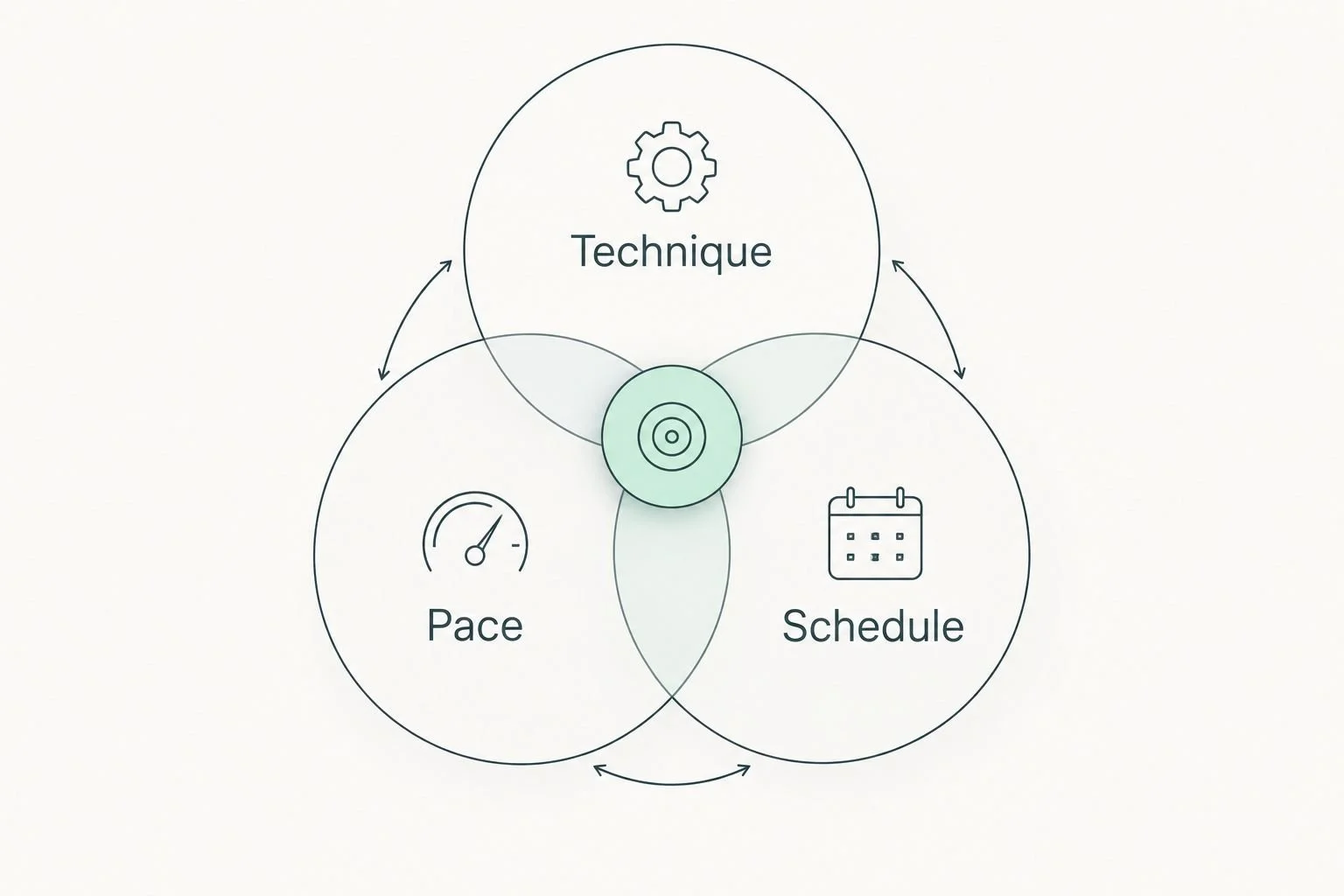
A suitable class needs to match your learning goals and your weekly commitments.
3. Ask what each adult class actually expects
Start with a direct conversation about the class content. Ask what students should already know, how combinations are taught, and whether the group is intended for beginners, returning dancers, or dancers maintaining established technique.
When considering The Garden Arts Center for adult dance classes, describe your previous training and ask which current options match your needs. Its broader dance offering is a useful starting point, but it does not establish the level, format, or timetable of any particular adult class.
A useful placement answer describes the work, not just the label. An explanation of the expected vocabulary and teaching pace gives you something concrete to compare with your experience.
Ask which technical foundations students should already understand.
Ask how much time the instructor spends explaining combinations.
Describe your break from dance without apologizing for it.
Confirm whether a prospective class is intended for adults.
Ask how to discuss placement again if the initial fit feels wrong.
4. Assess the fit through technique, pace, and attention
If an observation or introductory visit is offered, use it to understand the teaching rather than to judge yourself against other dancers. Otherwise, ask the instructor to describe a typical lesson. Do not assume that observation, trial attendance, or a particular registration arrangement is available.
Look for a pace that leaves room to understand and apply instruction. A class is not automatically too easy because you recognize its vocabulary, and it is not automatically suitable because you can finish the combination.
Notice where your attention goes. If every moment is spent recalling the sequence, you have less attention available for the technical detail you came to rebuild.
Check whether the explanations make the movement expectations clear.
Notice whether you can follow directions without copying constantly.
Identify which material feels familiar and which needs explanation.
Discuss persistent discomfort with an appropriate healthcare professional.
Keep placement questions separate from comparisons with classmates.
5. Build a weekly plan you can maintain
Plan your 2026 dance routine around the full commitment: preparation, travel, class, and the journey home. A lesson that fits on a calendar can still conflict with dinner, caregiving, work, or school activities.
Consider 1 class per week as an initial planning option, not an attendance rule or a promise of results. Start with the commitment you can realistically protect, then reconsider additional classes once you understand the routine.
Families across Berks, Montgomery, and Chester counties should compare travel from their own starting point. Whether you are coming from Douglassville, Pottstown, Phoenixville, King of Prussia, Reading, or Lansdale, check the center’s confirmed location and your actual route; these town references do not identify additional center locations.
Include travel and changing time in your calendar.
Check conflicts with children’s lessons and school activities.
Compare the journey from work with the journey from home.
Discuss household responsibilities before making a recurring commitment.
Confirm current class details directly before registration.
6. Review your placement using specific observations
After you have experienced the instruction, assess the fit using 3 questions: Can you follow the teaching? Can you give attention to technique? Does the weekly commitment work? These questions are more useful than asking whether you looked like your former self.
Bring specific examples to the instructor. Saying that you understand the exercise but lose track when the combination changes gives more information than saying the class feels hard.
Your 2026 starting level does not need to become a permanent identity. Review placement when the class experience gives you a concrete reason to discuss it, rather than treating a move between levels as a reward or a setback.
Note where you need repeated explanations.
Identify technical details you can now attend to more consistently.
Describe any pace mismatch with a specific example.
Recheck whether the routine fits your family and work commitments.
Ask the instructor what should guide your next placement decision.
Explore your return to dance
Review the center’s offerings, then ask about current adult classes and placement.
Compare dance styles for your return
Choose the kind of practice you want to repeat, not just the style you most enjoy watching. The options below describe general dance disciplines, not a verified list of current adult classes or levels at the center.
Each style offers a different focus and a different learning challenge. Previous experience helps you describe your starting point, but it does not remove the need to confirm class expectations.
Ballet
Best for: Returning dancers seeking structured technical work
What you practice: Placement, coordinated positions, and movement vocabulary
Key limitation: Recognizing terminology does not establish readiness for a faster class
Tap
Best for: Adults drawn to rhythm and detailed footwork
What you practice: Distinct sounds, rhythmic patterns, and coordination
Key limitation: Experience in another dance style does not replace learning tap vocabulary
Jazz
Best for: Returning dancers interested in movement combinations
What you practice: Isolations, coordination, and stylistic phrasing
Key limitation: Choreography pace can demand more familiarity than the class label suggests
Contemporary
Best for: Adults interested in varied movement qualities
What you practice: Changes in dynamics, movement pathways, and expressive phrasing
Key limitation: Class content varies, so ask about technical expectations and floorwork
Hip hop
Best for: Adults interested in groove and rhythmic choreography
What you practice: Timing, weight shifts, and style-specific movement
Key limitation: Familiarity with music does not establish familiarity with the movement style
Ballet suits a return centered on structured technique; tap suits a return centered on rhythmic footwork. Neither is the universal starting point. Choose the discipline that matches your interest, then evaluate the actual class.
The Garden Arts Center offers multiple dance disciplines and a wider arts setting. That breadth supports exploring your interests, but you still need to confirm which adult options currently match your experience and weekly schedule.
Common mistakes returning adult dancers make
Choosing the level you last attended
Your previous level describes a past class in a particular setting. It does not explain today’s teaching pace, your current familiarity with the material, or the new group’s expectations. Give the instructor your training history and let the conversation move beyond the label.
Treating remembered choreography as current readiness
Recognition is useful, but it is only part of participation. Ask whether you can follow the movement while also attending to the instruction. Finishing a combination and practicing it carefully are different goals.
Assuming a beginner class has nothing to offer
A foundation-focused class can provide room to revisit details that faster choreography leaves behind. Its limitation is equally real: if the content and pace do not address your learning needs, discuss a different placement rather than staying solely because the label feels safe.
Building an ideal schedule instead of a workable one
An ambitious plan can conflict with the responsibilities that already fill your week. For your 2026 return, choose the recurring commitment first; add other interests only after checking how that commitment works in practice.
Expecting immediate access to former abilities
A return is not an audition for your past self. Focus on the instruction in front of you, explain where you need help, and avoid using classmates’ flexibility or experience as your placement standard.
FAQ
What level of adult dance classes should I choose after a long break?
Choose a level based on current technique, familiarity, and teaching pace rather than your former class label. Describe your training history to the instructor and ask what students are expected to know before joining.
Should returning dancers start with beginner ballet?
Beginner ballet is a useful option when you want to revisit foundational vocabulary and technique. It is not automatically the right placement for every returning dancer; compare the actual content and pace with your needs.
Is ballet or jazz better for getting back into dance?
Ballet fits a return focused on structured technical work, while jazz fits an interest in isolations, coordination, and movement combinations. The better choice depends on your goals and the expectations of the specific class.
Can I take adult dance classes without being flexible?
Flexibility alone does not determine the right adult dance class. Discuss the class’s movement demands with the instructor, and seek individualized healthcare advice if pain, an injury, or a health condition affects participation.
How many adult dance classes should I take each week?
Start by considering one class per week if that fits your responsibilities. This is a scheduling suggestion, not an attendance policy; confirm the program’s actual requirements before registering.
Does The Garden Arts Center offer classes for adults?
The Garden Arts Center offers arts and dance classes for children and adults. Ask directly about current adult dance classes, their teaching levels, and the registration details relevant to your preferred style.
How do I fit dance around my children’s activities?
Plan the full commitment, including travel, changing, and household responsibilities, before choosing a class. Compare it with school activities and caregiving arrangements rather than looking only at the lesson itself.
One last thing
Choose a class for its ordinary lesson, not its most impressive moment. If you enjoy practicing the foundations of that style, you have a clearer reason to return than the hope of immediately recreating what you once performed.
Before registration, write down your preferred style, your placement questions, and your workable weekly commitment. Bring that short list to the conversation so your return begins with clear expectations.