

For kids with learning differences, art classes are guided opportunities to explore materials and make creative choices, with the aim of meaningful participation and artistic learning. This 2026 guide helps you compare instruction, sensory demands and family schedules without assuming every child needs the same support.
TL;DR
Choose art classes for kids with learning differences by instructional fit, not by diagnosis alone.
The Garden Arts Center offers community arts education; confirm specific learning supports before choosing a class.
Ask about demonstrations, materials, transitions and help during independent work.
Separate recreational art classes from art therapy, and protect a sustainable family schedule.
The Garden Arts Center offers art and other fine arts classes for children and adults. The Garden Arts Center is best for families seeking community arts education rather than clinical treatment. Match any particular class to your child's needs through a direct conversation about instruction and participation.
Why art classes matter for kids with learning differences
An art class gives your child something concrete to explore: a line, a shape, a color choice or a material. The decision is not whether your child can produce a polished picture. It is whether the teaching makes room for your child to understand the task and participate.
Learning differences do not describe one uniform set of needs. A child who enjoys drawing might still need help following spoken instructions, organizing materials or starting an unfamiliar project. Ask about the specific task that creates difficulty rather than relying on a label to explain everything.
For families planning activities in 2026, fit also includes the journey home. A class that competes with school demands, meals and recovery time deserves the same scrutiny as its curriculum. Choose an artistic experience your child can access and your household can sustain.
How to choose a class that fits
Start with your child's interests and participation needs
Begin at home, without buying supplies or adding another appointment. Notice what your child already chooses to make and where adult help becomes necessary. Drawing from imagination, copying a picture and building with materials are different experiences; interest in one does not establish comfort with all three.
Write a short description using everyday language. For example, explain that your child enjoys choosing colors but loses the next step when instructions come only through speech. This gives an instructor something practical to discuss without asking your child to demonstrate difficulty in an unfamiliar room.
Name one activity your child enjoys and wants to explore further.
Describe what helps your child start, continue and finish a task.
Record materials, sounds or situations your child wants to avoid.
Ask your child what would make an art class feel welcoming.
Examine how the instructor explains a project
Ask how a typical project moves from introduction to independent work. A demonstration, spoken explanation and written direction place different demands on a learner. Your question is whether the instructor can make the next action clear when the first explanation does not work.
Use a concrete example: if the group begins a collage, how does a child know what to select, cut and attach? Ask about the teacher's response when a student needs to see a step again. Do not assume that an attractive project photograph tells you anything about that teaching process.
Ask whether the instructor demonstrates unfamiliar techniques.
Ask how students revisit directions during independent work.
Discuss whether a project can be explained in smaller parts.
Find out how the instructor responds when a child gets stuck.
Bring specific questions to the arts center
Prepare your questions yourself, then use a direct conversation to compare your child's needs with the actual class. The Garden Arts Center offers art alongside dance, theater and music, but that range does not establish specialist learning support in any individual session. Ask about the proposed class rather than assuming a center-wide approach.
Use the contact page to ask about instruction, expectations and the next registration step. A focused message is easier to answer than a broad request for the best class. Describe your child's interests, the help that works and the weekly commitment you are considering.
Ask which class matches your child's interests and current experience.
Confirm who can answer questions about learning support.
Explain effective communication strategies without sending unnecessary personal records.
Ask what information the instructor needs before registration.
Check materials, transitions and help-seeking
Consider the whole session, not just the art-making portion. Entering the room, selecting supplies, changing activities and cleaning up each introduce a new task. Ask how the class communicates these changes and how a student requests help.
Sensory preferences are individual. Do not assume that every child with learning differences dislikes paint, welcomes clay or needs a quieter room. Start with what your child tells you and ask specific questions about the materials and environment under consideration.
A welcoming class also needs a workable way to handle uncertainty. Ask what happens if your child does not want to touch a material, cannot complete a step or needs clarification while other students continue.
Ask which materials the proposed class uses.
Discuss known concerns about texture, sound or mess.
Ask how the instructor announces transitions and cleanup.
Confirm how students request help or communicate discomfort.
Ask whether alternatives are possible, without assuming they are offered.
Build a weekly commitment your family can sustain
Map the school-to-class-to-home journey before choosing a session. Families across Berks, Montgomery and Chester counties need to consider travel alongside the lesson itself. Whether you travel from Douglassville, Pottstown, Phoenixville, King of Prussia, Reading or Lansdale, check the actual destination rather than assuming the center has a location in your town.
For your 2026 plan, start by assessing whether 1 weekly class fits comfortably around existing commitments. This is a planning suggestion, not a required attendance pattern. Include the time needed to leave school, eat, travel and settle at home afterward.
An enjoyable activity still needs room in the week. Compare the ordinary school-week version of your schedule, not an unusually quiet week when everything runs smoothly.
Check the route from your child's actual starting point.
Include sibling activities and the adult responsible for transportation.
Consider meals, homework and time to decompress.
Confirm session details directly before making registration decisions.
Separate arts education from therapeutic care
Decide what you are seeking before comparing program descriptions. Arts education focuses on learning and creative participation. Art therapy is a mental health profession that uses art-making within a therapeutic relationship; it is not another name for a supportive recreational class.
A child's learning differences do not automatically mean a clinical service is needed. Likewise, an enjoyable art lesson does not replace care recommended by a qualified clinician. For an older child, questions about art therapy for autistic teens belong to a separate decision about therapeutic goals and provider qualifications, not simply which art project looks appealing.
Keep family practice in its own category, too. Making art together at home offers flexibility, but a parent-led activity does not establish the instructional or clinical support a child needs elsewhere. These options serve different purposes rather than forming a ladder from lesser to better.
Choose arts education when your goal is creative learning and participation.
Discuss therapeutic goals with an appropriately qualified professional.
Ask providers to explain their role and qualifications clearly.
Avoid treating an inclusive description as proof of clinical expertise.
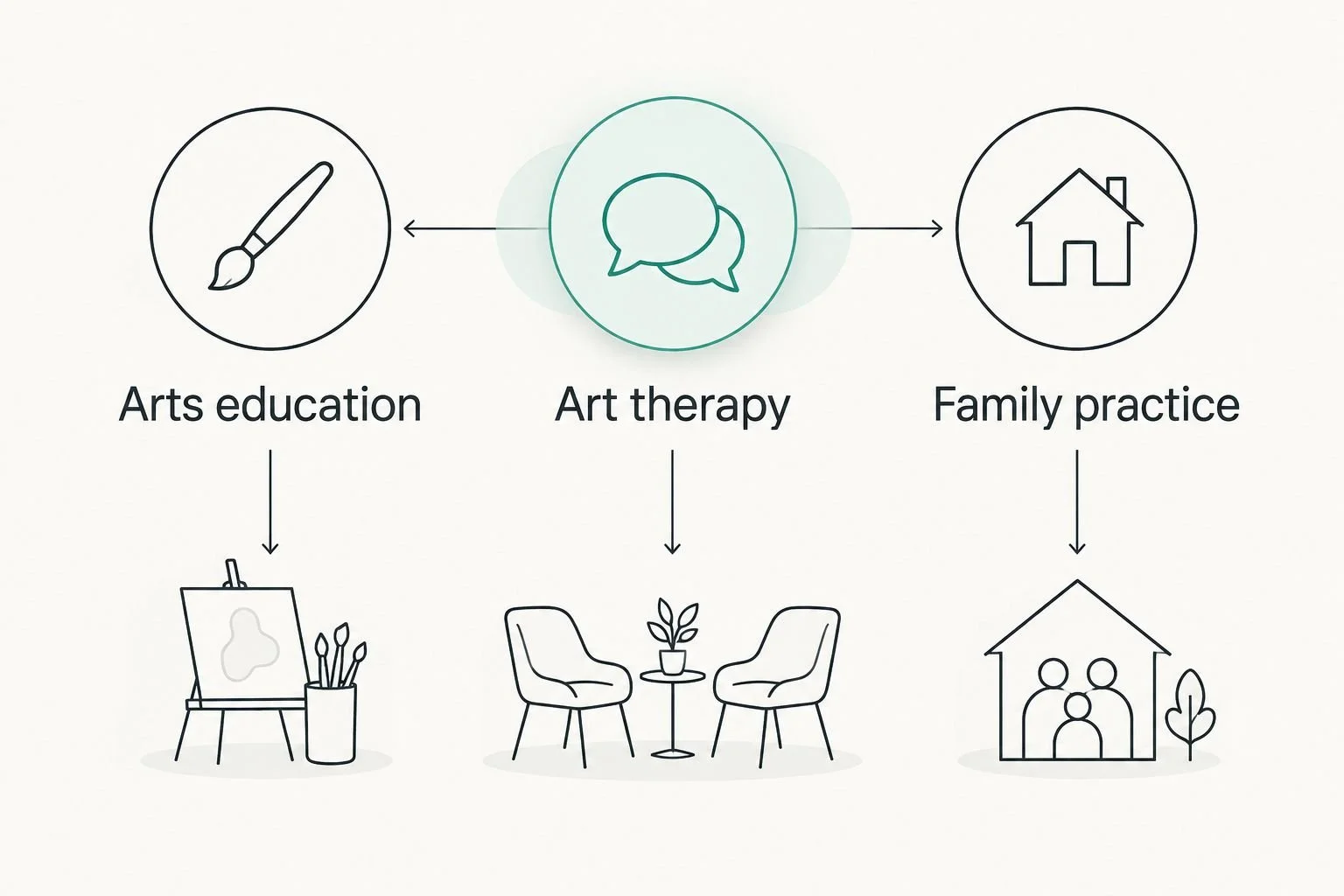
Choose according to the purpose of the activity, not the appeal of its label.
Agree on a simple way to review the fit
Before starting, decide what a useful check-in would cover. Ask your child about the experience, not whether the finished work looks good. Then compare that account with the instructor's observations about participation and requests for help.
If 2 completed projects come home looking very different, resist using their appearance as the scorecard. One might involve familiar materials while another introduces an unfamiliar technique. Ask what your child understood, chose and tried; keep the conversation specific.
For the rest of 2026, revisit the schedule as school demands change. A suitable class and a suitable time slot are separate requirements, and both deserve attention.
Ask your child what felt enjoyable, confusing or uncomfortable.
Ask the instructor which directions or demonstrations helped.
Notice whether your child can communicate a need during class.
Reassess the travel and weekly commitment alongside the learning experience.
Compare options by purpose and teaching fit
Use this comparison to identify the right questions, not to rank children by ability. The Garden Arts Center offers community arts education; confirm the format and support of any particular art class directly. The other options below are general categories, not claims about services offered by the center.
Community group art class
Best for: Children interested in making art alongside peers
Practical strength: Shared creative activity with instructor guidance
Key limitation: Group pacing and individual support require confirmation
Individual art instruction
Best for: Families prioritizing direct teaching attention
Practical strength: A format centered on one learner
Key limitation: Individual attention alone does not establish specialist expertise
Art-making at home
Best for: Families exploring interests before a larger commitment
Practical strength: Control over materials, timing and stopping points
Key limitation: Parents provide the structure and feedback
Art therapy
Best for: Children with therapeutic goals identified with a qualified professional
Practical strength: Art-making within a therapeutic relationship
Key limitation: Different purpose from recreational arts education
Choose by purpose first, then compare the actual teaching conditions. A smaller setting is not automatically a better match, and a group class is not automatically unsuitable. Ask what happens when your child needs a different explanation or more help starting.
Common mistakes families make
Choosing by diagnosis instead of the child's needs
A diagnosis does not tell an instructor which explanation works or which materials your child enjoys. Replace a general question about suitability with a description of the help your child uses successfully. Ask how that help would translate into the proposed class.
Treating the finished artwork as the only evidence
A neat picture cannot show how much direction a child needed or whether the process felt comfortable. Ask about choices, techniques and participation. Leave room for experimentation rather than expecting every project to become a display piece.
Assuming welcoming language confirms specific support
An inclusive mission matters, but it does not answer questions about staffing, communication or adaptations. Ask for a practical explanation of what the instructor can provide. Respect a clear boundary when a class cannot meet a particular need.
Filling the only open slot in the calendar
An empty calendar square is not the same as usable family time. Consider the transition from school and the trip home before adding an activity. A manageable routine deserves priority over squeezing in another commitment.
FAQ
What's the best art class for a child with learning differences?
The best fit matches the child's interests, communication needs and ability to participate in the actual class format. Ask how the instructor demonstrates tasks, handles transitions and responds when a student needs help.
Does The Garden Arts Center offer art classes for children?
The Garden Arts Center offers art and other fine arts classes for children and adults. Confirm the proposed class's teaching approach and specific learning supports directly before registering.
Should I tell the art instructor about my child's learning differences?
Share relevant information that helps the instructor understand how your child participates and learns. Explain effective strategies and ask what information is needed rather than sending personal records without a clear purpose.
Is art therapy the same as an inclusive art class?
No, art therapy and an inclusive art class have different purposes. Art therapy involves therapeutic goals and a qualified professional, while an art class focuses on arts education and creative participation.
Is a group art class better than individual instruction?
Neither format is automatically better for a child with learning differences. Compare group pacing, direct teaching attention and the instructor's ability to explain tasks in ways your child understands.
What should I ask before registering for art classes in 2026?
Ask about materials, demonstrations, transitions, help-seeking and the expected family commitment. Confirm session details directly and explain the support your child uses successfully.
How do I know whether my child is enjoying art class?
Ask your child what felt enjoyable, confusing or uncomfortable, then discuss participation with the instructor. Judge the experience by more than the appearance of the finished artwork.
One last thing
Ask this before choosing: What happens when my child does not know what to do next? The answer reveals the teaching process more clearly than a photograph of finished projects. Listen for a concrete explanation you can picture your child using.