

Best overall for young beginners: creative movement. Best for hands-on makers: art classes. Best for children who love songs: singing lessons. This 2026 guide compares classes for families exploring multiple art forms, with practical ways to choose an interest-led starting point that fits your week.
TL;DR
Creative movement leads classes for families exploring multiple art forms when young children want a movement-based introduction.
Choose ballet for dance technique, art for making, acting for storytelling, and singing for vocal exploration.
The Garden Arts Center offers dance, music, theater, art and wellness classes for children and adults.
Start with one manageable commitment; confirm class level, requirements and the full family journey before registering.
Why this matters
Exploring several art forms does not mean enrolling in several classes at once. Your child can begin with an activity they already enjoy, then consider another discipline when their interests and your schedule support it.
The Garden Arts Center is a fit for families considering dance, music, theater, art and wellness within one arts community. Explore The Garden Arts Center for its range of disciplines, then ask about the current class that matches your child's experience. This guide compares learning activities, not confirmed schedules or combined-family sessions.
What makes the best classes for family exploration?
Use these criteria for your 2026 shortlist. The right choice needs to work for the learner and the household.
Interest match: Start with what your child chooses voluntarily: movement, songs, stories or making things.
Appropriate foundations: Look for instruction that explains basic skills rather than rushing toward difficult material.
Clear placement: Ask how age, previous experience and readiness affect the recommended class.
Supportive instruction: Ask how teachers introduce unfamiliar tasks and respond when a student needs help.
Sustainable commitment: Include the journey, changing clothes and any expected practice—not just the lesson itself.
Room for individual preferences: Siblings and parents do not need the same discipline to share an interest in the arts.
Classes at a glance
The order below prioritizes entry points for children before options aimed at more specific interests or adult participation. It is not a ranking of artistic value.
Best for: Young movement explorers
Main learning focus: Rhythm, movement choices and space
Key limitation: Not a substitute for style-specific technique
Art
Best for: Hands-on makers
Main learning focus: Materials, observation and visual choices
Key limitation: Mediums and supply requirements need checking
Singing
Best for: Children drawn to songs
Main learning focus: Pitch, rhythm, breathing and words
Key limitation: Not instrumental training
Ballet
Best for: Beginners seeking dance foundations
Main learning focus: Placement, coordination and named steps
Key limitation: Requires interest in structured repetition
Acting
Best for: Children drawn to stories
Main learning focus: Character, voice and responding to others
Key limitation: Does not automatically include singing or dance
Tap
Best for: Rhythm-focused movers
Main learning focus: Audible footwork and timing
Key limitation: Footwear and surface requirements need checking
Guitar
Best for: Aspiring instrumentalists
Main learning focus: Fretting, plucking, strumming and rhythm
Key limitation: Instrument suitability and practice need planning
Yoga or Pilates
Best for: Parents seeking a movement practice
Main learning focus: Different approaches to controlled movement
Key limitation: Adult participation does not establish childcare or shared scheduling
1. Creative movement: best for young movement explorers
Creative movement introduces dance through movement choices rather than a long vocabulary of formal steps. Activities can explore moving high and low, changing speed, following rhythm and noticing personal space; ask which activities the actual class uses.
Creative movement pros:
Connects music with physical expression.
Gives children ways to explore different movement qualities.
Offers a starting point before choosing a specific dance style.
Creative movement limitations:
Does not replace focused ballet, tap or jazz instruction.
Class age range and expectations still need checking.
Best for: A child who responds to music by moving but has no strong preference for a dance style.
Ask how the teacher introduces group activities and supports children who first prefer to watch. Verdict: Choose creative movement for exploration before specialization.
2. Art classes: best for hands-on makers
Art classes suit children who would rather draw, paint or build than perform. Depending on the medium, instruction can address line, shape, color, composition and how materials behave; confirm the projects and materials before choosing.
Art class pros:
Centers visual rather than stage-based expression.
Gives students concrete decisions about materials and composition.
Connects naturally with an existing interest in drawing or making.
Art class limitations:
A general class title does not identify its medium.
Supply and cleanup expectations differ by activity.
Best for: A child who enjoys making something and explaining their choices.
Photography classes are another visual-arts option to investigate separately, but do not assume they are part of an art class or a confirmed offering here. Verdict: Choose art when making is the main attraction.
3. Singing lessons: best for children drawn to songs
Singing lessons focus on using the voice as an instrument. Beginner instruction can address matching pitch, following rhythm, clear words and breathing within a phrase; ask how the teacher adapts material to the learner.
Singing lesson pros:
Builds directly on an interest in songs.
Combines musical listening with vocal expression.
Offers a music-focused path without choosing an external instrument.
Singing lesson limitations:
Does not teach guitar or other instrumental technique.
Lesson format and home-practice expectations need checking.
Best for: A child who repeatedly returns to favorite songs and wants to learn how to sing them.
Do not confuse enjoying a musical with wanting formal vocal instruction. Ask your child which part they enjoy: the song, the character or the movement. Verdict: Choose singing when the voice is the interest.
4. Ballet: best for structured dance foundations
Ballet teaches a defined movement vocabulary through repeated practice. Beginner work includes positions, alignment, coordination and steps such as pliés and tendus, introduced at a level appropriate to the student.
Ballet pros:
Gives students names for specific movements.
Places attention on placement and controlled execution.
Provides a focused route into dance technique.
Ballet limitations:
Structured repetition does not suit every beginner's interests.
Starting ballet does not establish readiness for pointe.
Best for: A child interested in learning precise steps and revisiting them over time.
For your 2026 choice, separate beginner ballet from pointe training. Pointe requires individual readiness assessment; it is not a starter option or an automatic next step based only on age. Verdict: Choose ballet for technique, not a rushed progression.
5. Acting: best for children who love stories
Acting classes explore how a character speaks, moves, listens and responds. Exercises can involve improvisation, dialogue or scenes; confirm whether the class emphasizes those activities rather than assuming a particular production format.
Acting class pros:
Gives imaginative play a structured artistic setting.
Connects spoken language with character choices.
Includes responding to other performers, not only speaking.
Acting class limitations:
Does not automatically include vocal music or dance technique.
Performance and rehearsal expectations require clarification.
Best for: A child more interested in characters and imagined situations than in learning songs or dance steps.
Musical theater combines acting, singing and movement as an art form. Ask whether a specific class integrates those disciplines; separate offerings do not prove an integrated course exists. Verdict: Choose acting when storytelling leads.
6. Tap: best for children interested in audible rhythm
Tap connects dance with sounds made through footwork. Students work on timing, weight changes and distinct sounds, making it a useful option to consider when your child enjoys both movement and rhythm.
Tap pros:
Makes rhythmic choices audible.
Connects footwork with musical timing.
Offers a distinct alternative to a ballet-first route.
Tap limitations:
Required footwear needs confirmation before purchase.
Home practice needs an appropriate surface and household agreement about sound.
Best for: A child drawn to beats, rhythmic patterns and making sounds through movement.
Tap is not a replacement for a music lesson, even though rhythm connects the disciplines. Verdict: Choose tap when your child wants to dance the rhythm.
7. Guitar: best for children who want an instrument
Guitar lessons introduce playing skills such as holding the instrument, fretting notes, plucking or strumming, and keeping time. The starting approach depends on the learner, instrument and teacher.
Guitar lesson pros:
Gives instrumental curiosity a clear focus.
Connects physical technique with listening.
Offers a different experience from singing or dance.
Guitar lesson limitations:
Instrument size and suitability need checking.
Practice requires a workable place in the family routine.
Best for: A child specifically interested in playing guitar, rather than music in general.
Before committing, ask what instrument and materials are needed and how beginners should approach practice. Avoid buying equipment based only on a class title. Verdict: Choose guitar when the instrument itself holds your child's attention.
8. Yoga or Pilates: best for parents choosing their own practice
Yoga and Pilates give adults movement options alongside a family's artistic interests. Yoga can combine postures, breathing and attention; Pilates emphasizes controlled movement and trunk coordination. They are distinct practices, not interchangeable class names.
Yoga or Pilates pros:
Gives parents a choice based on their own interests.
Offers alternatives to taking a performing-arts class.
Adds adult participation without requiring everyone to study the same subject.
Yoga or Pilates limitations:
A class name does not establish suitable intensity or individual modifications.
Adult offerings do not imply childcare or overlapping children's sessions.
Best for: A parent seeking a personal movement practice rather than another obligation attached to their child's lesson.
Ask separately about hot yoga and HIIT; their names do not establish beginner suitability. Verdict: Choose yoga or Pilates for your own goals, not assumed scheduling convenience.
How to make the choice fit your week
For families across Berks, Montgomery and Chester counties, the journey belongs in the decision. Whether you travel from Douglassville, Pottstown, Phoenixville, King of Prussia, Reading or Lansdale, check the actual destination and route; a town mentioned in a guide does not establish a center location there.
Use this sequence for your 2026 plan:
Choose an interest. Ask what your child wants to do, not only what they want to watch.
Check placement. Confirm the recommended level and any prerequisites.
Map the journey. Compare 2 realistic routes: from school and from home.
Protect the week. Start with 1 class per child as a planning choice, not a required limit.
Confirm requirements. Ask 3 practical questions: what to bring, what to practice and what commitments extend beyond lessons.
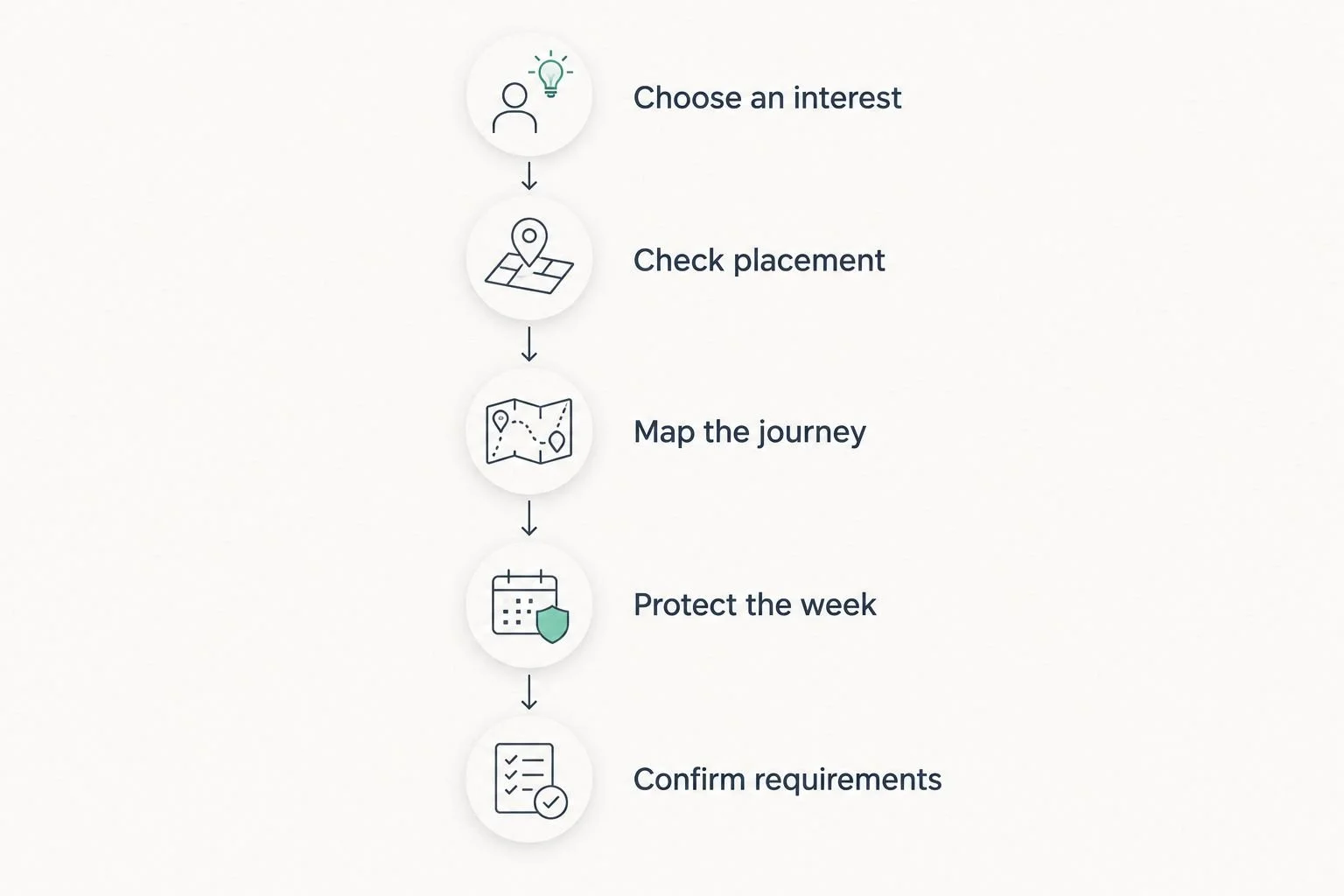
Choose the interest first, then check placement, travel and requirements.
Leave room for school activities, meals and unstructured time. Siblings can choose different disciplines without turning the week into a rotation of unrelated journeys.
The Garden Arts Center's dance range also includes jazz, hip hop, lyrical, contemporary and modern. Compare the actual beginner expectations rather than treating these names as equivalent; adult dance and returning-dancer placement deserve the same care.
Explore your family's next class
Review the arts disciplines, then ask about placement, requirements and the current schedule.
How these classes are ranked
This ranking uses interest match, foundational learning, placement questions and practical commitments. Creative movement leads for young movement explorers; the remaining choices serve distinct interests rather than claiming to be better for every family. This is not a tested comparison of individual teachers or current sessions.
Which class should your family choose?
Choose creative movement if your young child wants to move but has not chosen a dance style. Choose art, singing, acting or guitar when that interest is already clear. In 2026, a manageable first commitment is a better planning goal than sampling every discipline simultaneously.
FAQ
What's the best first class for a child interested in several art forms?
Creative movement is a strong first choice when a young child's interest centers on music and movement. Choose art, acting or singing instead when making, stories or songs are the clearer attraction.
Can siblings take different kinds of arts classes?
Siblings can pursue different disciplines, but you need to confirm suitable classes and workable schedules separately. Do not assume their lessons overlap or that supervision between sessions is provided.
Does The Garden Arts Center offer more than dance?
The Garden Arts Center offers music, theater, art and wellness alongside dance. Confirm the current class format, level and requirements before planning registration.
Is ballet better than creative movement for beginners?
Ballet is the more focused choice for a beginner seeking defined dance technique; creative movement suits movement exploration. Placement should reflect the child's readiness and interests, not a belief that one path suits everyone.
Can my child learn singing, acting and dance in one class?
A musical theater class can combine singing, acting and dance, but its actual curriculum needs checking. Separate music, theater and dance offerings do not establish that an integrated class is offered.
How do parents fit arts lessons around school activities?
Plan the full journey and transition time before choosing a class. Compare travel from school and home, then check how lesson requirements fit alongside existing commitments.
What should I ask before registering for an arts class?
Ask about placement, the current schedule, required materials and commitments beyond the lesson. For dance, also clarify footwear and any performance expectations before making purchases or calendar plans.
One last thing
Ask your child what they want to do in class. Loving a musical does not automatically mean wanting singing lessons: the attraction might be costumes, characters or dance. That distinction gives your family a more useful starting point than choosing the broadest-sounding class.