

Best overall: separate arts classes matched to each child’s interests. Best for younger explorers: creative movement. Best for children who love making things: art classes. The Garden Arts Center offers dance, theater, music and art, giving families several starting points when choosing classes for siblings with different interests.
TL;DR
Choose classes for siblings with different interests by individual readiness, not by a shared enrollment decision.
The Garden Arts Center offers dance, theater, music and art for families exploring different creative interests.
Creative movement suits movement exploration; ballet introduces structured technique; art suits children drawn to making things.
Confirm class placement and current schedules before building a shared family routine.
Why this matters
Siblings do not need the same activity to share an arts-centered family routine. One child might enjoy repeating a dance combination while another would rather draw, act out a character or learn a song. Choosing separately respects those differences without turning either child’s preference into the family default.
For your 2026 class search, separate two decisions: what each child wants to learn and what your household can sustain. A promising class still needs to fit around school, travel, meals and other commitments. Start with individual interests, then check the practical fit.
What makes the best classes for different siblings?
Use these criteria before comparing class names:
Individual interest: Ask what each child wants to do, rather than which activity a sibling already enjoys.
Readiness: Match instruction to the child’s experience, attention and ability to participate in the class format.
Teaching approach: Ask how the instructor explains skills, responds to questions and supports beginners.
Distinct learning goals: Look for an understandable purpose, such as keeping a beat, learning ballet positions or developing a character.
Sustainable routine: Check the full outing, including transportation, waiting and the transition home.
Room for individuality: Give each child space to describe their own experience without comparing progress.
The Garden Arts Center is a fit for families seeking different arts disciplines within one arts community. That range gives you options to investigate; it does not establish that particular classes run together or suit the same ages.
Classes for siblings at a glance
These rankings describe different interest matches, not a competition between disciplines. Read the table as a decision guide: choose the row that sounds most like each child.
Creative movement
Best for: Younger movement explorers
Learning focus: Rhythm, space and imaginative movement
Key limitation: Less focused on formal technique than ballet
Ballet
Best for: Children who enjoy structure
Learning focus: Placement, balance and coordinated movement
Key limitation: Requires patience with repetition
Hip hop
Best for: Children drawn to music-led combinations
Learning focus: Groove, rhythm and coordinated sequences
Key limitation: Group pacing needs to match the beginner
Tap
Best for: Children interested in making rhythms
Learning focus: Footwork, sound and timing
Key limitation: Shoe sounds make it a more audible activity
Art
Best for: Children who prefer making to performing
Learning focus: Visual choices and working with materials
Key limitation: Materials and projects differ by class
Acting
Best for: Children who enjoy characters and stories
Learning focus: Voice, movement and responding to others
Key limitation: Participation can involve being watched
Singing
Best for: Children who want to explore their voice
Learning focus: Pitch, rhythm and phrasing
Key limitation: Lesson format and song selection need checking
Guitar
Best for: Children drawn to an instrument
Learning focus: Fretting, picking or strumming and rhythm
Key limitation: Instrument fit and practice support matter
1. Creative movement: best for younger movement explorers
Creative movement introduces dance through exploration rather than a long list of formal steps. Typical activities connect movement with music, changes of direction, different levels and imaginative prompts. Ask what the particular class teaches and how instructions are adapted for beginners.
Best for: A child who enjoys moving to music and trying physical ideas.
Creative movement pros:
Connects listening with movement.
Gives imagination a place in dance learning.
Introduces awareness of space and other dancers.
Creative movement cons:
Offers less technical detail than a technique-focused class.
Still requires participation in a shared learning space.
For siblings, this is a useful option to investigate when a younger child wants to dance but an older sibling wants more defined technique. Neither needs to follow the other’s path.
Verdict: Choose creative movement for exploration; hold on a more formal class until the fit is clear.
2. Ballet: best for children who enjoy structure
Ballet teaches a defined movement vocabulary through exercises that develop placement, balance and coordination. Beginners learn foundations before more demanding work. Sound instruction matters more than how quickly a child moves to the next level.
Best for: A child who enjoys clear instructions and refining a movement through repetition.
Ballet pros:
Gives students specific positions and movements to learn.
Connects posture, coordination and musical timing.
Offers a technique-focused approach to dance.
Ballet cons:
Repetition does not appeal to every child.
Placement should reflect readiness, not a sibling’s level.
When comparing ballet classes in 2026, ask how beginners receive corrections and how the instructor decides placement. Do not treat pointe as an automatic next step or a reason to accelerate early training.
Verdict: Choose ballet for structured technique; skip sibling-based level comparisons.
3. Hip hop: best for children drawn to music-led combinations
Hip hop dance classes can introduce groove, rhythmic awareness and coordinated movement sequences. The name covers varied approaches, so ask what a beginner class actually teaches. Familiar music alone does not tell you whether the instruction fits your child.
Best for: A child who enjoys moving to a beat and learning combinations.
Hip hop pros:
Makes rhythmic choices central to movement.
Connects individual steps into sequences.
Gives music-focused children a dance option to explore.
Hip hop cons:
Fast combination teaching can challenge a new dancer.
Class content and music choices need checking.
If one sibling wants ballet and another wants hip hop, ask about each class independently. Different styles still require attentive teaching, suitable placement and clear explanations.
Verdict: Choose hip hop for an interest in groove and combinations; hold if the beginner pacing is unclear.
4. Tap: best for children interested in making rhythms
Tap turns footwork into audible rhythm. Students work on the relationship between movement, sound and timing, making it a distinct choice from dance classes where the feet do not create the musical sounds.
Best for: A child who likes rhythmic patterns and the idea of making music through movement.
Tap pros:
Makes timing audible.
Connects coordination with listening.
Gives repeated patterns a clear sound-based purpose.
Tap cons:
Tap-shoe sounds deserve consideration for sound-sensitive children.
Footwork requires patient repetition.
Ask about footwear before purchasing anything. A sibling’s existing dance shoes do not establish what another class requires, and general tap guidance does not replace the instructor’s directions.
Verdict: Choose tap for a strong interest in rhythm; hold until footwear and the learning environment are clear.
5. Art: best for children who prefer making to performing
Art classes give children a different way to participate in an arts community. Depending on the medium, students explore choices involving line, shape, color, texture and composition. Ask about actual materials and projects rather than assuming every class includes drawing, painting and sculpture.
Best for: A child who gravitates toward drawing, arranging materials or making visual work.
Art pros:
Offers a creative path outside dance and stage performance.
Gives students visual decisions to explore.
Makes materials and process part of learning.
Art cons:
The medium must interest the child.
A group art class still involves shared instructions and space.
Art is not a consolation option for the sibling who does not want dance. Treat it as a separate, equally valid interest when discussing classes at home.
Verdict: Choose art for a maker’s interests; skip assumptions that every project will suit every child.
6. Acting: best for children who enjoy characters and stories
Acting instruction explores how voice, movement and choices communicate a character or situation. Activities can include responding to a scene partner, speaking clearly and experimenting with different interpretations. Confirm the format rather than assuming every class prepares a production.
Best for: A child who enjoys pretend play, dialogue and storytelling with others.
Acting pros:
Gives storytelling a practical form.
Connects listening with responding.
Lets students explore voice and physical expression.
Acting cons:
Some activities involve performing in front of others.
Interest in stories does not automatically mean comfort with every group exercise.
Ask how an instructor introduces participation to hesitant beginners. Supportive teaching should be part of your selection criteria, not a promised change in your child’s personality.
Verdict: Choose acting for character-based storytelling; hold if participation expectations remain unclear.
7. Singing: best for children who want to explore their voice
Singing lessons focus on using the voice musically. Instruction can address pitch, rhythm, phrasing and breathing as part of singing. Ask how the teacher selects material and adapts instruction to the learner.
Best for: A child who repeatedly chooses singing as their preferred creative activity.
Singing pros:
Makes the voice the main instrument.
Connects words, melody and musical expression.
Gives song-focused interests a clear learning direction.
Singing cons:
Singing for enjoyment differs from following lesson exercises.
Teaching format and repertoire need an individual fit.
For your 2026 plans, confirm whether the relevant instruction is individual or group-based before organizing sibling transportation. Neither format should be assumed from the phrase music lessons.
Verdict: Choose singing for a sustained interest in vocal music; hold until the lesson approach is clear.
8. Guitar: best for children drawn to an instrument
Guitar lessons introduce the coordination involved in fretting notes and picking or strumming strings. Students also work with rhythm and musical patterns. Appropriate instrument fit is a practical question to discuss before making equipment decisions.
Best for: A child who wants to learn how an instrument produces notes and accompanies music.
Guitar pros:
Connects hand movements with musical sounds.
Offers note-based and chord-based learning.
Gives instrument-focused curiosity a specific direction.
Guitar cons:
Coordinating the hands takes repetition.
Instrument suitability and home practice need discussion.
Do not choose guitar simply because an instrument already belongs to an older sibling. Ask whether that instrument suits the learner and what support the instructor recommends between lessons.
Verdict: Choose guitar for genuine instrument interest; hold equipment purchases until you have guidance.
How these class matches are ranked
The order prioritizes recognizable interests, clear learning goals and practical questions parents can resolve. It does not rank artistic value or claim that one discipline produces better outcomes. The Garden Arts Center offers these arts disciplines, but the right choice still depends on each child’s placement and your family’s routine.
Build a sibling schedule your family can sustain
Use this sequence to turn a 2026 shortlist into a workable decision:
Child interest: Write down 3 activities each child chooses without prompting from a sibling.
Class fit: Ask about experience requirements, teaching format and placement for the preferred discipline.
Travel plan: Compare 2 realistic travel plans, including pickup, waiting and the journey home.
Weekly commitment: Consider starting with 1 weekly class per child rather than adding several new commitments together.
Registration questions: Confirm current scheduling and participation expectations before deciding.
For families across Berks, Montgomery and Chester counties, the full trip belongs in the decision. Whether you are traveling from Douglassville, Pottstown, Phoenixville, King of Prussia, Reading or Lansdale, assess your own route at the relevant time. These communities are planning references, not claims about center locations.
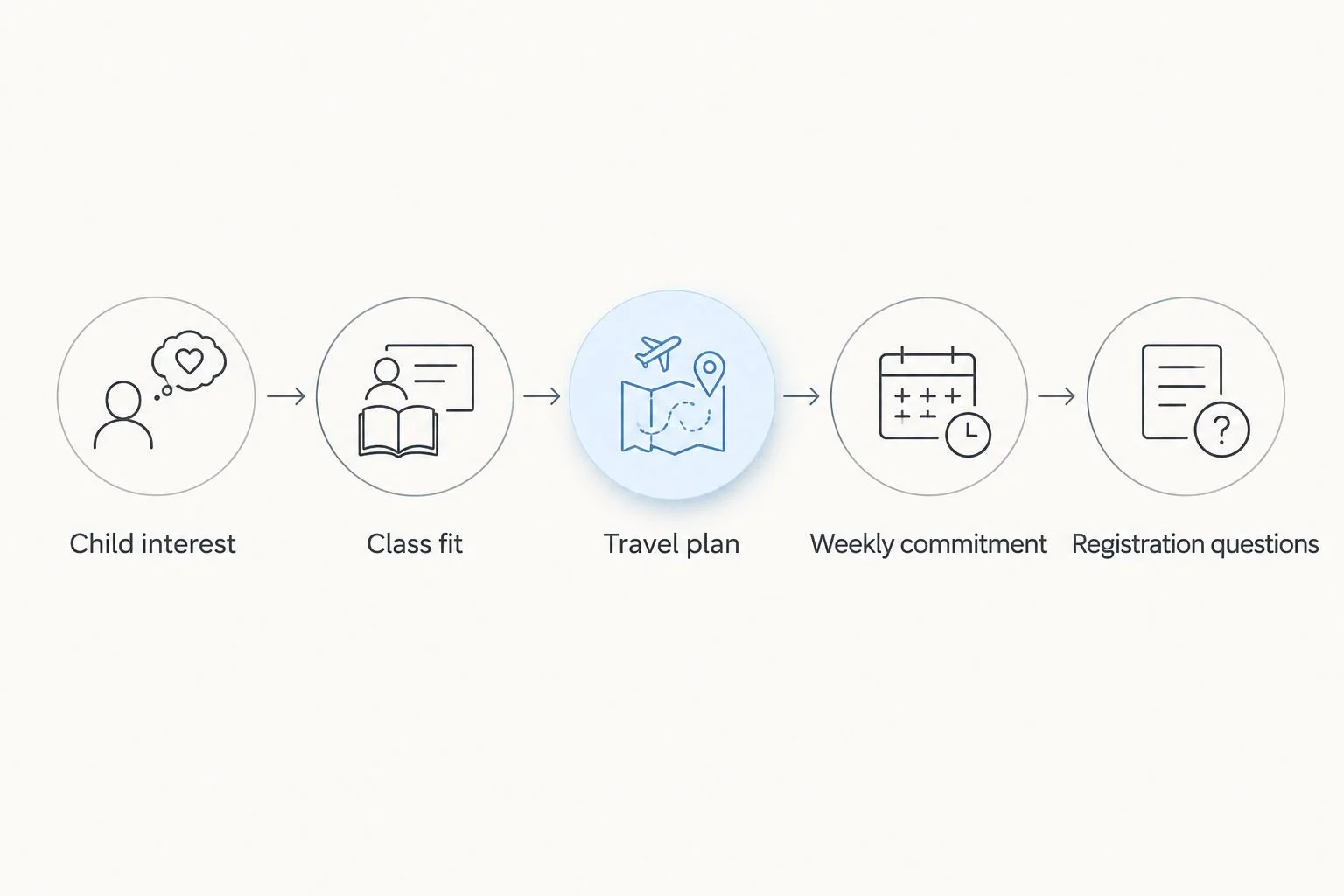
Check the learning fit before organizing the family travel routine.
Overlapping classes are useful only when the learning fit also works. Ask about supervision during gaps, adult responsibilities and any performance commitments; do not assume siblings can wait together or move between activities independently.
Explore your family’s arts options
Consider each child’s interests, then ask about placement and current scheduling.
Which classes should your family choose?
Choose separately, then coordinate. If your children have no clear preference, ask each what they want to spend time doing: moving, making, storytelling, singing or playing an instrument. Use that answer to narrow the options before comparing the calendar.
For 2026, the best default is a manageable commitment in a discipline each child actually wants to explore. A shared class is a good choice only when it fits both children—not simply because it removes a transportation decision.
FAQ
What are the best classes for siblings with different interests?
The best classes match each sibling’s own interests and readiness. Creative movement, ballet, hip hop, tap, art, acting, singing and guitar offer different starting points; confirm placement and scheduling before choosing.
Should siblings take the same dance class?
Siblings should share a dance class only when the style, level and participation expectations suit both children. A convenient shared time does not replace an appropriate learning fit.
What if one child wants dance and the other wants art?
Choose each discipline on its own merits, then compare the family schedule. The Garden Arts Center offers dance and art, but you should confirm current class details rather than assume the sessions overlap.
Is creative movement better than ballet for a beginner?
Creative movement suits exploration, while ballet introduces more defined technique. The better fit depends on the child’s readiness, interests and the specific class expectations.
Can a shy child choose acting or singing?
Yes, shyness alone does not determine which art form a child should choose. Ask how the instructor introduces participation and what beginners are expected to do; do not treat enrollment as a promise of greater confidence.
How do I plan travel when my children choose different classes?
Compare the complete outing for each realistic schedule, including school pickup, waiting and the return home. Confirm supervision expectations before planning around gaps between sibling activities.
What should I ask before registering siblings?
Ask about placement, teaching format, current schedules, required equipment and participation expectations. Also clarify any performance commitments and what adults must do during time between classes.
Should my children start several new classes together?
Start with a commitment your household can sustain. One weekly class per child is a practical starting point to consider, not a rule or a statement about any program’s attendance requirements.
One last thing
Ask each child about class separately before discussing it as a family. A sibling’s enthusiastic answer can crowd out a quieter preference, so give both children time to explain what they want to try. Shared belonging does not require identical activities.