

Before enrolling in kids dance classes, ask whether the recital is required, which rehearsals your child must attend, what expenses sit outside regular lessons, and how instructors prepare beginners for performing. For your 2026 plans, get those answers before committing so you can match the full rehearsal and performance schedule—not just the weekly class—to your child’s readiness and your family’s calendar.
TL;DR
Before choosing kids dance classes, confirm recital participation, rehearsal commitments, additional expenses, and backstage supervision.
Ask how ballet and creative movement students prepare for performing without rushing technique.
The Garden Arts Center suits families seeking kids dance classes within a broader arts community.
Choose a commitment your child and family can sustain, rather than judging a class by its recital alone.
What should families ask about dance recitals before enrolling?
Ask for the recital expectations attached to the specific class you are considering. A general description of the school’s performances does not answer whether your child’s group participates or what your family must commit to.
When considering The Garden Arts Center, use the questions below to discuss the class that interests your child. Confirm the expectations for that class rather than assuming every dance style or age group follows the same arrangements.
1. Is recital participation required for this class?
Start here. Ask whether enrollment includes a performance commitment, whether families make a separate participation decision, and when that decision becomes binding.
If your child wants dance lessons but feels uncertain about the stage, explain that before registering. Ask what happens during class preparation if a student does not perform; do not assume a nonperforming arrangement exists.
A useful answer separates weekly learning from performance participation. You should understand what your child is joining, not discover a new obligation after lessons begin.
2. What dates and attendance commitments should we expect?
Request the performance date, rehearsal dates, arrival expectations, and dismissal arrangements when those details are confirmed. Ask which activities happen outside the usual lesson and whether rehearsals take place somewhere different.
For a 2026 enrollment decision, distinguish confirmed dates from dates still being planned. If details remain undecided, ask when families will receive them and what you need to decide beforehand.
Check school events, work commitments, siblings’ activities, and transportation before agreeing. A manageable weekly class does not automatically make the performance period manageable.
3. What obligations sit outside regular lessons?
Ask for a written explanation of recital-related expenses and responsibilities. Clarify whether costumes, required clothing, footwear, tickets, photographs, or other purchases are part of the arrangement; these are questions to ask, not assumed requirements.
Also ask when families must make decisions and what happens if plans change. Read the applicable terms before agreeing to a performance commitment or authorizing an order.
An enrollment decision should account for the whole commitment, including preparation and family responsibilities. A vague assurance that details will come later leaves important questions unanswered.
4. How do beginners prepare for the stage?
Ask how the instructor introduces choreography, entrances, exits, and dancing with a group. Request concrete examples of how students learn to recognize musical cues and remember where to move.
For ballet, ask how performance preparation connects with alignment, controlled movement, and musical timing. For creative movement, ask how the performance approach fits children who are still learning to follow group directions and explore movement.
Preparation should be understandable to you and appropriate to your child. Ask how instructors respond when a student forgets a sequence, needs another explanation, or feels nervous about an audience.
5. Who supervises children before and after performing?
Ask who receives your child, who supervises waiting areas, and how authorized adults collect students afterward. Find out whether parents stay with children or follow a separate check-in process.
Explain any support your child needs with communication, toileting, changing clothes, or unfamiliar surroundings. Ask who should receive that information and how the agreed arrangements reach the adults responsible on the day.
A clear answer describes responsibilities and handoffs. It should not depend on your child finding the right adult independently in an unfamiliar space.
6. What happens if our plans or our child’s needs change?
Ask about illness, a missed rehearsal, a school conflict, and a child who becomes uncomfortable with performing. Request the actual policy rather than relying on what another family experienced.
Clarify whom you should contact and which decisions require an instructor’s input. A missed rehearsal can raise questions about spacing and group preparation, so ask how the school handles that situation rather than deciding on your own.
You do not need a promise that every conflict can be accommodated. You need to understand the process before accepting the commitment.
Why this matters before choosing a class
A recital gives students a defined occasion to share dance with an audience. It also introduces responsibilities beyond learning movements during a weekly lesson.
The benefit is a shared artistic goal; the trade-off is the preparation, coordination, and attention that goal requires. Neither tells you whether a particular class fits your child without more detail.
The Garden Arts Center suits families seeking kids dance classes within a broader arts community. Its stated offerings include dance, theater, music, art, and wellness, but those offerings do not establish the recital arrangements for an individual class.
Keep your questions focused on your child’s actual experience: what students learn, how they receive guidance, and whether your family can sustain the commitment. A performance is one part of the decision, not a substitute for understanding the instruction.
Turn recital answers into an enrollment decision
Use this table when speaking with a school. It separates useful information from answers that still need a follow-up question.
Participation
What a useful answer clarifies: Whether this class has a performance commitment
Your next check: Does that match your child’s interest?
Calendar
What a useful answer clarifies: Confirmed dates and additional rehearsal expectations
Your next check: Can your household manage the travel and timing?
Family obligations
What a useful answer clarifies: Required purchases, decisions, and responsibilities
Your next check: Have you reviewed the applicable terms?
Preparation
What a useful answer clarifies: How students learn choreography and stage routines
Your next check: Does the explanation fit your child’s experience?
Supervision
What a useful answer clarifies: Check-in, waiting areas, and authorized pickup
Your next check: Does the plan address your child’s needs?
Changes
What a useful answer clarifies: The process for absences, illness, or withdrawal
Your next check: Do you know whom to contact?
For your 2026 comparison, record answers in the same format for each class under consideration. Label an unanswered question as unresolved rather than filling the gap with an assumption.
Match the calendar to your actual week
Start with the time your family leaves home, not the time instruction begins. Include school pickup, getting changed, travel, parking, and the return trip before deciding whether a commitment fits.
Families across Berks, Montgomery, and Chester counties should assess their own route. Whether you travel from Douglassville, Pottstown, Phoenixville, King of Prussia, Reading, or Lansdale, a town name alone does not establish the journey or confirm a class location.
The guide to fitting kids dance classes into a busy family schedule offers a related planning framework. Apply the same thinking to extra rehearsals and performance-day arrangements.
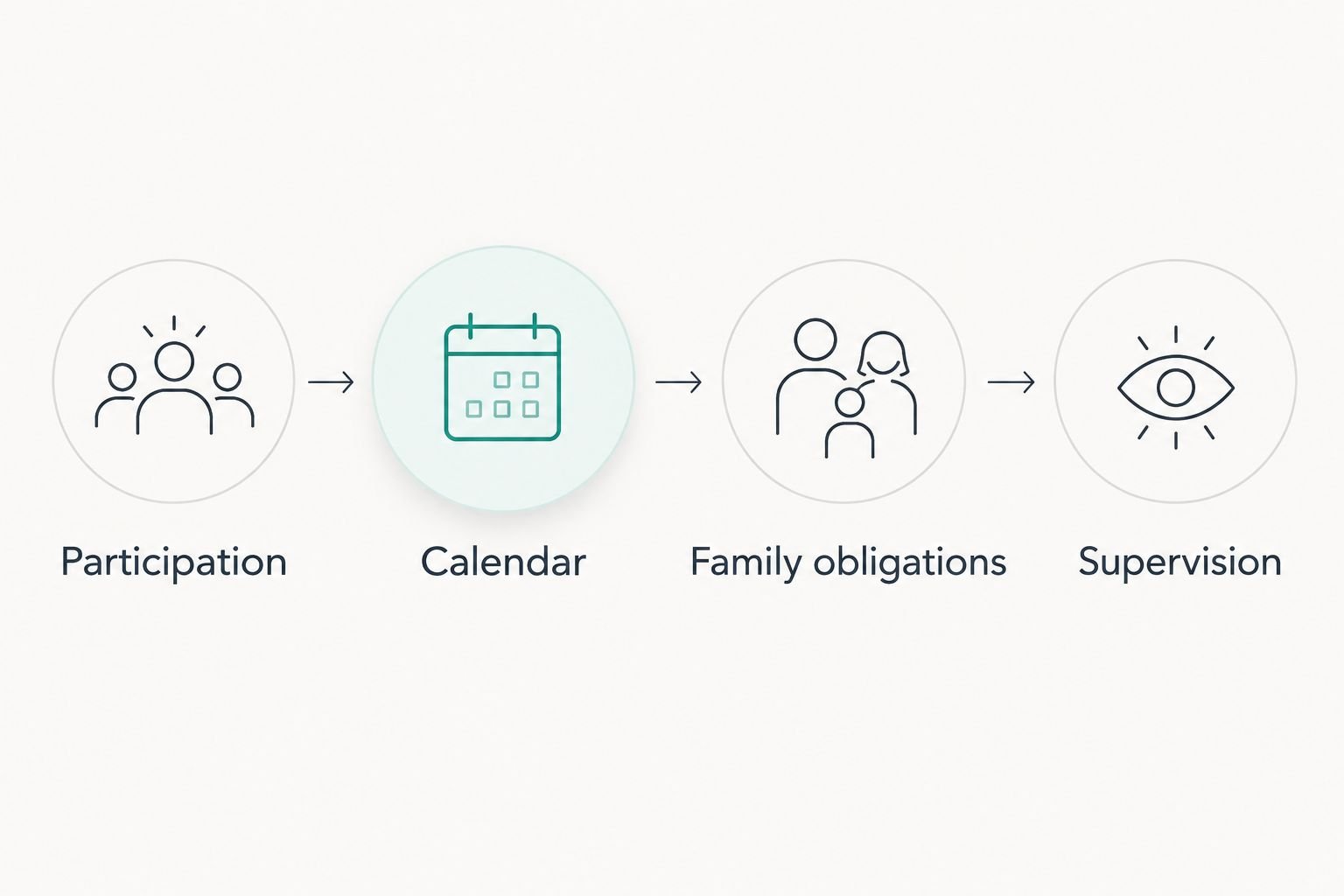
Check the full performance commitment alongside the weekly lesson.
Why recital commitments vary
Ask about the class itself instead of treating one family’s experience as a rule. These factors help you identify what needs clarification:
Participation expectations: Find out whether the class includes a performance commitment and when families must decide.
Student readiness: Ask how the instructor handles unfamiliar instructions, group movement, and stage nerves.
Rehearsal arrangements: Confirm which sessions fall outside regular lessons and what attendance is expected.
Performance setting: Ask about the venue, arrival process, waiting areas, and pickup arrangements.
Family responsibilities: Clarify required clothing, preparation at home, purchases, and any requested adult involvement.
Individual support: Discuss communication, sensory, mobility, or other needs directly rather than assuming an arrangement.
These questions identify differences without labeling one approach better for every child. The right choice is the one whose instruction and commitments fit your student.
Can my child take dance classes without doing a recital?
Whether your child can take dance classes without performing depends on the class’s participation policy. Ask directly before registering; do not interpret an optional-sounding description as permission to skip the recital.
If the answer is yes, ask what your child does while classmates rehearse and whether the learning experience changes. If the answer is no, decide whether a performance commitment fits your child now.
For 2026 planning, separate your child’s interest in dancing from readiness for an audience. A child can enjoy movement while still needing time and support to understand performing.
Is a recital a good fit for a shy beginner?
A recital decision for a shy beginner should start with the child’s response to the actual expectations, not the label shy. Ask how instructors introduce the stage and support students who hesitate.
Best for a hesitant beginner: an explanation of preparation that gives your child a clear picture of what will happen. The benefit is a more understandable decision; the limitation is that a conversation cannot guarantee how a child will feel on performance day.
Avoid treating participation as a test of confidence. Explain the routine in plain language, invite questions, and discuss concerns with the instructor before making promises to your child.
How can I tell whether recital preparation supports learning?
Ask the instructor to connect performance work to specific skills students are learning. Useful examples include keeping musical time, coordinating movements, recognizing cues, and maintaining awareness of other dancers.
Then ask how the class continues to address sound technique while learning a routine. A polished-looking sequence alone does not explain how individual students receive instruction or corrections.
For your 2026 class choice, look for an explanation you can understand without dance terminology. You should be able to describe what your child is practicing and why, rather than only naming the song or costume.
Have a practical conversation with your child
Before registering, explain that dance lessons involve listening, practicing, and moving with others. If the class includes a recital, describe performing separately so your child understands that it adds an audience and a different setting.
Ask what sounds enjoyable and what feels unfamiliar. A child’s questions about waiting, clothing, loud music, or finding a parent give you specific topics to discuss with the school.
Avoid promising that your child will love every part of the experience. Instead, explain how you will ask questions together and learn what support is available.
When contacting The Garden Arts Center, describe your child’s interests, experience, and scheduling needs before asking about recital arrangements. That makes the conversation more useful than asking only whether a class is suitable for beginners.
Explore classes for your family
Review the arts offerings, then ask about class fit and recital expectations before registering.
FAQ
What should I ask about recitals before enrolling in kids dance classes?
Ask whether participation is required, what rehearsals involve, what obligations sit outside regular lessons, and who supervises children. Confirm the answers for the specific class before registering.
Does every kids dance class include a recital?
Do not assume that every kids dance class includes a recital. Ask whether the class you are considering has a performance commitment and whether participation is required.
What if my child wants dance lessons but does not want to perform?
Ask whether the class permits students to attend without performing. If it does, clarify what nonperforming students do during recital preparation.
What extra recital expenses should parents ask about?
Ask whether costumes, required clothing, footwear, tickets, photographs, or other purchases are part of participation. Request the applicable terms before agreeing to purchases or commitments.
Should I enroll if the recital dates are not confirmed?
First decide whether your family can accept the unresolved scheduling commitment. Ask when dates will be confirmed and what decisions you must make before then.
How do I ask about backstage support for my child?
Describe your child’s needs and ask who handles check-in, supervision, personal assistance, and pickup. Confirm how that information reaches the adults responsible during the event.
What should I ask The Garden Arts Center about recital participation?
Ask The Garden Arts Center about the participation expectations, rehearsal calendar, preparation, and supervision for your chosen class. Its broader arts offerings do not establish those class-specific arrangements.
One last thing
Ask what your child will practice before the recital routine is introduced. The answer brings the conversation back to instruction: listening to music, learning movement patterns, following cues, and developing sound technique.
A performance gives that learning an audience, but the weekly experience deserves equal attention. Choose a class whose everyday instruction and full calendar make sense for your child—not only a recital your family would enjoy watching.