

Best for children who already love singing: vocal lessons. Best for children who want to play an instrument: guitar lessons. The best music lessons for kids start with the activity your child wants to repeat; this 2026 guide compares both paths and explains how to fit lessons into family life.
TL;DR
The best music lessons for kids match a child's interest: vocal lessons for singing, guitar lessons for instrumental exploration.
The Garden Arts Center offers singing and guitar lessons within its arts education community.
Choose instruction that explains technique clearly and gives your child an understandable practice task.
Plan travel, school activities, and home practice before adding a recurring lesson.
Why this matters
Singing and guitar both involve listening, rhythm, and musical expression, but the beginner experience differs. A singer works with the voice; a guitarist also learns to handle an instrument and coordinate movements across strings.
The Garden Arts Center is a fit for families seeking music lessons within a broader arts community. Its offerings include singing, instrument-based music lessons, dance, theater, art, and wellness. Start with your child's interests when exploring The Garden Arts Center, rather than choosing music simply because another activity has filled the calendar.
For families across Berks, Montgomery, and Chester counties, the decision also includes the journey. A class that fits your child still needs to fit the school pickup, dinner, and homework routine.
What makes the best music lessons for kids?
Use these criteria to evaluate either option before choosing a teacher or planning registration:
Child-led interest: Your child wants to sing or play, not simply attend because a friend does.
Clear instruction: The teacher explains a task, demonstrates it, and helps your child understand the next attempt.
Appropriate technique: Singing stays comfortable; guitar instruction addresses instrument fit, hand position, and unnecessary tension.
Manageable practice: Your child leaves knowing what to work on at home, with expectations explained to the family.
Sustainable scheduling: Travel, lessons, and practice fit alongside school, rest, and existing activities.
These criteria matter more than an impressive song list. In 2026, choose the learning process you can support, not a performance outcome you hope lessons will guarantee.
Vocal and guitar lessons at a glance
Best for: Children who enjoy singing songs and expressing lyrics
Standout learning focus: Pitch, phrasing, diction, and comfortable vocal use
Key limitation: Song choice must suit the child's developing voice
Guitar lessons
Best for: Children drawn to strings, strumming, and instrumental patterns
Standout learning focus: Fretting, picking or strumming, and coordinating both hands
Key limitation: Instrument fit and early hand coordination need attention
Neither path requires a child to arrive as a performer. Ask how the instructor introduces unfamiliar skills and responds when a student needs a different explanation.
1. Vocal lessons: best music lessons for kids who love singing
Vocal lessons teach children to use their voices with musical intention. Beginner work can include matching a pitch, following a melody, shaping a phrase, and making lyrics clear; the teacher should explain which tasks suit your child.
Singing also connects words with musical choices. A child can explore how a change in articulation or phrasing changes the meaning of a song without needing to imitate an adult recording.
What to look for in vocal instruction
Ask how the teacher selects songs and adjusts them for the individual singer. A familiar song is not automatically an appropriate teaching piece, especially when its range or delivery encourages a child to strain.
Listen for explanations your child can understand. Instructions such as noticing where a phrase ends or listening before repeating a note give the student a specific task instead of a vague request to sound better.
Vocal lessons pros:
Build directly on a child's existing enjoyment of singing.
Connect melody, lyrics, and expression in the same activity.
Allow listening and phrase work without handling an external instrument.
Offer a musical starting point for children interested in theater.
Vocal lessons cons:
The voice is part of the body, so discomfort cannot be treated like an equipment problem.
Favorite recordings can encourage imitation rather than a comfortable individual sound.
Singing alone in front of a teacher can feel exposing to a hesitant beginner.
Best for: Children who choose to sing during play, remember melodies, or enjoy telling stories through songs.
Verdict: Choose vocal lessons when singing is your child's own interest, and prioritize comfortable technique over impressive volume or high notes.
2. Guitar lessons: best music lessons for kids who want an instrument
Guitar lessons combine listening with a physical task: making a string sound while controlling how it is played. A standard guitar has 6 strings, but a beginner does not need to work across all of them immediately.
Early instruction can introduce a steady pulse, individual notes, simple patterns, and basic chords. Ask the instructor what comes first and how that sequence changes for a child who needs more time coordinating both hands.
What to look for in guitar instruction
Instrument fit matters before a child starts practicing. Ask the teacher to assess whether your child can hold the guitar comfortably and reach the required positions without excessive stretching.
The instructor should also explain tuning and home setup to the family. A child who cannot prepare the instrument independently needs a clear plan for getting help, not an expectation that practice will somehow happen.
Guitar lessons pros:
Suit children who enjoy making music through hands-on exploration.
Connect a visible movement with an audible result.
Introduce rhythm through repeated picking or strumming patterns.
Provide a path toward playing melodies or accompanying songs.
Guitar lessons cons:
An unsuitable instrument can make reaching and holding positions difficult.
Coordinating fretting and picking adds a physical learning task alongside listening.
Home practice depends on access to an appropriate, playable instrument.
Best for: Children who return to string instruments, enjoy rhythmic patterns, or specifically ask to learn guitar.
Verdict: Choose guitar lessons when your child wants the instrument itself, and resolve fit and practice setup before committing to equipment.
How these options are ranked
This ranking separates use cases rather than declaring a universal winner. Vocal lessons come first for the child whose musical interest is singing; guitar lessons take the instrumental slot for the child who wants to play strings.
The comparison uses the criteria above: interest, instruction, technique, practice, and scheduling. It does not claim measured learning outcomes or rank individual teachers.
Which music lessons should you choose in 2026?
If your child already sings by choice, start the conversation with vocal lessons. If your child repeatedly asks to play guitar, start there instead. Neither option becomes better because an adult considers it more practical or more impressive.
For an undecided child, ask them to name 3 songs they enjoy. Then ask what they notice: the voice, the words, the strumming, or the instrumental melody? Treat the answer as a conversation starter, not an aptitude test.
A shy child does not automatically need an instrument instead of singing. Ask how the teacher introduces participation, whether the lesson format suits your child, and how corrections are communicated.
If your child likes singing while playing, ask about the teaching sequence. Learning the parts separately is different from coordinating them together; the teacher should explain how they would approach both interests without overloading the beginner.
Before choosing a guitar, clarify the learning setup
Ask the instructor about instrument type, fit, and what your child needs to begin. Do not make a guitar decision based only on appearance or an age label; the child needs to hold and use the instrument comfortably.
When buying used musical instruments, fit and playability still matter: a guitar needs an assessment of its condition, tuning hardware, and ease of fretting, not just an appealing description. Ask a qualified teacher or instrument technician what to inspect before making the decision.
For singing, clarify the home setup too. Ask whether the teacher assigns listening, lyric work, or sung exercises, and what materials the family should use. A clear assignment prevents parents from substituting repeated full-song performances for the specific skill being taught.
Build a family schedule that works in 2026
Start by considering 1 recurring weekly commitment rather than assuming your child needs several new arts activities at once. This is a planning recommendation, not a statement about the center's lesson frequency or attendance requirements.
Families traveling from Douglassville, Pottstown, Phoenixville, King of Prussia, Reading, or Lansdale should assess their actual route and responsibilities. These communities are part of the family's travel decision; naming them does not imply a center location in each town.
Use this sequence before registration:
School commitments: Note dismissal, homework, sports, and other fixed activities.
Travel plan: Consider the route from the place your child will actually leave, not only from home.
Practice space: Identify where singing or guitar practice can happen without interrupting essential household routines.
Family review: Discuss which commitment remains realistic during a demanding school week.
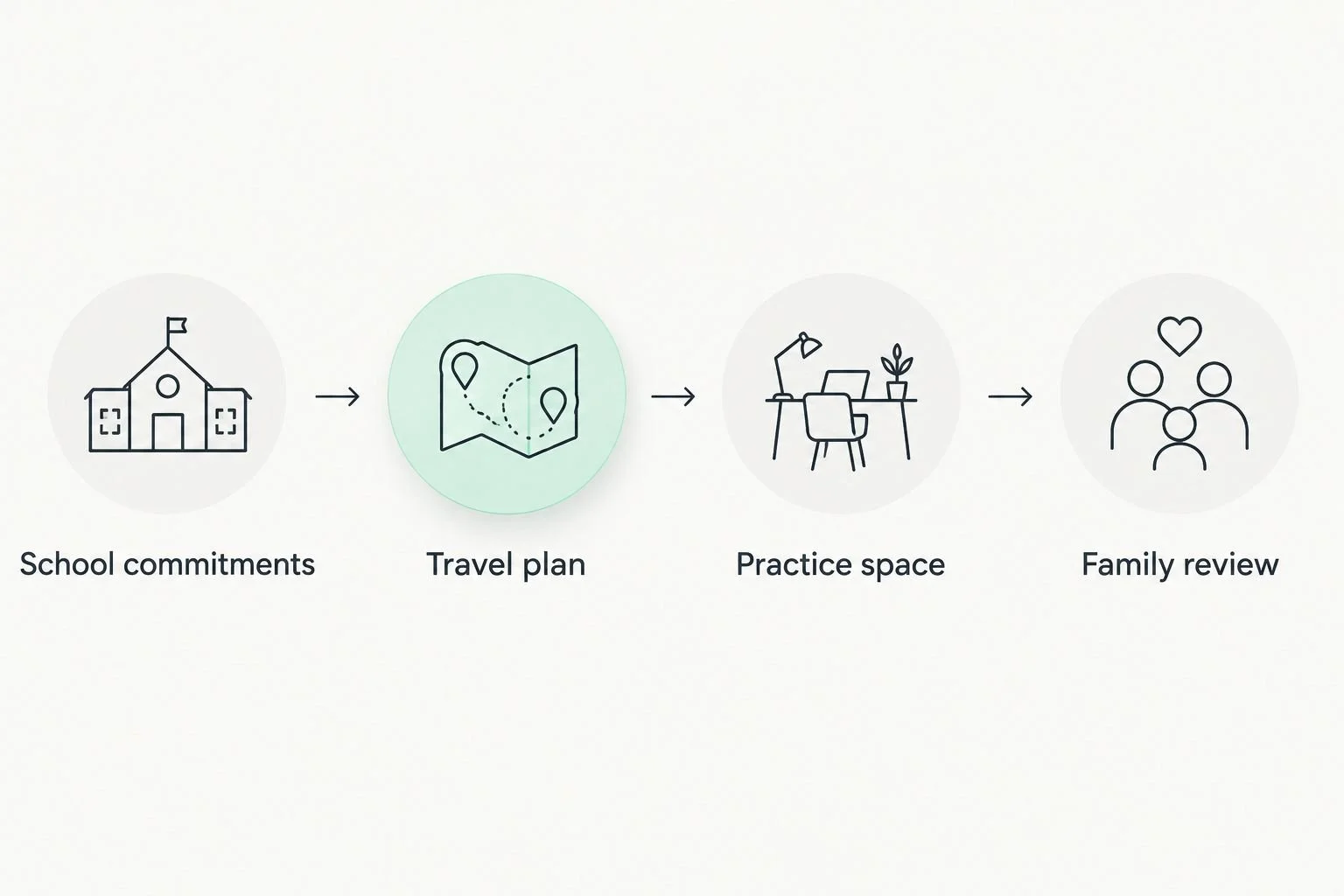
Choose a lesson routine your household can support alongside school and travel.
Leave room for transitions. A child arriving hungry or rushed has a different starting point from a child who has had time to settle, so assess the whole afternoon rather than only the lesson appointment.
Ask The Garden Arts Center about current lesson arrangements and registration steps. Confirm the relevant details directly before reorganizing the family calendar.
Questions to ask before registration
A productive conversation gives you a picture of the learning process, not just a list of songs. For your 2026 planning, ask:
How do you choose a starting point for a child with no previous lessons?
What does the child work on during an early lesson?
How do you explain technique to children at different developmental stages?
What should the family support between lessons?
How do you respond when a child is hesitant or frustrated?
What scheduling and attendance expectations should we understand?
Listen for specific answers. A teacher can describe how they break down a rhythm or select an appropriate song without promising that every child will progress at the same pace.
Explore your child's music interests
Consider singing or guitar, then ask about the next steps for your family.
FAQ
What's the best music lesson for a child who has never studied music?
The best starting point is the activity the child wants to explore: singing for a child drawn to voices and songs, or guitar for a child drawn to playing strings. Ask the teacher how instruction begins without assuming prior knowledge.
Are vocal lessons better than guitar lessons for kids?
Vocal lessons are better matched to a child who wants to sing; guitar lessons are better matched to a child who wants an instrument. Compare the child's interest, comfort with the activity, and home practice needs rather than treating either option as universally better.
What age should my child start singing lessons?
Choose a starting point through a conversation about your child's readiness and the teacher's approach, rather than using age alone. Ask how instruction supports a developing voice and what attention, participation, and practice expectations apply.
Does my child need a guitar before starting lessons?
Ask the instructor what equipment is required before obtaining a guitar. Confirm instrument fit, type, and preparation rather than assuming any guitar will suit a beginner.
Can a shy child take singing lessons?
Shyness alone does not determine whether singing lessons are a suitable choice. Ask how the teacher introduces singing, handles hesitation, and gives feedback so you can assess the approach with your child.
How should we fit music lessons around school and dance?
Plan school responsibilities, travel, and home practice before adding music lessons. For families combining music with kids dance, ballet, or creative movement, choose a weekly routine that leaves room for rest rather than filling every opening.
Does The Garden Arts Center offer both singing and guitar lessons?
The Garden Arts Center offers singing and guitar lessons within its arts education offerings. Ask directly about current lesson arrangements and registration steps for your child.
One last thing
Ask your child what they want to try again, not only whether they were good at it. After an initial learning experience, interest in repeating a small task gives you something concrete to discuss with the teacher. Keep the conversation about curiosity, comfort, and the next step—not a prediction about future talent.