

Best for a structured strengthening routine: Pilates. Best for combining movement, breathing and stillness: yoga. When comparing yoga vs pilates classes in 2026, choose the approach that matches your interests and fits your family’s week—not the one with the most demanding description.
TL;DR
Yoga vs pilates classes: choose Pilates for controlled strengthening and yoga for movement paired with breathing and stillness.
The Garden Arts Center offers yoga and Pilates within an arts community serving children and adults.
Beginner suitability depends on the instructor, class format and available modifications—not the class name alone.
Compare travel, school activities and weekly commitments before choosing a wellness class.
Why this matters for parents
A wellness class needs room in your calendar as well as a reason to attend. An appealing class becomes difficult to sustain when getting there means rushing through school pickup, dinner or another child’s activity.
The Garden Arts Center is a fit for parents seeking yoga or Pilates within a community that also offers children’s arts classes. Explore The Garden Arts Center for current class information, then ask about the specific level and format before making a registration decision.
Families across Berks, Montgomery and Chester counties—including Douglassville, Pottstown, Phoenixville, King of Prussia, Reading and Lansdale—should assess the actual journey from home or work. A familiar town name does not tell you whether a particular class fits your route.
What makes the best wellness class for a parent?
Use these criteria to compare yoga and Pilates before choosing a style. For your 2026 routine, the strongest choice is the class you understand, feel comfortable asking questions in and can attend without repeatedly rearranging family commitments.
Your goal: Decide whether you want controlled strengthening, movement with breathing, or an opportunity to explore both.
Beginner instruction: Look for clear explanations, demonstrations and time to understand unfamiliar movements.
Adaptable exercises: Ask how the instructor adjusts positions for different experience levels and physical needs.
Class format: Confirm the pace, equipment and environment rather than assuming every yoga or Pilates class works alike.
Weekly fit: Include travel, changing, school activities and the trip home—not just the class itself.
Comfort asking questions: Choose instruction that makes it easy to explain a concern or request another version of an exercise.
Neither discipline wins every category. A fast-moving yoga class and a carefully paced introductory yoga class can feel very different; the same distinction applies to Pilates.
Yoga vs Pilates classes at a glance
These are general differences between the disciplines, not a description of a particular instructor’s lesson plan. Confirm the details of any class you are considering.
Best for: Parents who prefer structured, controlled strengthening
Standout approach: Coordinated movement with attention to breathing, alignment and trunk control
Key limitation: Small movements can still be demanding; equipment and teaching formats differ
Ask before registering: Is this mat-based or equipment-based, and is it suitable for beginners?
Best for: Parents who want movement connected with breathing and stillness
Standout approach: Postures, transitions and breath awareness, with emphasis varying by style
Key limitation: The word yoga does not establish the pace, heat or physical demands
Ask before registering: What style is taught, is the room heated, and what modifications are offered?
The practical distinction is emphasis. Pilates centers on controlled exercise; yoga combines physical postures with breathing and, depending on the class, practices such as relaxation or meditation.
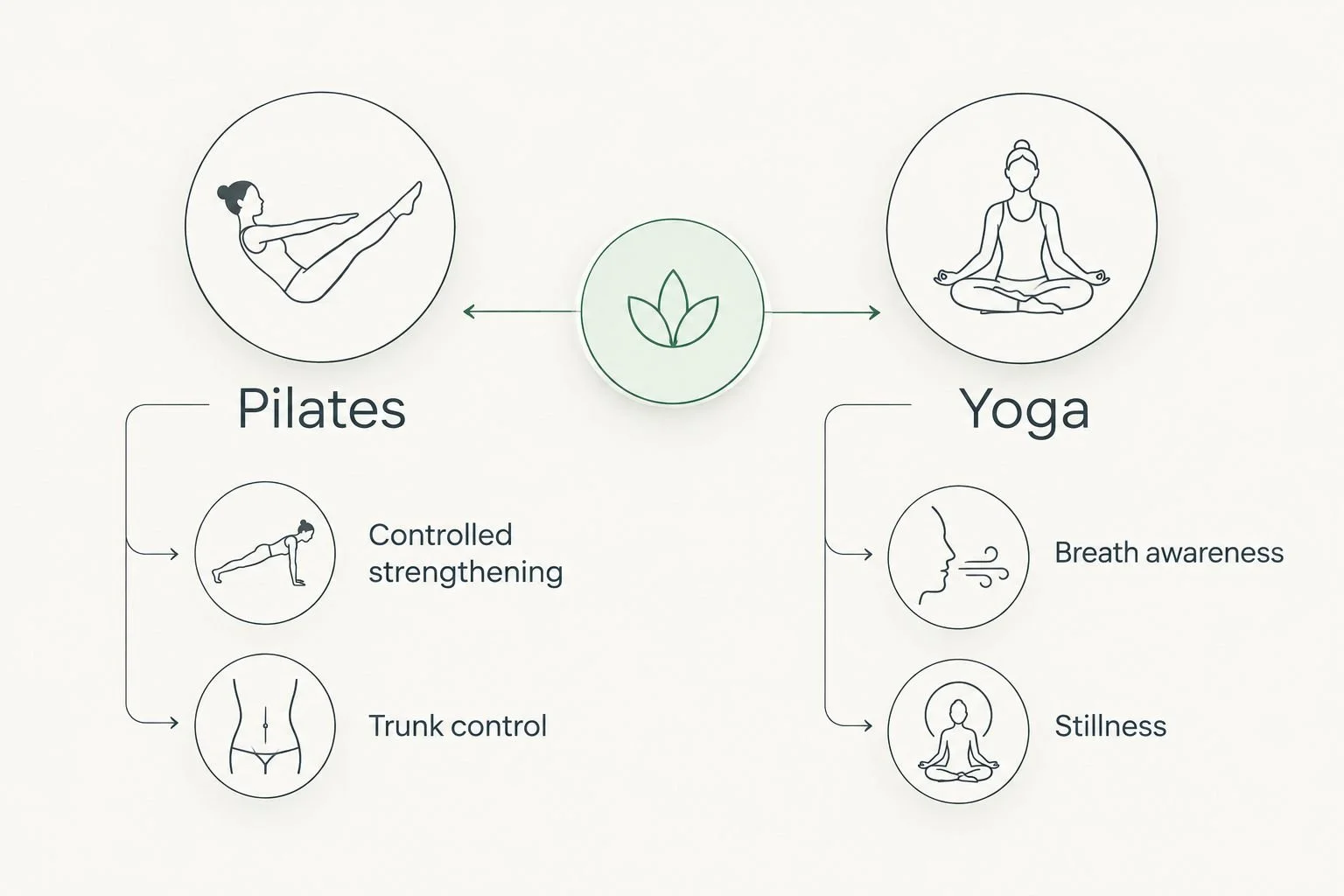
Choose the emphasis that interests you, then check the specific class format.
1. Pilates: best wellness class for controlled strengthening
Pilates uses coordinated exercises that ask you to control how you move rather than simply complete repetitions. Breathing, alignment and the relationship between your trunk and limbs are central parts of the method.
Depending on the format, you might practice movements lying down, sitting, kneeling or standing. Mat Pilates and apparatus-based Pilates are different formats; do not assume a class includes a reformer or other specialized equipment.
Best for: Parents who enjoy specific movement instructions and want an exercise-focused class built around control and strengthening.
What you learn in Pilates
An instructor might ask you to move a leg while keeping your pelvis steady, coordinate an exhale with an exercise or reduce a movement’s range to maintain control. These are examples of Pilates teaching, not a promised class sequence.
If you like understanding what your body is doing during an exercise, that attention to detail can make Pilates appealing. You do not need a dance background to ask about a beginner class.
Pilates pros:
Controlled exercises give you a specific movement task to concentrate on.
The method emphasizes trunk control alongside movement of the arms and legs.
Exercises can be adjusted through position, range of motion and support.
Mat-based practice does not depend on learning large exercise machines.
Pilates cons:
Small movements still require effort; a quiet-looking class is not necessarily easy.
Floor-based exercises need modification if getting down to or up from the floor is difficult.
Class names do not always explain the equipment, level or pace.
Questions to ask about Pilates instruction
Ask whether new students receive an introduction to the exercise positions and breathing cues. Explain any difficulty with kneeling, supporting weight through your wrists or moving between the floor and standing.
For a 2026 family schedule, also ask what the complete visit involves. The relevant commitment includes arrival and departure, not simply the exercise portion.
Verdict: Choose Pilates if controlled strengthening interests you and the instructor confirms that the class matches your starting point.
2. Yoga: best wellness class for movement and breathing
Yoga classes commonly combine physical postures with breathing practices. Some emphasize sustained positions, others link movements together, and some include substantial time for relaxation or meditation.
That variety makes the class description important. Yoga is not automatically gentle, slow or unheated, and flexibility is not a prerequisite for asking about beginner instruction.
Best for: Parents who want to explore movement alongside breath awareness and periods of stillness.
What you learn in yoga
You might practice a standing posture, shift between positions with attention to breathing or use support to make a posture more accessible. An instructor can explain alternatives rather than expecting every student to create the same shape.
The useful question is not whether you can already touch your toes. Ask whether the class teaches new students how to approach positions without forcing their range of motion.
Yoga pros:
The practice connects movement with attention to breathing.
Different styles offer different balances of movement and stillness.
Positions can be adapted using changes in stance, support or range.
You can explore the practice without a dance background.
Yoga cons:
The category name alone does not reveal physical intensity or teaching pace.
Some positions place weight through the hands or require kneeling unless modified.
A heated class adds an environmental consideration beyond the movements themselves.
Questions to ask about yoga instruction
Ask what kind of yoga is taught and how the instructor supports first-time students. Confirm whether the room is heated, what equipment you need and whether alternatives are offered during weight-bearing or floor-based positions.
The Garden Arts Center’s offerings include hot yoga, so confirm the format rather than assuming a particular class is unheated. For your 2026 comparison, treat room temperature as a separate decision—not as evidence that a class is better.
Verdict: Choose yoga if breathing and stillness matter alongside movement, and the specific class suits your comfort and experience.
How the options are ranked
Pilates appears first for parents seeking a structured strengthening routine; yoga takes the separate recommendation for movement connected with breathing and stillness. This is a use-case comparison, not a claim that either discipline produces better results for everyone.
The deciding criteria are beginner instruction, adaptable exercises, class format, personal interest and weekly fit. A suitable yoga class is a better choice than an unsuitable Pilates class, regardless of list order.
Fit your class around family life
Before registering, walk through the week in which you would actually attend. Use a regular school week rather than a holiday week with fewer commitments.
Start with the journey
Identify where you will leave from: home, work, school pickup or another activity. Check the route at the relevant time and include the return journey.
Families traveling from Pottstown or Reading face a different planning question from families leaving Phoenixville or Lansdale. Use the confirmed class address; do not assume that a center serving your community has a location in your town.
Check the handoff
Decide who is responsible for children during your class. An adult wellness class does not establish childcare, supervision or permission to leave a child elsewhere in the building.
If you hope to coordinate your class with kids dance, ballet or creative movement, ask about the actual schedules and supervision arrangements. Do not build a plan around simultaneous classes until those details are confirmed.
Protect the surrounding time
Include changing, meals and the next family commitment. A weekly plan that depends on everything running perfectly leaves little room for ordinary delays.
For 2026, choose a commitment you can sustain before adding another activity. You can value your own class without making every family member’s schedule more complicated.
Explore your class options
Review The Garden Arts Center, then ask about class format, beginner suitability and scheduling.
Which wellness class should you choose?
Choose Pilates as your starting point if your main interest is controlled strengthening. Choose yoga if you want breathing and stillness to be explicit parts of the experience. If both sound appealing, compare the actual beginner classes rather than choosing from the discipline names alone.
The Garden Arts Center offers yoga and Pilates alongside arts education for children and adults. Ask which current option fits your experience, then check the full family schedule before deciding about registration.
If you have an injury, are pregnant, are returning after childbirth or have a health condition that affects exercise, discuss participation with an appropriate healthcare professional. A class description is not individualized medical advice.
FAQ
What's better for a busy parent, yoga or Pilates?
Pilates suits parents seeking controlled strengthening, while yoga suits parents seeking movement connected with breathing and stillness. The better choice is the specific class that matches your needs and fits your weekly commitments.
Can I start yoga or Pilates with no experience?
You can look for beginner yoga or Pilates without previous experience. Ask whether the instructor explains basic positions, offers modifications and welcomes questions from new students.
Do I need to be flexible before starting yoga?
You do not need to be flexible before asking about a beginner yoga class. Choose instruction that offers appropriate alternatives rather than expecting everyone to reach the same position.
Is Pilates always taught on a reformer?
Pilates is not always taught on a reformer; mat-based and apparatus-based formats both exist. Confirm the equipment used in the particular class before registering.
Does yoga always mean hot yoga?
Yoga does not always mean hot yoga. Ask whether the room is heated and what style is taught, because the class name alone does not explain the environment or pace.
Can I take a wellness class while my child takes dance?
Coordinating an adult wellness class with a child's dance class depends on confirmed schedules and supervision arrangements. Ask about both before assuming your family can attend at the same time.
What should I bring to my first yoga or Pilates class?
Ask the center what clothing and equipment are required for the specific class. Confirm whether you should bring a mat and whether any supports or other equipment are provided.
How do I choose a class when my family schedule changes?
Choose a class after reviewing travel, school activities and caregiving responsibilities together. Ask about the current attendance and registration policies rather than assuming missed classes can be rescheduled.
One last thing
The most useful question is: What happens when I cannot do the movement as demonstrated? The answer tells you more about beginner support than a label such as easy or all levels.
Listen for a clear explanation of alternatives and how to ask for help. Then choose the class where you can learn without feeling that you must already know what to do.