

Yes, adults can start dance classes with no previous experience; choose a class that explicitly welcomes complete beginners and teaches foundational movement. You do not need to arrive knowing choreography, dance terminology, or how to stretch into advanced positions. For your 2026 plans, the important distinction is between a class that teaches from the beginning and one that expects prior training.
TL;DR
Adult dance classes welcome first-time learners when the level explicitly includes complete beginners.
Choose ballet, jazz, tap, or hip hop by what interests you, then confirm the starting level.
The Garden Arts Center offers adults dance within a broader arts community.
Ask about instruction, clothing, footwear, and weekly travel before deciding whether a class fits.
Can adults start dance classes with no previous experience?
Adults can begin dance without childhood lessons. The class level, not your history, determines whether the instruction is an appropriate starting point. A beginner needs explanations of basic positions, rhythm, movement patterns, and how to follow instructions—not an expectation that these skills already exist.
Use these 3 checks before choosing a class:
Check level. Ask whether the class welcomes someone who has never taken a dance lesson. Do not rely on the word open without asking what it means.
Ask questions. Find out how the instructor introduces unfamiliar steps and handles different starting abilities. This guide to evaluating instruction in dance classes gives you more questions to bring.
Plan travel. Check the actual journey alongside work, school pickups, meals, and other commitments. A class needs to fit the week you already have.
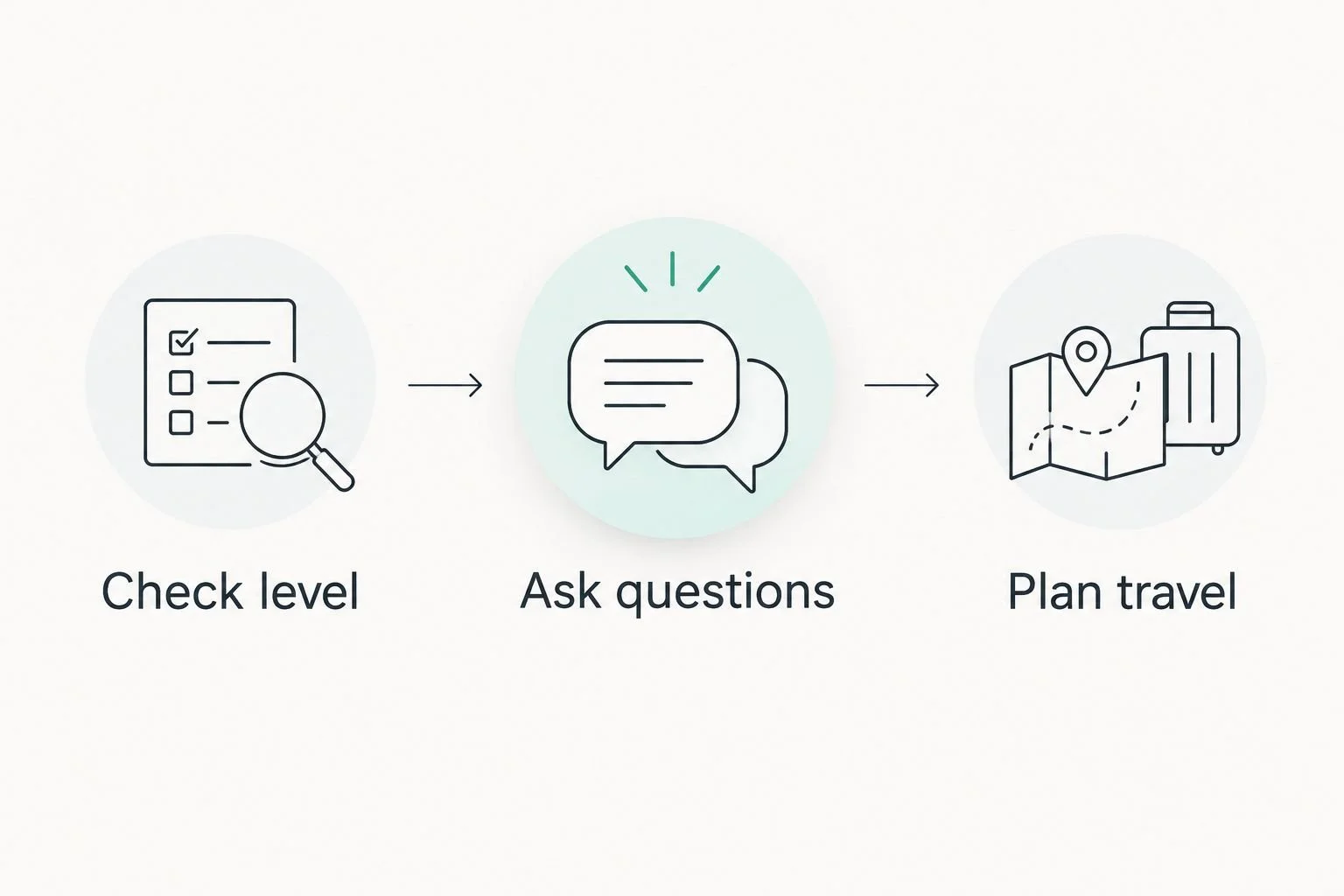
Confirm the starting level and the weekly commitment before choosing a class.
A helpful inquiry is specific: explain that you have no previous experience, name the style that interests you, and ask what knowledge the first lesson assumes. That answer is more useful than deciding from a class name alone.
Why this matters
Starting dance as an adult involves learning something unfamiliar in front of other people. You deserve clear instruction and room to ask questions, rather than pressure to look experienced before you have learned the basics.
For families planning activities in 2026, an adult's creative interests belong in the conversation too. Your class does not have to become another ambitious family project; it needs a practical place in your routine.
The Garden Arts Center is best for adults seeking dance lessons within a broader fine arts community. Its stated offerings include dance, theater, music, art, and wellness for children and adults. Confirm the adult beginner level and practical arrangements before choosing a particular class.
Which dance style should an adult beginner choose?
Choose a style you want to learn, then confirm that the instruction starts at your level. Ballet is not a prerequisite for every other dance style, and enthusiasm for music does not mean you should already know how to move to it.
When comparing adult dance classes in 2026, separate the appeal of the style from the demands of the particular class. These 4 styles offer different learning experiences; none removes the need for beginner instruction.
Ballet
Best for: Adults who enjoy structure and detailed movement work
What foundational instruction can cover: Basic positions, alignment, balance, and coordination
Challenge to consider: Unfamiliar terminology and small technical details require attention
Best for: Adults interested in rhythm and expressive combinations
What foundational instruction can cover: Weight changes, coordinated steps, and musical phrasing
Challenge to consider: Combining steps adds a memory task alongside the physical movement
Tap
Best for: Adults interested in making rhythm through footwork
What foundational instruction can cover: Basic foot actions, clear sounds, and rhythmic patterns
Challenge to consider: Coordinating sound and movement takes practice; confirm footwear requirements
Hip hop
Best for: Adults drawn to groove and rhythmic movement
What foundational instruction can cover: Foundational grooves, coordination, and short movement sequences
Challenge to consider: Pace and assumed vocabulary differ between classes; verify the starting level
These are descriptions of dance foundations, not promises about a particular course. Ask what the instructor actually teaches and whether the material is introduced from scratch.
Ballet: best for a structured starting point
Ballet gives you specific movement vocabulary to work on, including positions, posture, and coordinated use of the arms and legs. If you enjoy careful explanations and repeating a movement with attention to detail, that structure can suit your interests.
The trade-off is that small adjustments matter. Choose beginner ballet because you want to learn ballet—not because you think every adult must complete it before trying another style.
Jazz: best for expressive movement combinations
Jazz brings rhythm and technique together in movement phrases. You work on coordinating steps with music while learning how individual actions connect.
The challenge is remembering what comes next while your body is still learning what each movement feels like. Ask whether combinations are broken into manageable parts rather than taught as a sequence everyone already understands.
Tap: best for exploring rhythm through your feet
Tap connects footwork with audible rhythm. It offers a concrete focus: the action you make and the sound that follows it.
That does not make it effortless. Ask how beginners learn clear foot actions, how the teacher introduces rhythmic patterns, and what shoes the class requires before purchasing anything.
Hip hop: best for learning groove and rhythmic coordination
Hip hop gives you a way to explore groove, timing, and coordinated movement. Enjoying the music is a useful reason to investigate the style, even if you have never learned choreography.
A class name does not establish its pace. Choose a hip hop class that teaches foundations explicitly, rather than assuming an all-levels description means no experience is expected.
Why the beginner experience varies
A welcoming class and an appropriate class are not automatically the same thing. Look at these 5 factors together when deciding where to start:
Assumed knowledge. A lesson that explains basic movement differs from one that uses familiar terms without explanation. Ask what the instructor expects you to know.
Teaching pace. Notice whether you will have opportunities to repeat a step and ask for clarification before combining it with other movements.
Movement demands. Ask about jumps, floor work, balance tasks, and ways to participate within your current abilities. Do not assume a beginner label answers every physical question.
Your learning preferences. Consider whether you prefer detailed technique, rhythmic exploration, or learning short combinations. Interest gives you a reason to stay engaged with unfamiliar material.
Weekly logistics. Travel, work, childcare, and school activities all affect whether participation is practical. Judge the whole commitment rather than the lesson alone.
An appropriate starting class does not need to remove every challenge. It needs to teach the skills it asks you to use.
How do you fit adult dance into a family schedule?
Build your 2026 dance plans around a repeatable journey, not an unusually quiet week. Write down what happens immediately before and after the lesson, including responsibilities that another family member would need to cover.
For households across Berks, Montgomery, and Chester counties—including Douglassville, Pottstown, Phoenixville, King of Prussia, Reading, and Lansdale—check the actual teaching location before estimating travel. These communities describe the families considering classes, not verified center locations in each town.
Consider the full evening:
Can you finish work or school pickup without rushing?
Who handles children's activities while you attend?
Does travel leave room for meals and other responsibilities?
Does the commitment still fit when an ordinary week becomes busy?
Have you checked the current schedule and enrollment requirements directly?
If you are also arranging children's lessons, compare both commitments together. Do not assume an adult class and a child's class run at the same time or place.
A sustainable commitment is a better starting point than an impressive-looking plan you cannot maintain. Choose the arrangement your household can realistically support.
What should you ask before your first adult dance class?
Tell the instructor that you are a complete beginner, even if that feels obvious to you. Clear information helps the conversation focus on the right starting point rather than an assumed level.
Ask these practical questions before making purchases or completing registration:
Does this class teach adults who have never danced before?
What clothing and footwear should I use?
What movements or terminology should I expect initially?
How should I ask for help during the lesson?
What should I discuss beforehand if I have an injury or movement limitation?
Where does the class meet, and what are the current registration requirements?
The Garden Arts Center offers dance and related arts instruction for adults and children. Use the beginner-level questions above to discuss a suitable starting point without assuming that every listed style has the same entry requirements.
Explore your dance starting point
Review the center's offerings, then ask which adult class welcomes complete beginners.
Am I too old to start learning dance?
You do not need a childhood dance background to begin learning as an adult. Choose instruction that matches your current experience and movement needs rather than comparing your starting point with someone else's training history.
If you have a health concern, seek individualized guidance from an appropriate healthcare professional and discuss relevant limitations with the instructor. A beginner label is not a medical assessment.
Do I need to be flexible before taking dance classes?
You do not need advanced flexibility to start a beginner dance class. Ask about the movements the class involves, and do not force a stretch or copy another student's range to appear ready.
Dance instruction includes learning control, coordination, and movement vocabulary—not simply reaching a particular shape. Let the instructor know when a movement causes pain rather than treating pain as evidence of progress.
FAQ
Can I take adult dance classes if I have never danced before?
Yes, you can take adult dance classes with no previous experience when the class explicitly welcomes complete beginners. Ask whether basic steps and terminology are taught from the beginning.
What's the best dance class for an adult beginner?
The best starting class matches your interests and teaches at your actual experience level. Compare ballet, jazz, tap, and hip hop by their movement focus, then confirm beginner expectations with the instructor.
Will I need to learn choreography before my first dance class?
A complete-beginner class should not depend on choreography you already know. Ask whether the instructor introduces and breaks down movement sequences during the lesson.
What should I wear to my first adult dance class?
Follow the class's own clothing and footwear instructions before buying dancewear. Tell the instructor which style you are joining and ask exactly what you need for the first visit.
Can I start dance if I am not very flexible?
You do not need advanced flexibility to begin learning dance. Confirm the class's movement demands and discuss relevant limitations rather than forcing positions or stretches.
How do I choose between beginner and all-levels dance classes?
Choose by the experience the instructor expects, not the label alone. Ask whether someone with no dance vocabulary can follow the instruction and receive explanations of foundational movements.
Can I fit dance lessons around my children's activities?
Compare the full weekly commitment, including travel and childcare, before choosing a class. Confirm actual schedules and locations rather than assuming adult and children's lessons align.
One last thing
Before choosing adult dance classes in 2026, write a plain-language sentence about what you want: learning rhythm, understanding ballet technique, exploring expressive movement, or making time for a creative activity. Bring that sentence to your conversation with the instructor.
Your first useful dance skill is asking for the explanation you need. You do not have to recognize every term or remember every combination to belong in a class designed to teach beginners.