

Beginner yoga classes are guided sessions that introduce breathing, movement, and postures with the aim of helping new students develop a manageable practice. Your first visit starts with choosing an appropriate class, checking what to bring, and making room for the trip in your family’s schedule—not with being flexible already.
TL;DR
The Garden Arts Center suits beginners seeking yoga classes within a broader arts community.
Choose beginner yoga by teaching pace, physical demands, and room temperature—not the class name alone.
Confirm equipment, registration details, and instructor guidance before your first visit.
Build a sustainable weekly commitment around travel, school activities, and family responsibilities.
Why yoga classes matter for beginners
A first yoga class introduces more than poses. You also learn how the instructor gives directions, how transitions work, and how to recognize when you need a different position or a pause. The right starting point is a class that explains the practice rather than assumes you already know it.
For parents and caregivers, choosing a class also means protecting time around school, work, and children’s activities. A session that looks convenient on paper still needs to fit the journey there and the responsibilities waiting afterward.
The Garden Arts Center offers yoga alongside dance, theater, music, art, and other wellness classes. That broader setting matters when you want your own practice to sit within a family’s interest in creative learning.
For your 2026 plans, separate the decision into two questions: does the instruction suit a beginner, and does the commitment fit your actual week? Neither question replaces the other.
Prepare for your first yoga class
1. Define what you want from the visit
Start with a practical intention, not a performance goal. You might want to understand basic poses, explore movement after a desk-based workday, or set aside time for yourself outside family responsibilities. Naming that intention helps you ask useful questions about the class.
You do not need to arrive with a goal of touching your toes or keeping up with everyone. Those targets tell you little about whether the instruction is appropriate. A more useful first-visit goal is understanding how to participate without feeling obliged to copy every movement.
Choose 1 weekly visit as an initial planning commitment, rather than filling several open spaces in your calendar. This is a scheduling suggestion, not a requirement or a promise about results. Review that commitment after you understand the travel and class experience.
Write down what you want to learn or experience.
Identify movements or settings you want to ask about beforehand.
Decide whether you prefer a quieter introduction or a more active session.
Keep your first goal focused on participation, not achievement.
2. Check the format before choosing a class
Read the class description, then ask about anything the description leaves unclear. Yoga names do not answer every beginner question: you still need to know whether the instructor explains foundational positions, how quickly the class moves, and whether the room is heated.
A slower pace gives you more time to process directions, but slower does not automatically mean physically easy. Holding a position can still require effort. Likewise, a class described as welcoming to different levels needs a clear explanation of how a new student participates.
If you are considering hot yoga, treat the heated environment as a separate decision from the movement itself. Do not assume that heat makes a class more effective or more appropriate for a first visit. Ask how the session handles rest and individual comfort.
Ask whether the session is intended for beginners.
Check whether poses receive step-by-step explanation.
Confirm whether the room is heated.
Ask how students adjust movements or take breaks.
Check whether any prior experience is expected.
3. Confirm the details with the center
You can prepare a useful shortlist yourself by reading descriptions and writing down questions. Direct confirmation is the next step when details determine whether a class fits; guessing about equipment or participation requirements creates avoidable first-day uncertainty.
The Garden Arts Center is best for beginners who want yoga classes within a broader arts community. Its offerings include yoga and other creative and wellness subjects, but that does not make every session interchangeable. Ask which current class provides an appropriate introduction for your experience and needs.
Before registering for a 2026 session, confirm the details for that particular offering. Do not carry assumptions from a dance class, a previous yoga studio, or another family member’s experience into your booking. The useful answer is the one that applies to the class you intend to attend.
Ask which current yoga offering welcomes first-time students.
Confirm the registration process and arrival instructions.
Ask whether to bring a mat or other equipment.
Check clothing or footwear guidance for the session.
Ask who can answer questions about individual participation needs.
4. Fit the journey into your family schedule
Place the whole visit on your calendar, not just the class itself. Include travel, finding the entrance, getting ready, and the trip home. Then look at what happens immediately before and afterward: school pickup, dinner, work calls, or another child’s activity.
For households across Berks, Montgomery, and Chester counties, the practical question is the actual route from your starting point. Families considering travel from Douglassville, Pottstown, Phoenixville, King of Prussia, Reading, or Lansdale should verify the destination and assess their own journey. A town name in your search does not establish where a center is located.
Compare 2 travel scenarios: leaving from home and leaving from wherever you normally are before class. For a 2026 family calendar, use the scenario that matches your likely routine rather than the easiest possible journey.
Map the outbound journey from your usual starting point.
Check the return trip against the next family responsibility.
Identify who handles childcare or overlapping activities.
Leave room for arrival and changing, where needed.
Choose a commitment you can repeat without rushing.
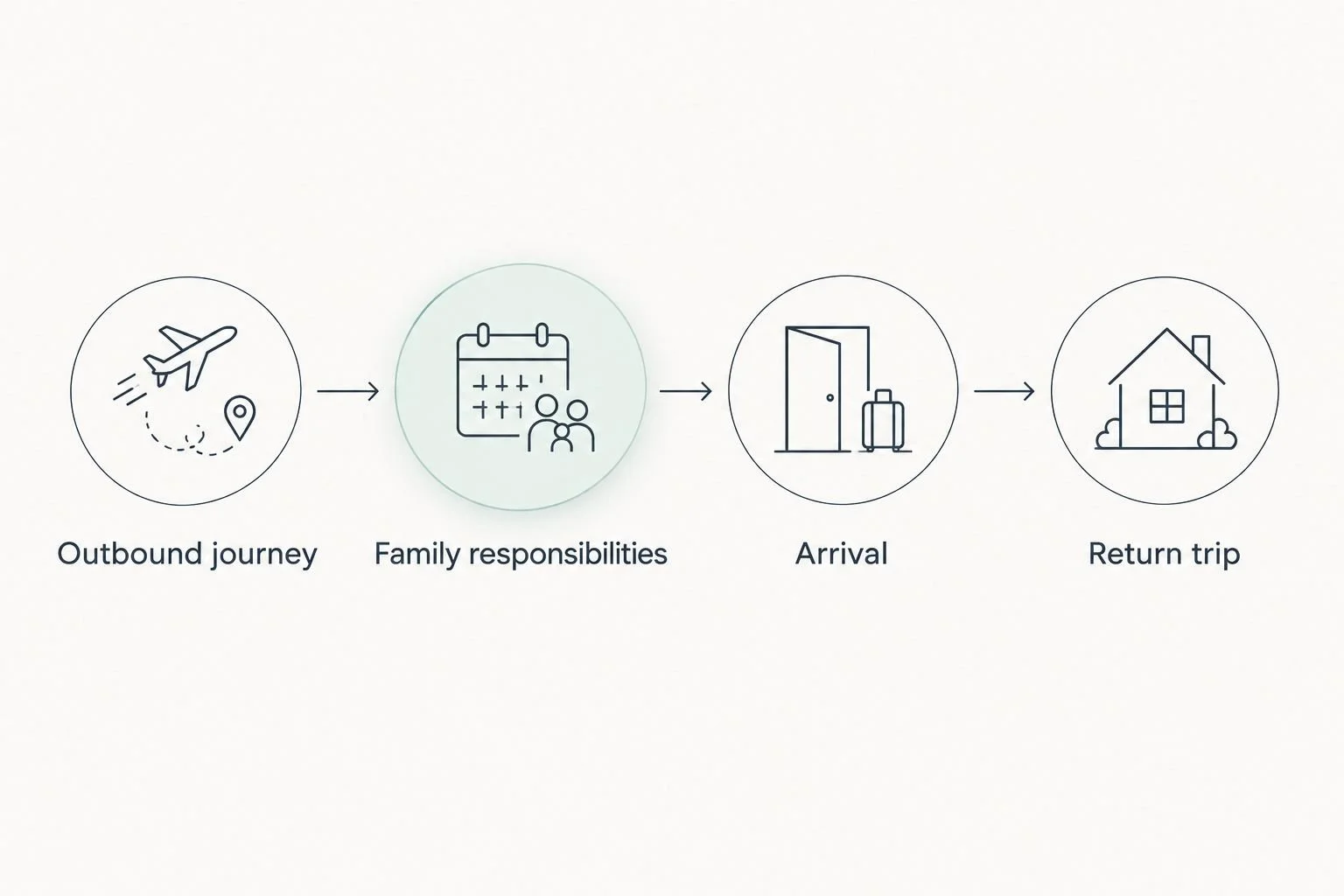
Plan the whole visit, not just the time spent in class.
5. Prepare clothing, equipment, and questions
Choose clothing that lets you bend, reach, and change position without constant adjustment. Try those movements at home before packing. An outfit that feels comfortable while standing can behave differently when you lean forward or raise your arms.
Use the center’s equipment guidance rather than assuming a mat or props will be provided. Keep your belongings simple, and ask where personal items belong during class. There is no need to buy specialized accessories before you know what the session requires.
Write down 3 questions for your instructor: how to rest, what to do when a position feels unsuitable, and how to follow an unfamiliar transition. If you have an injury, are pregnant, or have a medical concern, seek individualized guidance from a qualified healthcare professional about participation. A general article cannot assess your circumstances.
Test whether your clothing allows comfortable movement.
Pack the equipment the center asks you to bring.
Bring drinking water for your visit.
Keep relevant participation questions easy to remember.
Share necessary concerns privately before movement begins.
6. Participate without trying to match everyone
Listen for the purpose of each instruction rather than watching only the person beside you. Another student’s position is not a measurement of what your body should do. Differences in experience, movement, and comfort make visual comparisons a poor first-class guide.
Ask for clarification when a direction is unfamiliar. If a movement causes pain, stop that movement and tell the instructor rather than forcing your way through it. A suggested adjustment is useful only when you understand it and can participate comfortably.
Afterward, assess the experience using specific observations. Could you follow the explanations? Did you know how to pause? Did the journey fit your day? Use those answers to shape your next 2026 class decision, rather than judging the visit by how many positions you completed.
Follow instructions at a pace you can understand.
Ask what to do instead of an unsuitable position.
Pause when you need to reassess your comfort.
Avoid treating another student’s range as your target.
Note what you want clarified before another visit.
Explore your next class
Review The Garden Arts Center and ask which current yoga class fits a beginner’s needs.
Compare yoga options for your first visit
Compare teaching format before deciding where to begin. The options below describe class characteristics to ask about, not a verified timetable or a list of sessions currently offered by The Garden Arts Center.
Beginner-focused instruction is the clearest starting criterion. Room temperature, movement pace, and the amount of explanation are separate considerations; a familiar class label cannot settle all three.
Beginner-focused yoga
Best for: Students learning instructions and foundational positions
Main advantage: Makes introductory teaching the central selection criterion
Key limitation: The label alone does not confirm pace, heat, or individual support
Gentle or slower-paced yoga
Best for: Students who prefer more time between transitions
Main advantage: Gives you more time to process directions
Key limitation: Slower movement does not mean every position suits every participant
Mixed-level yoga
Best for: Beginners who receive clear adaptations within a shared class
Main advantage: Allows participation alongside students with different experience
Key limitation: Requires confirmation that beginner explanations are included
Hot yoga
Best for: Students who deliberately want a heated setting after considering suitability
Main advantage: Makes room temperature an explicit part of the choice
Key limitation: Heat adds a condition to assess alongside movement demands
If several options seem suitable, ask which instructor-led session provides the clearest introduction. Choose on the basis of the answer, not the appeal of a more demanding label.
Common mistakes beginners make
Choosing by the class name alone
A label cannot tell you exactly how a session is taught. Ask about instruction, transitions, heat, and rest before deciding. Match the class to your starting point, not to an image of what yoga should look like.
Planning only for time inside the room
A workable class can become an unworkable family commitment when travel and handoffs are ignored. Put the complete visit on the calendar before registering, especially when school activities or another child’s lesson already occupy that day.
Buying equipment before checking requirements
You do not need to assemble a collection of accessories to prove you are ready. Confirm what the class requires first. That keeps preparation focused on participation rather than purchases and avoids assuming the center supplies equipment it has not confirmed.
Treating discomfort as something to overcome
Your first visit is not an endurance test. Stop a movement that causes pain, explain the issue, and ask about an alternative. Do not interpret another student’s ability to hold a position as permission to ignore your own experience.
Expecting the first visit to settle everything
A first session gives you information about teaching, comfort, and logistics. You can use that information without demanding an immediate personal transformation. For your 2026 routine, a clear understanding of what fits is a more useful outcome than an ambitious plan you cannot sustain.
FAQ
What should I expect at my first yoga class?
Expect instructor-led movement and explanations, with the exact sequence depending on the class. Before attending, ask whether the session teaches foundational positions and how beginners can pause or adjust movements.
Do I need to be flexible before starting yoga classes?
You do not need to demonstrate flexibility before asking about beginner yoga classes. Choose instruction that explains positions and adjustments rather than expecting every student to reach the same shape.
What should I bring to my first yoga class?
Bring the equipment specified by the center, comfortable clothing, and drinking water. Confirm whether you need your own mat and whether any other items are required rather than assuming equipment is provided.
Is hot yoga a good first yoga class?
Hot yoga is not an automatic first choice simply because it is yoga. A beginner should assess both the teaching format and the heated environment, and seek individualized healthcare guidance when a medical concern affects participation.
Can I join yoga classes if I have an injury?
Get individualized advice from a qualified healthcare professional before choosing a class when an injury affects movement. Tell the instructor about relevant participation needs, but do not treat a general class description as medical clearance.
Does The Garden Arts Center offer yoga as well as arts classes?
The Garden Arts Center offers yoga alongside dance, theater, music, art, and other wellness subjects. Ask which current yoga session is suitable for a first-time student and confirm its registration requirements.
How do I fit yoga into a busy family schedule?
Plan the complete visit, including travel and family handoffs, rather than reserving only the class time. Start with a repeatable commitment and check it against school activities, work, and the return journey.
One last thing
Your best first-class question is not how difficult the session will be. Ask: What should I do when I need to pause or change a movement? The answer gives you a practical way to participate before you know the poses.
Bring that same approach to your schedule. You do not need the busiest routine; you need a class you understand and a journey your household can manage. Let your first visit help you choose the next step.