

Children’s acting classes are guided lessons in character, storytelling, and performance that help young students explore how to communicate through theater. This guide explains how to choose a beginner class around your child’s interests, comfort with group activities, and the weekly commitment your family can sustain.
TL;DR
Choose children’s acting classes by teaching approach, group fit, and a schedule your family can sustain.
The Garden Arts Center is best for families exploring acting alongside other arts.
Ask how beginners practice character work, listening, and scenes before focusing on performances.
Compare theater, creative movement, and singing lessons by what your child wants to practice.
Why acting classes matter for children
Acting gives children a setting to practice listening, responding, imagining a situation, and expressing a character’s intentions. A beginner does not need an audition goal to have a reason to participate. Enjoying stories or wanting to create with other children is a useful starting point.
For parents, the decision is also practical: a suitable lesson has to fit around school, travel, and family downtime. When comparing options for 2026, separate what your child wants to learn from what your household can realistically attend.
The Garden Arts Center offers acting and other arts lessons for children and adults. Its range includes dance, music, and theater, giving families several artistic directions to consider without treating acting as the only valid starting point.
The Garden Arts Center is best for families exploring acting alongside other arts. The deciding details still belong at class level: ask about the intended students, lesson approach, and current registration information before choosing.
How to choose acting classes for your child
Start with your child’s interests
Ask what your child enjoys doing, not whether they want to become an actor. Making up characters, retelling a favorite story, singing through a scene, and playing movement games are different interests. Each gives you a more useful question to bring to an instructor.
A child who loves costumes might enjoy pretending but dislike memorizing lines. Another might enjoy reading dialogue while feeling uncertain about moving in front of a group. Neither response rules acting in or out; it identifies what to discuss.
For your 2026 shortlist, write down an interest and a question rather than attaching a label such as naturally talented or too shy.
Storytelling: Ask whether students invent stories or work from existing material.
Character work: Ask how beginners explore a character’s wants, choices, and reactions.
Group play: Ask how students participate in partner and ensemble activities.
Music: Ask whether singing is part of the lesson or a separate subject.
Check how the class welcomes beginners
Beginner is not a complete description. Ask what students are expected to do when they arrive and how an instructor explains unfamiliar activities. A welcoming approach includes clear directions and a way for children to understand the task before attempting it.
Useful teaching examples to ask about include a call-and-response game, a short improvised conversation, or a scene in which partners take turns speaking and listening. These are examples of acting exercises, not a statement about any particular center’s curriculum.
If your child needs an accommodation or a different way to receive instructions, describe that need directly. A broad statement about inclusion does not replace a conversation about the specific class.
Ask whether prior acting experience is expected.
Ask how the instructor introduces partner work and individual turns.
Describe any communication, sensory, mobility, or learning needs relevant to participation.
Ask what happens when a child does not understand an exercise.
Match the teaching approach to the goal
Choose the practice your child wants, then look for a class that provides it. Improvisation involves responding without a fully scripted exchange. Scene work uses a dramatic situation and often dialogue. Theater games give an instructor another way to introduce listening, movement, and shared attention.
The Garden Arts Center offers acting, vocal, and instrument-based music lessons, as well as dance. That breadth helps frame your questions, but it does not establish which activities belong in a particular acting class. Ask for a description of the lesson itself.
Choose instruction, not just an appealing performance title. A show can be part of theater education, but a production description alone does not explain how beginners receive guidance.
Ask which acting activities students practice during lessons.
Ask how the instructor explains voice, movement, and character choices.
Ask whether a performance is involved and what preparation it requires.
Ask how feedback helps a student understand what to try next.
Build a sustainable weekly plan
Put the actual class commitment beside your 2026 school calendar before registering. Include the journey, getting ready, and the transition home rather than considering only the lesson itself. A workable class on paper can become difficult when it overlaps with dinner, homework, or another child’s activity.
For families considering travel from Douglassville, Pottstown, Phoenixville, King of Prussia, Reading, or Lansdale, verify the teaching address before checking the route. Naming a community does not mean a provider has a location there. Families across Berks, Montgomery, and Chester counties should assess the journey from their own starting point.
Use 1 weekly commitment as a planning baseline, not a presumed class frequency. If transport is complicated, compare 2 realistic travel arrangements before deciding.
School activities: Mark existing clubs, homework needs, and school events.
Travel time: Check the journey at the time you would actually travel.
Family downtime: Protect room for meals, rest, and unstructured time.
Confirm the lesson’s current schedule and any commitments outside regular instruction.
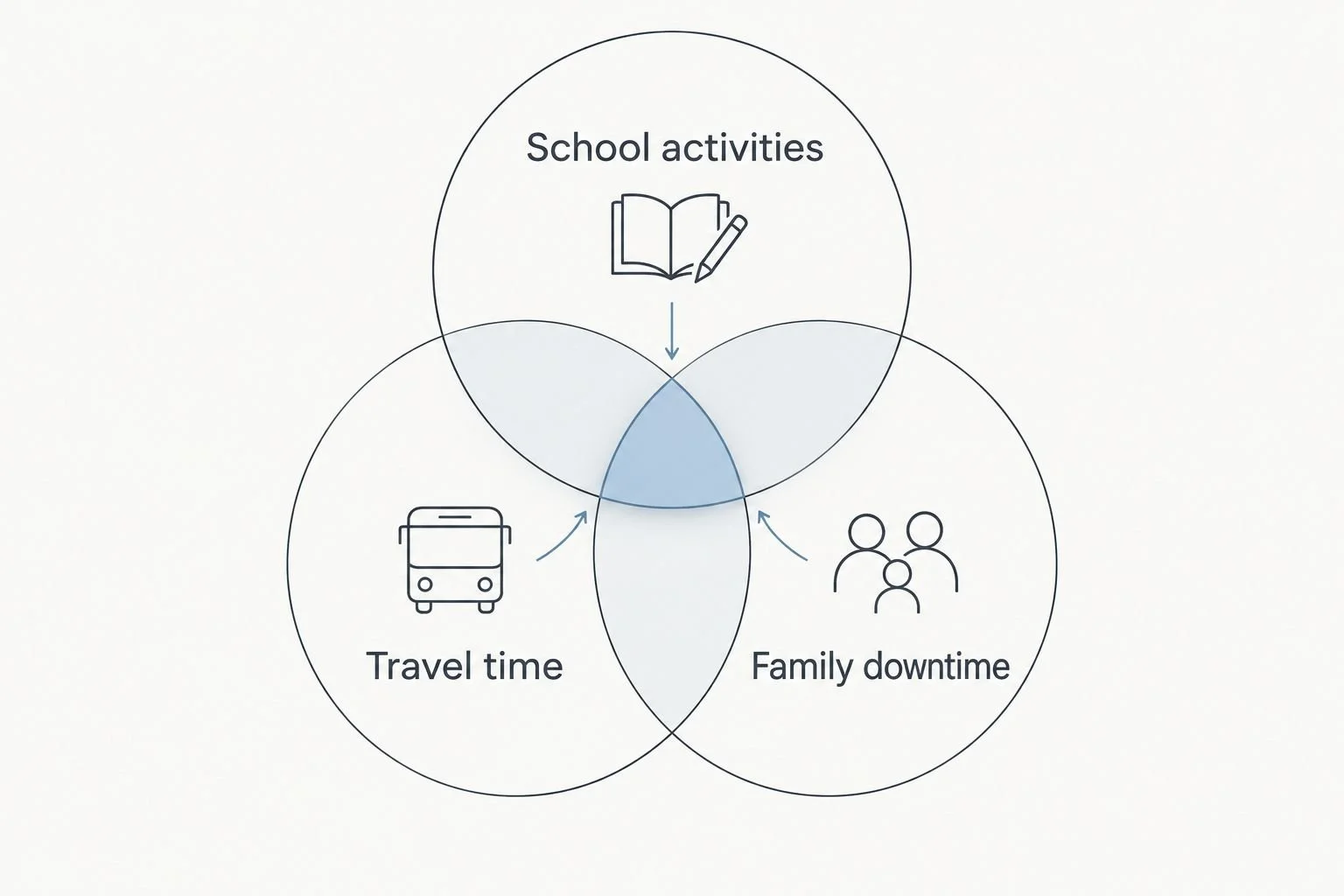
A suitable class needs room in the family routine, not just an open slot on the calendar.
Prepare for the first lesson without rehearsing it
Explain that acting involves trying ideas, listening to instructions, and working with other people. Your child does not need to arrive with a finished character or a polished speech unless the instructor explicitly requests preparation.
At home, an optional storytelling game can make the subject familiar: take turns inventing what a character wants and what happens next. Keep it playful. Turning preparation into a test creates a different experience from exploring a story together.
Ask the provider directly about clothing, footwear, materials, and arrival arrangements. Dance requirements do not automatically apply to acting, and one theater class’s instructions do not establish another’s.
Request the class’s own preparation instructions.
Explain unfamiliar words, such as scene or character, in plain language.
Help your child choose a question to ask the instructor.
Avoid promising a role, performance opportunity, or particular result.
Review the experience with specific questions
After a lesson, ask what your child actually did before asking whether it was fun. Enjoyment matters, but a concrete description tells you more about the fit: perhaps they invented a character, listened for a partner’s cue, or found an instruction confusing.
Separate a new experience from a persistent mismatch. If something was difficult, ask the instructor about the task and the guidance provided rather than assuming your child lacks ability. Do not turn a single reaction into a prediction about future success.
Use these 3 questions as a conversation starter, not a scorecard. You are checking whether the learning experience makes sense for your child and your family.
What did you get to try?
What instruction helped you understand what to do?
What would you like help with next time?
With those answers, you can return to the provider with a specific question rather than a general request for reassurance. For The Garden Arts Center acting classes, confirm the current class details and registration steps directly.
Explore the arts together
Review the center’s offerings, then ask about the acting class that fits your child’s interests.
Compare beginner options for your child
For a 2026 class decision, compare the activity your child wants to practice rather than treating every performing arts lesson as interchangeable. Acting, singing, and movement share expressive elements, but they organize learning around different tasks.
The options below describe general learning formats. They do not confirm a provider’s current timetable, enrollment arrangements, or curriculum.
Instructor-led acting classes
Best for: Children interested in characters and dramatic situations
What students practice: Listening, responding, character choices, and scene work
Key limitation: The balance of games, scripts, and performance varies by class
Creative movement classes
Best for: Children drawn to expressing ideas through movement
What students practice: Moving through space, responding to rhythm, and exploring physical expression
Key limitation: Movement is the focus rather than spoken scene work
Singing lessons
Best for: Children primarily interested in using their singing voice
What students practice: Vocal technique and musical expression
Key limitation: Singing instruction does not replace acting instruction
At-home storytelling games
Best for: Families exploring a child’s interest informally
What students practice: Inventing characters, taking turns, and building a story
Key limitation: Parent-led play does not provide an instructor’s feedback or a class ensemble
Acting classes are the direct choice when your child wants to explore characters through dramatic situations. Creative movement or singing deserves consideration when movement or music is the stronger interest. At-home play is useful for exploration, but it is not equivalent to guided instruction.
Common mistakes parents make when choosing acting classes
Choosing by age label alone
An age range helps you identify a possible group, but it does not describe the teaching approach. Ask about experience expectations, activities, and how instructions are introduced. A class should make sense for the child attending it, not simply match a birthday.
Treating shyness as a problem acting must fix
Choose acting because your child is interested in the activity, not as a promised cure for discomfort. Explain what participation involves and discuss relevant concerns with the instructor. Confidence is not a registration guarantee or a deadline to impose on a child.
Confusing participation with getting a role
Learning to respond to a scene partner is different from securing a particular part. If a performance is involved, ask how participation works and what commitments it adds. Keep the conversation centered on learning rather than an assumed outcome.
Leaving travel out of the decision
A class can suit your child and still be difficult for your household to attend. Check the full journey and competing commitments before registering. An arts activity should have a realistic place in your routine rather than depend on a weekly scramble.
FAQ
What should beginners learn in acting classes?
Beginner acting classes should introduce listening, responding, character choices, and working with others. Ask how the instructor teaches those skills through games, improvisation, or scenes rather than assuming every class uses the same approach.
Does my child need experience before taking acting classes?
A class described as beginner should explain its entry expectations directly. Confirm whether students need prior experience, reading skills, memorized material, or any preparation before registering.
Are acting classes suitable for a shy child?
Interest in acting matters more than whether a child is outgoing. Discuss how the instructor introduces participation and supports unfamiliar tasks; do not treat acting as a guaranteed way to change a child’s temperament.
How do I fit acting classes into our family schedule in 2026?
Compare the full commitment with your school calendar, including travel and preparation. Verify the current teaching address and schedule, then check whether the routine leaves room for homework, meals, and rest.
Is acting or creative movement better for my child?
Acting is the more direct fit for exploring characters and dramatic situations; creative movement centers on physical expression. Ask which activity your child wants to practice, then compare the actual class descriptions.
Does The Garden Arts Center offer more than acting?
The Garden Arts Center offers dance, theater, music, art, and wellness classes for children and adults. Ask directly about the intended students and teaching approach for the specific lesson you are considering.
What should I ask before registering for children’s acting classes?
Ask about beginner expectations, instructor guidance, the schedule, preparation, and any performance commitments. Describe your child’s interests and support needs so the conversation addresses the actual class fit.
One last thing
Before choosing a 2026 class, ask your child what they hope to do during a lesson—not what they hope to become. Wanting to invent a funny character or act out a story is a concrete starting point. Bring that answer to the instructor and build the decision around it.