

Best overall for young beginners: creative movement. Best for technique-focused children: ballet. Best for home-based creative time: art. The best creative classes for homeschool families in 2026 match your child's interests with a weekly commitment your household can sustain.
TL;DR
Choose creative classes for homeschool families by interest, readiness, travel, and practice expectations—not the fullest calendar.
Creative movement is the first option to consider for young children exploring dance and rhythm.
Ballet suits children interested in structured dance technique; art suits children drawn to drawing and making.
The Garden Arts Center offers dance, music, theater, and art; confirm current class details before planning registration.
Why this matters
Homeschooling gives you room to connect creative learning with the rest of your child's education. It does not make every open hour an appropriate class slot. Travel, meals, siblings' needs, and preparation still belong on the calendar.
The Garden Arts Center offers fine arts instruction for children and adults, including dance, theater, music, and art. The Garden Arts Center is a fit for homeschool families seeking arts instruction across several disciplines. Ask about the current options rather than assuming there is a daytime homeschool program or a shared sibling schedule.
For your 2026 plan, start with the activity your child wants to return to—not the longest list of possible benefits.
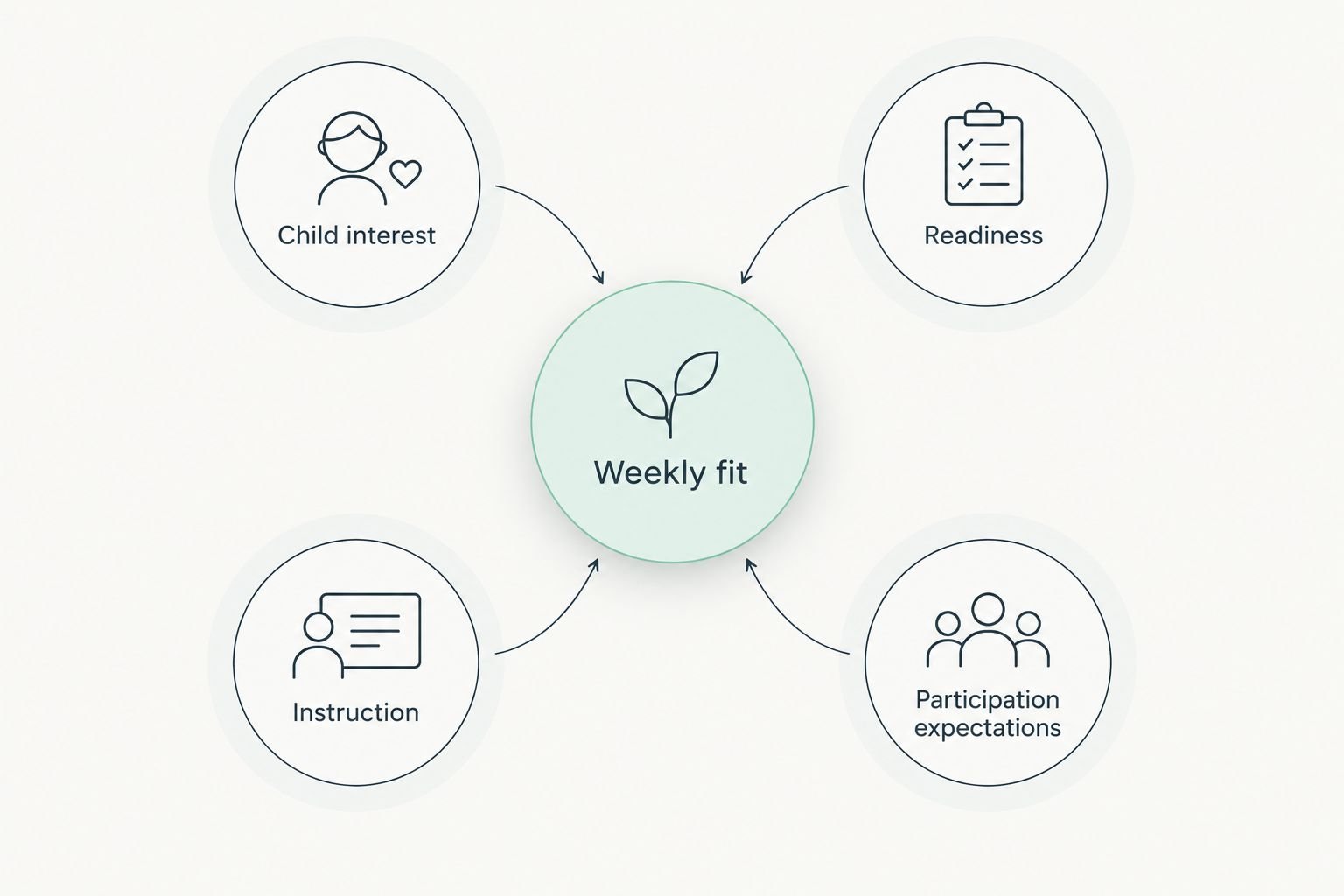
What makes the best creative class for your family?
Use these criteria before comparing styles:
Child interest: Your child can describe something they want to do, such as tap a rhythm, draw an animal, or act out a character.
Readiness: The class matches your child's experience, attention, movement needs, and comfort with group instruction.
Instruction: The teacher explains skills clearly and adjusts guidance to the learner rather than rushing progress.
Weekly fit: The trip, lesson, and any home preparation fit alongside schoolwork and family routines.
Participation expectations: You understand equipment, practice, performances, and other commitments before registering.
Treat these as filters, not points in a competition. A class that fits your child's interests but conflicts with a necessary school activity is not the right weekly choice.
For children with access needs, describe the support that helps them participate. Ask about those needs directly; a general statement about welcoming different abilities does not answer every individual question.
Creative classes at a glance
These rankings describe different learning goals, not a measured comparison of teachers or programs. Confirm age groups, instruction format, and expectations for any class you consider.
Best for: Young children discovering movement
What students explore: Rhythm, space, movement choices
Key limitation: Not a substitute for style-specific technique training
2. Ballet
Best for: Children seeking structured dance foundations
What students explore: Posture, balance, coordinated steps
Key limitation: Requires attention to repeated, precise work
3. Tap
Best for: Children interested in making rhythm with movement
What students explore: Footwork, timing, sound patterns
Key limitation: Footwear and a suitable practice surface need planning
4. Acting
Best for: Children drawn to stories and characters
What students explore: Voice, listening, character choices
Key limitation: Group participation can require an adjustment period
Best for: Children wanting a specific musical skill
What students explore: Vocal technique or instrument technique
Key limitation: Home practice adds to the weekly commitment
6. Art
Best for: Children who prefer visual, hands-on projects
What students explore: Drawing, color, composition, materials
Key limitation: Supplies and cleanup need space and attention
Choose the learning goal first, then compare the practical demands. Creative movement, ballet, and tap all involve dance, but they do not ask your child to engage with the same kind of task.
A class needs to fit both the learner and the family week.
1. Creative movement: best for discovering dance
Creative movement introduces movement through exploration rather than expecting children to arrive with a vocabulary of dance steps. Activities can include responding to musical cues, changing direction, and exploring different movement qualities. Ask the instructor which activities belong to the particular class.
Best for: A young child who enjoys moving to music and is beginning to participate in guided activities.
Creative movement pros:
Connects listening with physical action.
Gives children room to make expressive choices.
Introduces movement without selecting a technical specialty immediately.
Creative movement cons:
Does not provide the same focus as a dedicated ballet or tap class.
A group environment still requires readiness for shared space and directions.
Ask how the teacher balances guided activity with creative choices. A child who enjoys dancing freely at home still needs a class format that suits their comfort with transitions and other students.
Verdict: Choose creative movement for exploration; wait on specialization until your child's interest becomes clearer.
2. Ballet: best for structured dance foundations
Ballet gives children a defined movement vocabulary and a structured approach to posture, balance, and coordination. Beginner instruction includes learning positions and connecting movements with attention to technique. Progress depends on appropriate teaching and readiness, not on completing steps quickly.
Best for: A child who enjoys detailed instruction and wants to learn recognizable dance technique.
Ballet pros:
Offers clear skills to revisit and refine.
Connects musical timing with controlled movement.
Builds a technical vocabulary used in other dance styles.
Ballet cons:
Repetition does not suit every child's current interests.
Home enthusiasm is not a reason to attempt advanced work without guidance.
Ask how beginners are placed and how teachers explain corrections. Pointe is not an entry-level alternative to ballet; readiness requires an instructor's assessment and appropriate preparation.
Children interested in lyrical, contemporary, or modern dance can ask how those classes address foundations and placement. Do not assume the same experience level applies across styles.
Verdict: Choose ballet for deliberate technique; skip any plan that rushes advanced skills.
3. Tap: best for children interested in audible rhythm
Tap turns footwork into percussion. Children learn to distinguish sounds, repeat rhythmic patterns, and coordinate movement with music. It is a different entry point from ballet's emphasis on positions and lines.
Best for: A child who enjoys beats, sound patterns, and hearing the result of a movement.
Tap pros:
Makes timing something children can hear as well as feel.
Connects movement with rhythmic listening.
Gives practice a specific focus through sound and sequence.
Tap cons:
Shoes and practice surfaces require advance discussion.
Repeated sound affects where home practice works for your household.
Ask which footwear the teacher requires before buying anything. Also ask what practice is appropriate at home; a hard floor is not automatically a suitable tap surface.
If your child prefers moving to a song without producing percussion, compare jazz dance or beginner hip hop instead. Choose by the activity itself, not by which style seems most familiar to you.
Verdict: Choose tap for sound-led movement; wait until you understand footwear and practice needs.
4. Acting: best for children drawn to storytelling
Acting lessons turn an interest in stories into guided work with voice, movement, listening, and character choices. Depending on the class, students might explore a scene, improvise a situation, or communicate a character's intention. Confirm the actual format before describing it to your child.
Best for: A child who enjoys pretending, telling stories, or exploring how characters behave.
Acting pros:
Gives imaginative play a shared purpose.
Connects speaking with listening and responding.
Lets children explore expression without choosing a dance specialty.
Acting cons:
Group exercises can feel unfamiliar to a hesitant beginner.
Performance expectations vary and need a direct conversation.
A shy child does not need a promise that acting will change their personality. Ask how participation develops, whether students work in pairs or groups, and how the instructor supports newcomers.
Musical theater combines disciplines, but do not assume every acting class includes singing or dance. Ask which skills the particular session teaches.
Verdict: Choose acting for storytelling; hold off if the participation format does not fit your child.
5. Music lessons: best for a focused musical interest
Singing and guitar lessons develop different skills. Vocal instruction addresses using the voice, while guitar instruction includes producing notes, coordinating hands, and learning musical patterns. The right choice starts with what your child wants to make music with.
Best for: A child who specifically wants to sing or play an instrument, rather than simply attend another activity.
Music lesson pros:
Gives learning a clear musical focus.
Creates skills that students can revisit between lessons.
Connects listening with active music-making.
Music lesson cons:
Practice needs a realistic place in the home routine.
Instrument requirements or lesson format need confirmation.
Ask how the teacher sets practice expectations for a beginner. Do not promise daily practice on your child's behalf before understanding what the teacher recommends and what your household can support.
For a 2026 homeschool plan, count practice as part of the activity—not as time that will somehow appear after lessons begin.
Verdict: Choose music when the interest is specific; wait if home practice has no workable place.
6. Art: best for visual, hands-on learners
Art classes give children opportunities to explore drawing, color, composition, and materials through instruction. The exact medium matters: a child who loves drawing does not automatically want every kind of making activity.
Best for: A child who prefers creating visual work and exploring materials over performing.
Art pros:
Connects observation with creative decisions.
Allows children to develop individual interpretations.
Gives families ways to continue exploring related ideas at home.
Art cons:
Materials, setup, and cleanup need planning.
A medium chosen by the parent might not match the child's interest.
At home, diamond painting kits for kids involve placing pieces within a supplied design; open-ended drawing asks children to decide what the image will contain. Match the activity to the creative choices your child wants to make rather than treating every art activity as interchangeable.
Photography is another visual interest to discuss separately. An article about photography does not establish that a particular class is currently offered, so confirm instruction and equipment requirements before planning around it.
Verdict: Choose art for visual exploration; skip a medium your child does not want to use.
Make the weekly commitment visible
Before registering for creative classes for homeschool families, build a sample week that includes the whole trip. Families in Berks, Montgomery, and Chester counties need to consider their actual route rather than treating a county boundary as a measure of convenience.
Whether you travel from Douglassville, Pottstown, Phoenixville, King of Prussia, Reading, or Lansdale, verify the teaching address and assess the journey at the relevant time. These communities are planning reference points, not claims about center locations.
Try this planning exercise for your 2026 calendar:
Start small: Put 1 weekly class on the sample calendar before adding another activity.
Track routines: Review 2 school weeks of existing commitments, including co-ops, appointments, and sibling activities.
Leave breathing room: Test a 15-minute buffer around preparation or arrival, then adjust it to your route and your child's needs.
Count home work: Include practice, equipment preparation, and cleanup where relevant.
Confirm details: Ask about the current schedule, placement, attendance expectations, and registration process.
These are planning suggestions, not class lengths or attendance requirements. If the week only works when every transition goes perfectly, simplify the plan.
Questions to ask before registration
The Garden Arts Center offers several arts disciplines, but that does not establish simultaneous sibling lessons or a parent class during a child's session. Ask about the current schedule before building your family routine around either possibility.
Use specific questions:
Which class fits my child's age and experience?
What does a typical lesson involve?
What equipment or clothing is required?
What practice is expected outside class?
Are performances part of participation?
How should we discuss learning or access needs?
Adults interested in yoga, Pilates, hot yoga, HIIT, or adult dance should ask about those commitments separately. A parent's wellness interest is valuable, but it should not turn a manageable child activity into an overloaded outing.
How these options are ranked
Creative movement leads for young beginners because exploration comes before choosing a technical specialty. Ballet, tap, acting, music, and art each serve a distinct interest; their position is not a judgment of artistic value.
The criteria are child interest, readiness, instruction, weekly fit, and participation expectations. This is a decision guide, not a claim that classes were tested or that any provider outperforms another.
Which creative class should you choose?
For an undecided young beginner, start by asking about creative movement. For a child with a clear preference, follow that preference: ballet for structured technique, tap for audible rhythm, acting for stories, music for singing or playing, and art for visual making.
Bring that choice to The Garden Arts Center with your scheduling questions. In 2026, the next step is to confirm a suitable class and a sustainable commitment—not fill every opening in the week.
FAQ
What's the best creative class for a homeschooled child who has never taken lessons?
Creative movement is a first option for a young beginner who enjoys moving to music. A child with a clear interest in drawing, acting, singing, or an instrument should explore that interest instead; confirm age and experience requirements.
Does The Garden Arts Center offer daytime homeschool classes?
Confirm daytime and homeschool-specific scheduling directly with The Garden Arts Center. Its stated arts offerings do not establish a dedicated homeschool program or particular class times.
Is ballet better than creative movement for a beginner?
Ballet fits a beginner seeking structured dance technique, while creative movement fits a child exploring movement and rhythm. Choose according to readiness and interest rather than treating either option as universally better.
Can siblings take different creative classes on the same day?
Same-day sibling classes depend on the current timetable and suitable placement for each child. Confirm both before planning a shared trip, and include waiting time in your decision.
How many creative classes should we start with?
Start by planning for one weekly class, then assess the whole commitment before adding another. Include travel, preparation, practice, and the needs of other family members.
What should I ask about a class for a shy child?
Ask how the instructor introduces participation and supports children who need time to become comfortable. Describe what helps your child rather than expecting a class to change their personality.
How do I plan travel from Pottstown or nearby communities?
Verify the teaching address and assess the route at the time you would travel. Include preparation, parking, arrival, and the return journey rather than counting only the lesson itself.
One last thing
Ask your child, “Which part would you want to do again?” That answer is more useful than asking whether a class sounds educational. A repeatable interest gives you a practical starting point for choosing instruction without promising a particular result.