

Not necessarily: adult art classes require you to buy supplies only when the class instructions say students must bring their own materials. Supplies can be provided, supplied partly by the instructor, or purchased by each student; ask which arrangement applies before shopping. Also confirm whether materials are included in registration or handled separately, so your preparation covers more than the enrollment step.
TL;DR
Adult art classes supplies: confirm the instructor’s list before buying materials or bringing an existing kit.
The Garden Arts Center offers adult art classes within a broader arts community; ask about the specific class’s materials.
For beginner art supplies, separate required materials from optional tools and home-practice purchases.
Choose a class you can manage alongside travel, family activities, cleanup, and carrying materials.
Why this matters
Buying materials before choosing a class reverses the useful order of decisions. Start with what you want to learn, find instruction that fits, and then prepare the materials that instruction requires.
For your 2026 class search, a materials list should answer practical questions rather than create a shopping challenge. If you are still deciding between drawing and painting, begin with choosing a medium for adult beginner art classes. The medium helps determine which supply questions to ask.
The Garden Arts Center is a fit for adults seeking art classes within a broader arts community. The next step is to ask about the particular class, not assume that every arts program handles supplies the same way.
Do adult art classes require buying your own supplies?
The answer depends on the class’s materials instructions. These are arrangements to ask about, not confirmed policies for any particular program:
Supplies provided
What it means: The class provides the materials needed for its activities
Best for: Beginners who want less shopping preparation
Benefit: You can prepare without assembling a full kit
Limitation to check: Whether materials stay in the classroom
Bring your own
What it means: Students bring the materials specified by the instructor
Best for: Adults who want to keep using their own tools
Benefit: Your materials can also support home practice
Limitation to check: Exact requirements and acceptable substitutions
Mixed supplies
What it means: The instructor provides some materials and students bring others
Best for: Adults comfortable managing a short personal list
Benefit: You bring only the items assigned to students
Limitation to check: Which materials are your responsibility
Do not interpret a class title as a supply policy. A beginner label describes the intended learning level, not what comes with registration.
When reviewing a 2026 class description, look for a materials section, preparation instructions, or a supply list. If the wording is unclear, ask for clarification before buying anything. A specific answer about the class you plan to attend is more useful than a general statement about the organization.
If supplies are provided, what should you confirm?
Ask whether provided supplies cover every scheduled activity or only selected projects. Also ask whether you need to bring personal preparation items, such as clothing suitable for messy work, even when art materials are supplied.
The benefit is a simpler start. You can concentrate on instruction without choosing unfamiliar materials in advance, which suits adults exploring an art form before building a personal kit.
The limitation is that classroom access does not necessarily establish what you can take home. Confirm whether tools remain on site and how finished or unfinished work is handled. Do not assume that a supplied brush becomes your own brush.
If you bring supplies, what belongs on the list?
Bring the items the instructor identifies as required. Ask for enough detail to distinguish the right material from a similarly named alternative, particularly when a technique depends on the surface or medium.
For example, watercolor paper is made for work with water-based painting techniques; ordinary drawing paper is not an interchangeable choice for every watercolor exercise. That does not mean you should choose a paper specification yourself. Let the instructor’s list guide the purchase.
Owning your materials gives you continuity between class and home practice. The trade-off is responsibility: you need to select, carry, maintain, and replace those materials. A larger kit is not a substitute for a clear supply list.
If supplies are mixed, who brings what?
Ask for a written distinction between instructor-provided materials and student-provided materials. A list headed simply with the word supplies does not explain who is responsible for each item.
Mixed arrangements require particular attention to surfaces, consumables, and tools. Ask which materials you use during class, which you bring back for later sessions, and whether any items are specific to a project.
This arrangement can suit someone who wants personal tools without assembling everything independently. Its drawback is ambiguity when responsibilities are not clearly stated. Resolve that ambiguity before your first visit rather than packing everything you own.
Why adult art class supply requirements vary
Supply requirements follow the work being taught. Use these factors to make your questions specific:
Medium: Drawing, watercolor, acrylic painting, and clay involve different materials and working methods. Ask about the medium before choosing a kit.
Technique: A particular exercise can depend on a suitable tool or surface. Ask which specifications matter to the lesson.
Project: A project-based class needs materials appropriate to the object or artwork being made. Confirm what the project requires.
Shared equipment: Distinguish personal hand tools from equipment used under instruction. Do not assume that equipment access means equipment ownership is required.
Home practice: Materials needed during a lesson are not automatically the same as materials suggested for independent practice.
Transport and storage: Wet work, loose materials, and unfinished projects create different carrying needs. Ask what leaves the classroom with you.
These factors help you compare 2026 class instructions without treating the longest materials list as the strongest program. The useful question is whether you understand how each required item supports the lesson.
How should you prepare before buying anything?
Use this sequence to keep the decision manageable. Each step resolves a different source of uncertainty.
Choose the medium. Decide what you want to explore, then confirm what the class actually teaches. An interest in painting still leaves several possible materials and methods.
Get the list. Request the current instructions for your specific class. Use those instructions rather than a generic online shopping list.
Check your supplies. Compare what you already own with the required items. Describe existing materials accurately when asking whether they are suitable.
Confirm substitutions. Ask before replacing a specified material with an alternative. A familiar name or similar appearance does not establish that it serves the same purpose.
Plan the transport. Work out how you will carry tools and any artwork that comes home. Include cleanup and packing in your family’s plan.
An existing kit is a starting point for a conversation, not proof that you are fully prepared. Send the instructor a clear list of what you own if you need guidance, and wait for an answer before filling the gaps.
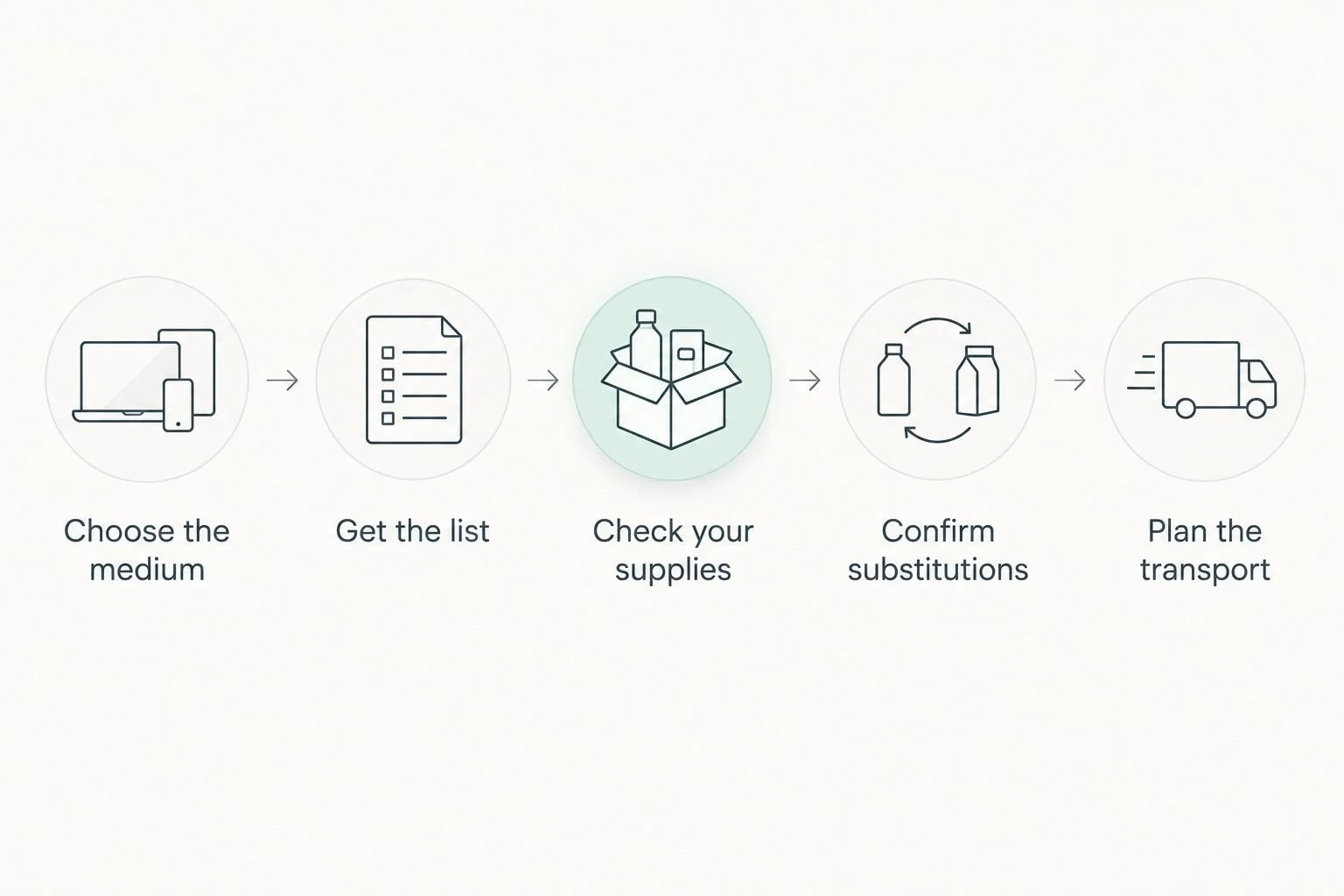
Confirm the class requirements before adding materials to your kit.
How can you fit art supplies into a family schedule?
Treat materials preparation as part of attending, not a separate task that happens automatically. A class can fit the calendar while the shopping, packing, or journey still makes the week difficult.
For families comparing options across Berks, Montgomery, and Chester counties, plan from your actual starting point. Whether you travel from Douglassville, Pottstown, Phoenixville, King of Prussia, Reading, or Lansdale, consider the route alongside school activities, work, and other commitments. These communities are planning reference points, not a statement about the center’s physical location.
Before committing to a 2026 routine, ask yourself:
Can you prepare your materials without rushing from another activity?
Who will carry the supplies if you are also helping a child?
Where will you put artwork during the trip home?
Does the plan remain manageable during a busy school week?
The Garden Arts Center offers arts learning for children and adults, but do not assume that different family members’ classes coincide. Confirm the actual arrangements before building a shared journey around them.
Do you need a home studio to take an adult art class?
Do not treat home-studio ownership as a prerequisite unless the class explicitly requires a particular home setup. Classroom learning and independent studio work are different commitments.
This distinction matters when exploring ceramics. A classroom materials list and pottery studio setup costs address different decisions: one concerns participating in instruction, while the other concerns creating a place to work independently. Do not turn a question about attending a class into a plan to equip an entire workspace.
If home practice interests you, ask what activities suit your available space and what materials those activities require. For clay, clarify how any work made outside class would be handled before starting it; do not assume that classroom equipment or processing extends to outside projects.
Start with the learning arrangement you can sustain. You can decide separately whether independent work belongs in your routine after you understand the medium and its requirements.
Can you use art supplies you already own?
Yes, if the instructor confirms that your existing supplies meet the class requirements. Check the material type, condition, and intended use rather than relying only on the brand name or the size of the set.
A box of art materials can contain useful items without matching a particular lesson. Ask which items are suitable, which need replacing, and which can stay at home. This keeps the discussion focused on learning rather than collecting equipment.
Should you buy optional supplies before the first class?
Wait on optional supplies until you understand their purpose. Required materials prepare you for instruction; optional materials should support a specific interest or practice need.
For your 2026 planning, separate the list into what you must bring and what you might consider later. If an item’s status is unclear, ask whether the lesson depends on it. You do not need to turn every suggestion into an immediate purchase.
What should you ask before registration?
Ask for the supply requirements and preparation instructions for the exact adult art class you are considering. A general inquiry is a start, but naming the class helps the center answer the practical question.
You can use this checklist when you contact The Garden Arts Center:
Which materials must I bring, and which are provided?
Which items are required rather than optional?
Can I use the materials I already own?
Are there instructions for clothing, cleanup, or transporting artwork?
What should I prepare before the first meeting?
Clear answers let you choose with confidence, without pressure to buy a complete collection. Match the class, preparation, and travel to the time you genuinely have.
FAQ
Do all adult art classes include supplies?
No universal supply arrangement applies to adult art classes. Ask whether the particular class provides materials, requires students to bring them, or uses a mixed arrangement.
What supplies should a beginner buy for an art class?
A beginner should buy the required materials on the instructor’s current supply list. Confirm acceptable alternatives before substituting items or buying a general-purpose set.
Can I bring art supplies I already have at home?
Bring existing supplies when the instructor confirms they are suitable for the class. Share their material type and condition so the answer addresses the actual lesson requirements.
Do I need expensive art materials to start?
Follow the class requirements rather than assuming that a more expensive material is necessary. Ask which specifications matter and whether your existing materials are suitable.
Do I need a home studio before joining an adult art class?
Do not assume you need a home studio to join an adult art class. Confirm any home-practice requirements separately from the materials needed during instruction.
Does The Garden Arts Center provide adult art class supplies?
Ask The Garden Arts Center which supplies are provided for the adult art class you are considering. Confirm student responsibilities before buying materials or packing an existing kit.
What should I ask if I am balancing art classes with family activities?
Ask what preparation, carrying, cleanup, and artwork transport the class involves. Consider those tasks alongside travel, work, and school activities before choosing your weekly commitment.
One last thing
Ask what you should leave at home, not just what you should bring. That question helps distinguish essential materials from optional extras and keeps your first visit focused on making art rather than managing a crowded bag.