

Best overall: beginner drawing. Best for structured movement: beginner ballet. Best for making music without an instrument purchase: singing lessons. The best beginner arts classes for adults match something you want to do with a level you can enter comfortably and a weekly commitment you can sustain.
TL;DR
Beginner drawing leads this comparison of the best beginner arts classes for adults for its direct introduction to observation and making.
Choose beginner ballet for structured movement, singing for voice work, or guitar for learning an instrument.
Choose acting for collaboration and tap for making rhythm through movement.
The Garden Arts Center offers arts instruction for adults; confirm the current beginner level and schedule before registering.
Why this matters
Starting an arts class as an adult means learning in front of other people, often while fitting another commitment around work and family. Your first choice should make that manageable—not ask you to arrive with skills you came to learn.
The Garden Arts Center is a fit for adults seeking beginner arts classes within a community that also serves children and families. Its stated offerings include art, dance, theater, music and wellness. Start with The Garden Arts Center to ask which current classes welcome adults with no previous training.
For your 2026 shortlist, separate the subject from the level. Loving ballet, music or theater tells you what interests you; an explicit beginner entry point tells you whether the instruction fits.
What makes the best beginner arts classes for adults?
Use these criteria before comparing class names:
Entry level: Instruction starts with fundamentals rather than assuming previous lessons or familiar terminology.
Teaching clarity: The instructor demonstrates a task, explains its purpose and gives you something specific to work on.
Personal interest: You want to repeat the activity itself, not just achieve a distant performance goal.
Practical preparation: You understand the clothing, materials, equipment and home practice involved before committing.
Weekly fit: Travel and class attendance work alongside your existing responsibilities.
Learning environment: Questions and mistakes belong in the learning process; ask how instructors support newcomers.
For 2026, make beginner suitability your first filter and timetable fit your second. A favorite subject at the wrong level is not a useful starting point.
Beginner arts classes at a glance
These are learning formats, not a claim that every format currently has an adult opening. Confirm the class description, prerequisites and schedule directly.
Best for: A first visual-art class
Standout learning focus: Observation, line, shape and value
Key limitation: Requires patience with unfinished work
2. Beginner ballet
Best for: Structured movement
Standout learning focus: Placement, coordination and movement vocabulary
Key limitation: Terminology creates an additional learning task
3. Singing lessons
Best for: Exploring music through your voice
Standout learning focus: Pitch, phrasing and breath coordination
Key limitation: Singing aloud can feel exposed
4. Guitar lessons
Best for: Learning a physical instrument
Standout learning focus: Fretting, strumming and chord changes
Key limitation: Requires access to a suitable instrument
5. Beginner acting
Best for: Collaborative storytelling
Standout learning focus: Listening, character and scene work
Key limitation: Involves participation in front of others
6. Beginner tap
Best for: Rhythm through movement
Standout learning focus: Footwork, timing and sound
Key limitation: Requires suitable footwear and practice conditions
1. Beginner drawing: best for a first visual-art class
Drawing is the default recommendation if you want to begin making art without learning choreography or performing a scene. Foundational exercises can focus on noticing edges, comparing shapes and showing light and dark.
You do not need a recognizable personal style before starting. You need instruction that breaks observation into manageable tasks rather than asking you to produce a polished picture immediately.
Beginner drawing pros:
Gives you a visible record of the decisions you made.
Introduces observation skills relevant to other visual media.
Supports subjects drawn from everyday objects and surroundings.
Beginner drawing cons:
Comparing your work with finished examples can distract from the exercise.
Materials and cleanup depend on the medium being taught.
Best for: Adults who want to make something and prefer working visually.
Ask whether the class teaches drawing fundamentals or expects you to develop independent projects. Verdict: Choose beginner drawing as your default when you have no stronger subject preference.
2. Beginner ballet: best for structured movement
Ballet suits adults who enjoy a clear sequence of movement tasks and attention to technique. Introductory work includes learning positions, coordinating arms and legs, and understanding how movements connect to music.
A beginner class should explain vocabulary and demonstrate placement. Do not mistake an adult age label for a beginner level: returning dancers and first-time dancers have different starting points.
Beginner ballet pros:
Gives movement a clear technical vocabulary.
Connects posture, coordination and musical timing.
Makes repetition an explicit part of learning.
Beginner ballet cons:
Unfamiliar terms add to the initial learning load.
A class designed for returning dancers is not the same entry point.
Best for: Adults who like precise instruction and repeating movements with attention.
Ask how the instructor introduces alignment and adjusts exercises for different starting abilities. Pointe is not an entry-level substitute for ballet fundamentals. Verdict: Choose beginner ballet for structure, not because you already feel graceful.
3. Singing lessons: best for exploring music through your voice
Singing lessons let you study music using your voice rather than beginning with an external instrument. Instruction can address matching pitch, coordinating breathing with phrases, listening and interpreting words.
Ask whether lessons are individual or group-based and how repertoire is selected. A beginner needs material that supports the lesson, not a song chosen solely because it is impressive.
Singing lessons pros:
Connect music-making directly with language and expression.
Give listening a practical role in each exercise.
Allow focused work on a short phrase rather than a complete song.
Singing lessons cons:
Singing alone in front of someone can feel unfamiliar.
Home practice requires a place where you can make sound comfortably.
Best for: Adults drawn to songs, lyrics and musical storytelling.
You do not need to arrive with a performance-ready voice. Ask how the instructor approaches beginners and comfortable vocal use. Verdict: Choose singing when the voice—not an instrument—is what interests you.
4. Guitar lessons: best for learning an instrument
Guitar offers a hands-on route into melody, rhythm and accompaniment. Early learning includes coordinating fretting and strumming, producing clear notes and moving between simple musical patterns.
Before choosing a class, ask what instrument and accessories you need. Confirm whether reading notation, reading chord diagrams or playing by ear forms part of the beginner approach.
Guitar lessons pros:
Connect finger placement with an immediate musical sound.
Introduce both rhythmic and melodic tasks.
Give home practice a specific physical focus.
Guitar lessons cons:
You need access to an appropriate instrument.
Coordinating both hands takes repeated practice between lessons.
Best for: Adults who specifically want to play an instrument and can make room for practice.
Do not choose guitar merely because it seems familiar from favorite recordings. Choose it because you want to learn the physical work behind those sounds. Verdict: Choose guitar when instrument practice is part of the appeal.
5. Beginner acting: best for collaborative storytelling
Acting introduces storytelling through attention, voice, movement and interaction. Introductory exercises can include listening to a partner, exploring a character's intention and working through a short scene.
You do not have to begin with an audition goal. Ask whether the class teaches fundamentals through exercises or expects students to prepare performance material independently.
Beginner acting pros:
Makes listening and responding central to the activity.
Combines spoken language with physical expression.
Creates opportunities to work with other learners.
Beginner acting cons:
Participation involves being observed by others.
Scene work can include preparation outside class.
Best for: Adults interested in stories, characters and learning with partners.
A quieter personality does not answer the placement question; the teaching format does. Ask how participation begins and how feedback is given. Verdict: Choose acting for shared storytelling, not as a test of outgoingness.
6. Beginner tap: best for rhythm through movement
Tap turns footwork into audible rhythm. Beginners learn to distinguish sounds, place them in time and connect steps into patterns.
Ask whether the class introduces steps from the beginning and what footwear is required. Experience in another dance style does not remove the need to learn tap's sound-producing technique.
Beginner tap pros:
Makes timing something you can hear as well as feel.
Connects movement patterns directly with music.
Allows focused work on a short rhythmic phrase.
Beginner tap cons:
Footwear needs checking before your first lesson.
Home practice depends on a suitable surface and consideration for noise.
Best for: Adults who are especially interested in beats, rhythm and footwork.
Verdict: Choose beginner tap when making rhythm sounds more appealing than drawing, singing or scene work.
How these classes are ranked
Drawing takes the default position because it offers a direct starting task: observe something and make marks that describe it. The remaining choices each serve a distinct preference rather than representing progressively worse classes.
This 2026 comparison ranks learning formats by entry requirements, teaching focus and practical fit. It does not rank individual instructors, report tested outcomes or establish current class schedules. Your strongest interest should outweigh the numerical order once you find an appropriate beginner level.
Make the weekly commitment realistic
For adults across Berks, Montgomery and Chester counties, the journey belongs in the decision. Whether you travel from Douglassville, Pottstown, Phoenixville, King of Prussia, Reading or Lansdale, assess the actual route against work, school pickup and other activities. These communities are travel-planning references, not claims about center locations.
Build your 2026 plan around these checks:
Choose interest: Select the activity you want to repeat on an ordinary evening.
Check level: Confirm that no previous arts training is expected.
Map travel: Include departure, arrival preparation and the return trip.
Protect practice: Decide where any between-lesson work will happen.
Confirm details: Ask about current scheduling, materials and registration requirements.
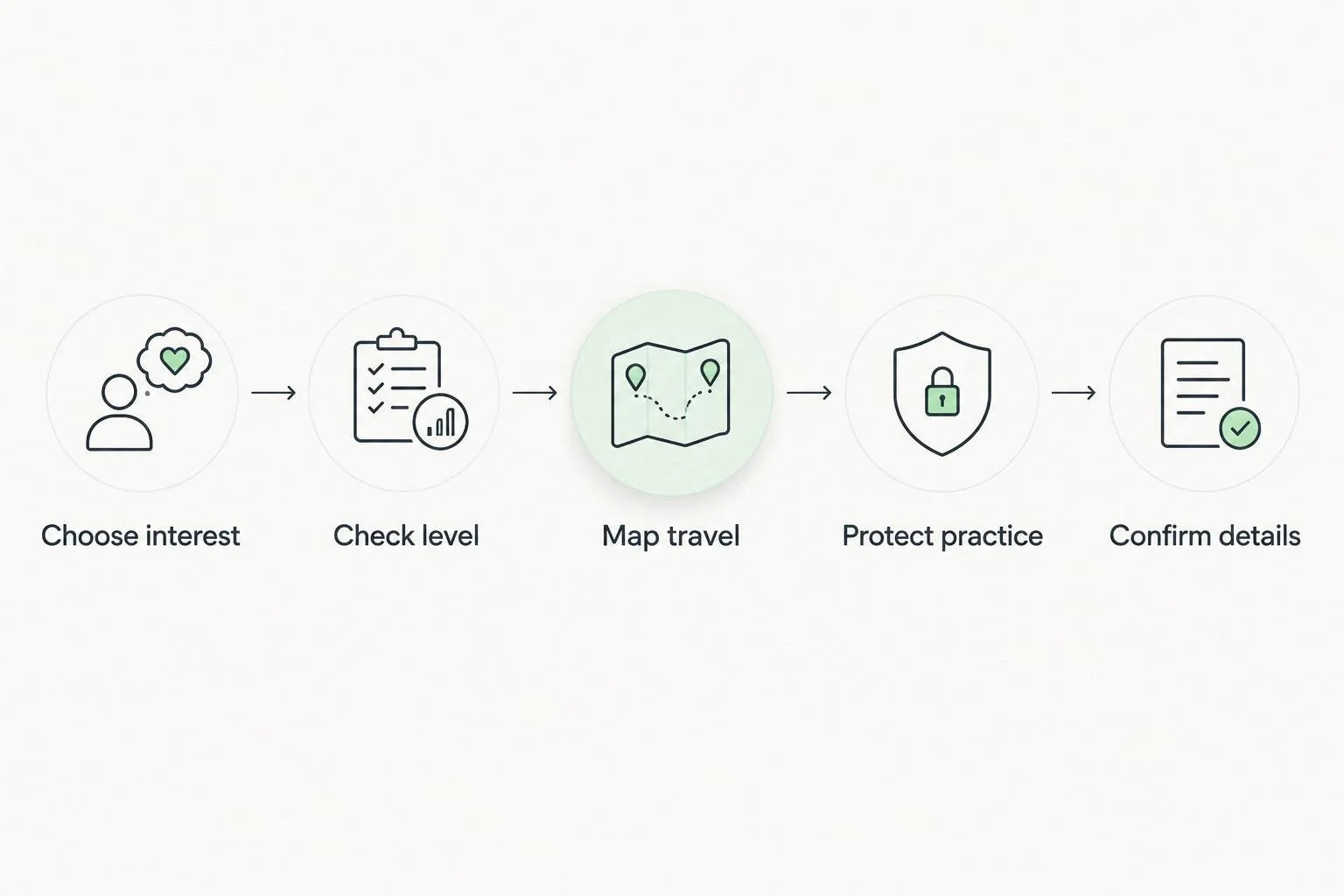
Check the learning level and the whole weekly routine before choosing a class.
As a planning recommendation, start with 1 class per week rather than committing to several unfamiliar subjects. Reserve a 10-minute practice window if your instructor assigns work that suits a short session. Test that proposed routine against 3 ordinary weeks on your calendar before registering; these are planning suggestions, not attendance requirements.
Keep creativity separate from performance pressure
Not every creative activity needs to become another course or a finished piece. Between lessons, choose an activity for the experience it provides rather than turning every evening into an assignment.
Following a preset design with diamond painting kits for beginners is a different task from learning to draw from observation: the former supplies the image structure, while drawing asks you to make decisions about shape and value. That distinction helps you separate an enjoyable making activity from the particular skill you want an instructor to teach.
The same principle applies to music and dance. Listening to a song for enjoyment is not a missed practice opportunity. Keep assigned work purposeful and leave room for enjoying the arts without measuring yourself.
Ask before taking the next registration step
Bring a short, specific inquiry to The Garden Arts Center rather than asking only whether a subject is offered. Explain that you are an adult with no previous training, name your preferred activity and describe your workable weekly window.
Ask these questions before choosing:
Does this particular class welcome adults starting from the beginning?
What will students work on in the opening lessons?
What clothing, materials or equipment should I arrange?
Is preparation or practice expected outside class?
What are the current registration steps and participation requirements?
If you are also planning children's activities, assess each person's level separately. A shared interest in ballet or music does not mean an adult and child need the same class format or pace.
Find your starting point
Ask about adult beginner instruction, current schedules and what to prepare.
FAQ
What's the best beginner arts class for an adult with no experience?
Beginner drawing is the default recommendation if you have no stronger preference. Choose ballet, singing, guitar, acting or tap instead when that activity interests you more and the class explicitly welcomes beginners.
Can I start ballet as an adult without childhood dance lessons?
Yes, an adult beginner ballet class is an appropriate entry point without childhood lessons. Confirm that the class introduces fundamentals rather than expecting returning-dancer experience.
Is singing or guitar better for a complete beginner?
Choose singing if you want to work with your voice, and guitar if you want to learn an instrument. Guitar requires access to a suitable instrument; both choices involve listening and practice.
Do I need to be outgoing to take an acting class?
You do not need an outgoing personality to begin acting. Ask how the class introduces partner work, participation and feedback so you understand the learning environment.
How many beginner arts classes should I start with?
Start with one class per week as a practical planning choice. Add another only after considering travel, other responsibilities and any assigned practice; this is not a center attendance policy.
Does The Garden Arts Center teach adults as well as children?
The Garden Arts Center states that it serves children and adults through arts and related classes. Ask which current class matches your subject, beginner level and schedule before registering.
What should I ask before registering for an adult beginner class?
Ask about prerequisites, early lesson content, preparation, practice and current registration requirements. Confirm the schedule and travel fit before making the commitment.
One last thing
Choose the activity whose beginner exercises you are willing to repeat—not just the finished result you admire. Drawing includes looking closely; guitar includes changing finger positions; ballet includes revisiting placement.
For 2026, keep your decision small: one subject, a confirmed beginner entry point and a workable weekly routine. You do not need an arts background to ask a clear question about where to begin.