

Kids’ hip hop dance classes are guided lessons in rhythm, grooves, movement coordination, and choreography with the aim of helping children learn to dance and express themselves. For beginners, choose a program that welcomes questions, teaches foundations before longer routines, and fits your family’s actual week—not just your child’s enthusiasm on registration day.
TL;DR
Choose kids’ hip hop dance classes that teach rhythm, foundational movement, and choreography with clear beginner instruction.
The Garden Arts Center suits families seeking hip hop dance classes within a broader arts community.
Compare hip hop, creative movement, and ballet by your child’s interests and the class’s actual expectations.
For your 2026 schedule, include school pickup, travel, meals, and other activities before choosing a weekly commitment.
Why hip hop dance classes matter for kids
A beginner class gives children a place to connect music with movement while learning alongside others. Hip hop also has cultural roots in Black and Latino communities; good instruction treats it as a dance form with history and foundations, not simply a collection of popular routines.
The Garden Arts Center is best for families seeking hip hop dance classes within a broader arts community. Its offerings include dance, theater, music, art, and wellness, with professional guidance and a supportive environment. Explore The Garden Arts Center to understand that wider setting, then ask about the specific beginner class you are considering.
The deciding factor is the actual instruction. A class labeled beginner should explain movements, allow practice, and help children understand what they are doing rather than expect them to copy immediately.
For families across Berks, Montgomery, and Chester counties, the practical question matters just as much: can this commitment fit alongside school, transportation, and family routines? Use your 2026 calendar to judge the whole trip, not only the lesson itself.
How to choose a beginner hip hop program
1. Start with your child’s interest
Ask what your child enjoys about dancing. Moving freely to music, learning a routine, and dancing with friends are different starting points. None is a requirement for joining, but each helps you explain what your child hopes to experience.
Describe the activity without promising a performance, a particular song, or an instant friendship. A child who enjoys dancing at home still needs a clear picture of a group lesson: listening, watching, practicing, and sharing space.
If your child is unsure, ask what feels interesting and what feels unfamiliar. That conversation gives you more useful information than asking whether they want to become a dancer.
Ask whether your child prefers making up movements or following a sequence.
Explain that lessons include both dancing and listening to instructions.
Share any concerns about noise, unfamiliar groups, or following directions with the instructor.
Choose an initial goal such as enjoying movement or learning to follow a beat.
2. Check the beginner teaching approach
Look for instruction that separates a movement into understandable parts. A teacher can demonstrate a groove, explain where the body’s weight goes, and let students repeat it before adding travel or a longer sequence.
Common hip hop learning activities include moving with a steady beat, practicing weight shifts, exploring grooves, and linking movements into choreography. These are category examples, not a statement about any particular class syllabus. Ask which foundations the proposed class actually teaches.
The Garden Arts Center offers hip hop alongside other dance styles. Ask how its available class groups beginners and supports children who need a movement explained differently; the overall arts offering does not replace checking the individual class’s expectations.
Ask whether the class welcomes children with no previous dance lessons.
Request examples of the foundations students practice.
Ask how the instructor breaks down unfamiliar movements.
Check whether students have opportunities to repeat material and ask questions.
3. Match the class to your child’s readiness
Age alone does not describe how a child learns in a group. Consider whether your child can attend to short instructions, move within shared space, and return to an activity after a pause. These observations help you ask better questions; they are not a home assessment that determines eligibility.
A preschooler who wants imaginative movement needs a different discussion from an older beginner who wants to learn choreography. Ask about the class’s actual age and experience expectations instead of assuming that every kids’ class has the same format.
Choose the teaching environment before choosing the most impressive routine. Clear explanations and supportive corrections matter more for a new dancer than how advanced an older group looks.
Describe your child’s previous group-class experience honestly.
Ask how age and experience influence class placement.
Explain any learning or access needs before registration.
Confirm how to request guidance if the suggested class does not seem suitable.
4. Map the complete weekly commitment
Before selecting a class for 2026, track your routine for 1 school week. Include pickup, homework, meals, siblings’ activities, and the time your child normally needs to settle at home. This is a planning exercise, not a recommended attendance requirement.
Then compare 2 possible travel plans: who handles the usual trip and what happens when that person cannot drive. Families in Douglassville, Pottstown, Phoenixville, King of Prussia, Reading, and Lansdale should use the verified class location to assess their own route. A town name in a guide does not establish a teaching location.
Start by assessing whether 1 weekly class is sustainable before adding another activity. Confirm the actual schedule and attendance expectations directly; do not assume alternatives or make-up arrangements exist.
Map travel from the place your child will actually leave, such as school or home.
Include parking, arrival preparation, and the return trip in your calendar.
Check conflicts with recurring school and sibling activities.
Identify who handles transportation when your normal plan changes.
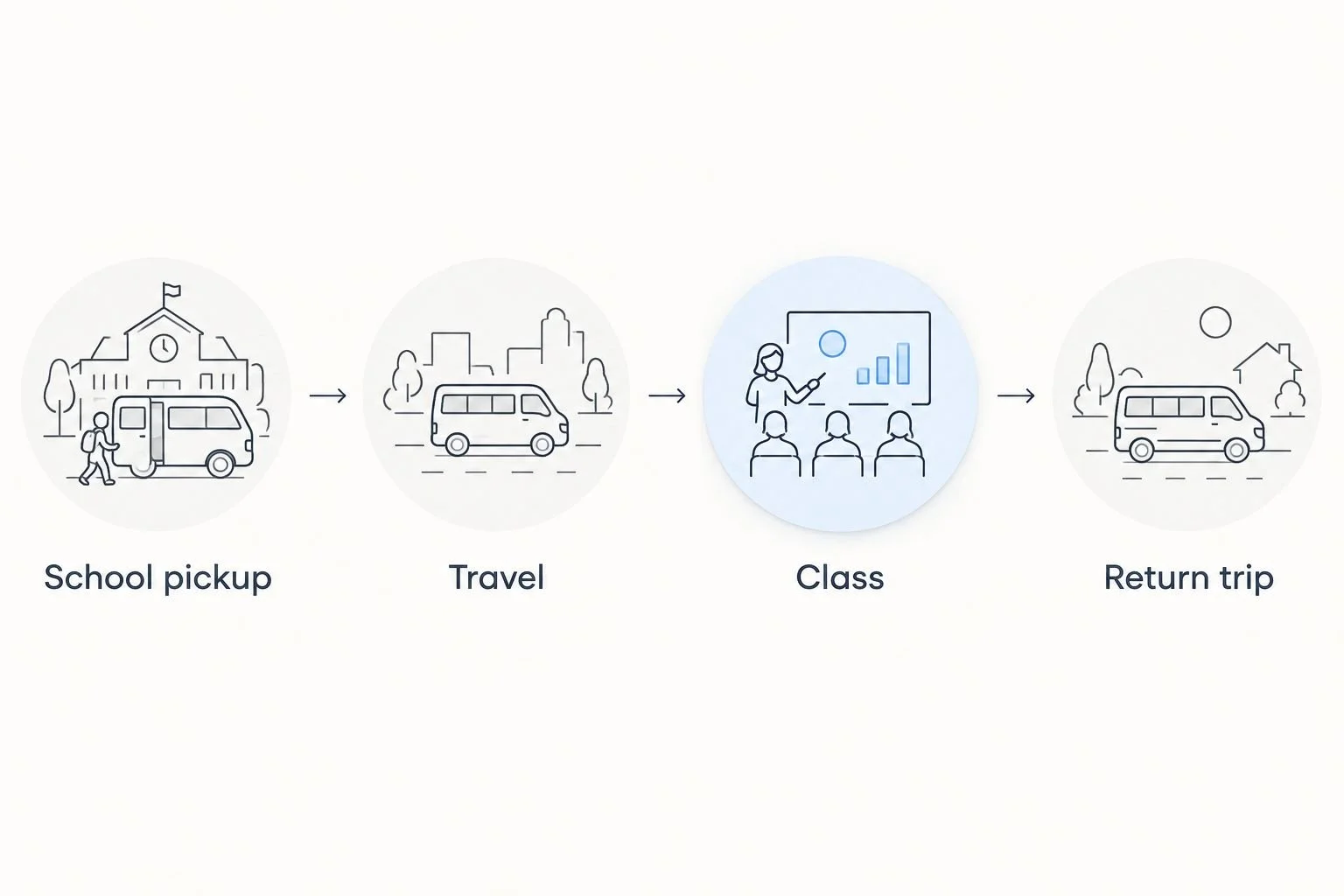
Plan the complete trip rather than reserving only the lesson time.
5. Confirm practical expectations before registration
Ask what students should wear and bring rather than buying from a generic dance checklist. Clothing needs to allow movement, but footwear and other requirements depend on the program. Do not assume outdoor sneakers, a particular uniform, or accessories are appropriate.
Also ask how arrival and pickup work and how parents receive class information. Clear answers help you prepare your child without making promises about watching lessons, joining a trial, or changing classes.
Before completing a 2026 registration, write down 3 questions you still need answered. Prioritize class placement, schedule fit, and preparation; these affect the first lesson more directly than choosing an outfit early.
Confirm clothing and footwear requirements with the program.
Ask what to bring and what should stay at home.
Clarify arrival, pickup, and parent communication procedures.
Read the current registration and attendance information before committing.
6. Support learning without turning practice into a test
After a lesson, ask your child what they noticed or enjoyed before asking what they learned. A beginner might remember a rhythm, a movement name, or how it felt to try something unfamiliar. Recalling an entire routine is not the only useful sign of engagement.
At home, let your child share a movement if they want to. Keep the floor clear, avoid asking for unfamiliar tricks, and use instructor guidance when discussing practice. Home encouragement should support the lesson, not introduce movements beyond what the child has been taught.
If your child feels frustrated, bring a specific observation to the teacher. Saying that a sequence feels too fast gives the instructor something clearer to address than simply saying the class is difficult.
Ask an open question about the lesson rather than requesting a performance.
Notice effort, listening, and willingness to try again.
Follow instructor guidance for any suggested home practice.
Discuss repeated concerns with the instructor instead of comparing children.
Explore your family’s next class
Review the arts offerings, then ask about beginner placement and the current class schedule.
Compare beginner dance options for your child
Hip hop, creative movement, and ballet offer different starting points. None automatically wins for every beginner. Your child’s interest and the class’s teaching approach should guide the decision together.
Use this comparison to prepare questions, not to assign a class based on personality alone. The specific program determines its age group, lesson structure, and expectations.
Beginner hip hop
Best for: Children interested in grooves, rhythm, and choreography
What students explore: Musical timing, weight shifts, foundational movement, and sequences
Key limitation: A choreography-focused class needs enough explanation and repetition for a new dancer
Creative movement
Best for: Children drawn to imaginative movement and exploration
What students explore: Moving through space, responding to music, and exploring movement ideas
Key limitation: A child seeking detailed hip hop instruction needs a style-specific class instead
Beginner ballet
Best for: Children interested in ballet vocabulary and structured technique
What students explore: Posture, coordination, basic positions, and movement patterns
Key limitation: Ballet does not substitute for learning hip hop foundations
The Garden Arts Center offers all of these dance styles within its broader arts program. That range gives families different directions to consider, but it does not establish which class is appropriate for an individual child. Confirm the current options and placement guidance directly.
Choose hip hop for an interest in hip hop—not because it appears less demanding than another dance style. Beginners still need attention, repetition, coordination, and instruction in sound movement technique.
Common mistakes families make when choosing hip hop
Choosing by the finished routine alone
A polished group routine shows a finished piece, not how beginners learn it. Ask what happens between the first demonstration and the final sequence: explanation, repetition, questions, and corrections are the details that matter to a new student.
Treating a style label as a readiness assessment
A child who likes hip hop music does not automatically know how a group class works. Share their experience and ask about expectations rather than assuming enthusiasm alone settles placement.
Scheduling only the class itself
A lesson that fits on paper can conflict with dinner, a sibling’s pickup, or the trip home. For your 2026 plan, reserve the whole travel-and-class window before deciding that a weekly commitment works.
Comparing beginners with experienced dancers
Another child’s memory, coordination, or confidence is not your child’s instruction plan. Ask what the beginner class is working on and discuss your child’s experience with the teacher instead of using classmates as a benchmark.
Assuming every program follows the same rules
Clothing, parent observation, attendance, and registration procedures are program-specific. Check the current information rather than relying on a friend’s experience at another studio or an older description online.
FAQ
What should I look for in beginner hip hop dance classes for kids?
Look for clear instruction in rhythm and foundational movement, appropriate class placement, and time to repeat unfamiliar steps. Ask how the teacher helps children with no previous dance experience and how the weekly commitment fits your family.
Can my child start hip hop without taking ballet first?
Do not assume ballet is required before beginner hip hop; ask the program about its actual prerequisites. Ballet and hip hop teach different movement vocabularies, and the proposed hip hop class should state what experience it expects.
Is hip hop or creative movement better for a preschool beginner?
Choose between hip hop and creative movement by comparing the actual class expectations with your child’s interests and readiness. Creative movement emphasizes exploration, while hip hop introduces style-specific movement; age labels alone do not explain how either lesson is taught.
What should kids wear to their first hip hop class?
Follow the program’s current clothing and footwear instructions. Confirm requirements before buying shoes or dancewear, and ask whether children need to bring anything else.
How many hip hop classes should a beginner take each week?
Choose a weekly commitment that fits the child’s placement and your family’s routine, with guidance from the program. Assess whether one weekly class is sustainable before adding activities, and confirm the actual attendance expectations.
What does The Garden Arts Center offer besides hip hop?
The Garden Arts Center offers other dance styles, including ballet, tap, jazz, and creative movement, alongside theater, music, art, and wellness classes. Ask about current class options and placement rather than assuming every offering has the same schedule or entry requirements.
How do I fit dance into school and other activities in 2026?
Plan the complete weekly trip, including school pickup, travel, arrival preparation, and the journey home. Check recurring conflicts and transportation responsibilities before choosing a class, then confirm its current schedule directly.
One last thing
Ask your child what they would like help with—not just whether they liked the class. A specific answer, such as remembering the next movement or knowing when to start, gives you a useful question for the instructor. That keeps the conversation centered on learning and belonging rather than performing on demand.