

Prepare for your child’s first tap dance class by confirming the shoe and clothing requirements, checking the arrival instructions, and explaining that beginners are there to learn—not perform perfectly. Ask before buying tap shoes, because the instructor’s requirements should guide your choice. For tap dance classes in 2026, a manageable family schedule and a calm introduction matter more than practicing steps at home.
TL;DR
For tap dance classes, confirm footwear requirements before buying shoes or practicing on household floors.
The Garden Arts Center offers tap, ballet, and creative movement within its arts education program.
Choose beginner dance lessons around your child’s interests, readiness, and a sustainable weekly routine.
Explain that listening, trying movements, and learning alongside others are enough for the first class.
Why this matters
Your child does not need to arrive knowing tap vocabulary. Your job is to remove practical uncertainties: what to wear, where to go, and what happens when the lesson begins. That leaves more room for curiosity.
The Garden Arts Center offers dance and other arts lessons for children and adults. When choosing a class, match your child’s interests with the placement guidance and the routine your household can maintain.
A useful first-class plan for 2026 covers both the child and the caregiver. Your child needs a clear, reassuring picture of the experience; you need confirmed instructions rather than assumptions about footwear, arrival, or parent observation.
How do you prepare for your child’s first tap dance class?
Confirm the practical details first, then prepare your child for the experience. Use this sequence before the first lesson rather than trying to teach a routine yourself.
Confirm placement. Explain your child’s age, previous dance experience, and any support needs. Ask which class is intended for a new student.
Check footwear. Ask what tap shoes are required and whether there are instructions for the first lesson. Do not assume any dance shoe will do.
Check clothing. Request the dress requirements, including guidance about hair, jewelry, and layers. Choose movement-friendly clothing within those requirements.
Plan the journey. Confirm the teaching address, arrival procedure, and pickup arrangements. Check the route against school dismissal and other commitments.
Set expectations. Tell your child that the teacher will explain what to do. Listening, attempting a movement, and asking for help all belong in a beginner lesson.
Pack together. Use the confirmed instructions to prepare the bag. Let your child help so the shoes and belongings feel familiar.
Keep these answers together in a message or note you can find quickly. A remembered conversation is less useful when another caregiver handles the trip.
What should you ask before buying tap shoes?
Ask about the required shoe style, fastening, fit, and any class-specific guidance. If your child has difficulty with fastenings or needs help changing shoes, mention that before the first visit.
Tap shoes create sound through metal taps attached to the sole. That makes them different from ballet slippers or ordinary sneakers, but it does not tell you which pair the instructor expects. Buy to the confirmed requirements, not to a generic shopping list.
Avoid choosing a loose fit simply to leave extra growing room. Ask a knowledgeable fitter about secure, comfortable footwear, and let the instructor know about pain or rubbing rather than encouraging your child to ignore it.
What should you put in the dance bag?
Build the bag around the class instructions, not around every accessory sold for dancers. Keep it simple enough that your child can identify their own belongings.
Required shoes and clothing, checked before leaving home.
A water bottle, with drinking arrangements confirmed if needed.
Hair supplies if the class requires hair secured away from the face.
Any necessary personal items, handled according to the center’s instructions.
A separate place for outdoor shoes so dance footwear stays easy to find.
Ask how medical information or emergency items should be handled. Do not assume a teacher can store, administer, or supervise something without an agreed arrangement.
What will your child learn in beginner tap?
Tap connects movement with rhythm: dancers use their feet to produce sounds and organize those sounds in time. Beginner work can involve listening, shifting weight, repeating a sound, and connecting movements. The instructor determines the actual lesson sequence.
A child might be concentrating on standing comfortably or distinguishing one sound from another while another student is remembering a sequence. Those are different learning tasks, not a reason to compare children across the room.
Explain the class through actions your child understands: listen, watch, try, and pause when asked. Avoid promising a particular song, game, performance, or step. A clear expectation is more helpful than an exciting description the lesson does not match.
Should you practice tap steps at home first?
You do not need to teach steps before a first beginner lesson. Ask whether the instructor wants any preparation, and follow that guidance rather than selecting drills from unrelated videos.
If your child wants to explore rhythm, clap along to a familiar song together. Keep it playful, without turning the activity into a test. The purpose is shared enjoyment, not arriving ahead of classmates.
Do not assume a household floor is suitable for tap shoes. Ask about an appropriate practice surface before allowing tapping at home; protecting the floor and giving your child suitable footing both matter.
How do tap, ballet, and creative movement differ?
Choose by the kind of movement your child wants to explore, then confirm age and placement requirements. A familiar class name does not establish whether a particular group is suitable for your child.
Tap
Best for: Children interested in making rhythms through movement
What distinguishes it: Footwork produces audible rhythmic patterns
What to consider: The sound level and footwear requirements deserve discussion before starting
Ballet
Best for: Children interested in ballet movement and technique
What distinguishes it: Work develops placement, coordination, and ballet vocabulary
What to consider: Ask how the class introduces technique to beginners
Creative movement
Best for: Children interested in imaginative movement exploration
What distinguishes it: Movement can explore music, space, and expression
What to consider: It is a different focus from learning tap-specific footwork
These are distinctions between dance forms, not descriptions of a particular timetable or lesson plan. Ask what a specific class teaches and how the instructor supports newcomers.
A child interested in tapping sounds does not automatically need ballet first. Equally, a child drawn to imaginative movement does not need to choose tap because a friend attends. Confirm prerequisites instead of assuming a required sequence.
Why first-class preparation varies
There is no single packing list or preparation routine that fits every child. Use these factors to decide which questions deserve the most attention:
Previous group experience. A child new to instructor-led activities needs an explanation of transitions and taking turns, not just dance clothing.
Comfort with sound. Tap produces audible footwork. Discuss sound sensitivity before the lesson rather than waiting for an uncomfortable moment.
Footwear independence. A child who needs help changing shoes needs a clear plan for who assists and when.
Movement or communication needs. Share relevant information so you can discuss support and class suitability directly.
The family journey. School pickup, travel, and sibling activities shape whether the weekly commitment is practical.
The child’s interests. Curiosity about rhythm is a different starting point from wanting to attend alongside a friend; both deserve a conversation.
Professional guidance should help you turn these details into useful questions. It should not require your child to hide discomfort or pretend to understand an instruction.
How do you fit tap into the family schedule?
Start with the whole outing, not just the lesson. For your 2026 family calendar, account for school pickup, changing, travel, the class itself, and the journey home. An appealing lesson time still needs to work at both ends of the trip.
For families across Berks, Montgomery, and Chester counties—including Douglassville, Pottstown, Phoenixville, King of Prussia, Reading, and Lansdale—the useful question is the journey from your actual starting point. These communities are planning references, not claims about teaching locations. Confirm the address before comparing routes.
Use this planning sequence:
School commitments: Write down dismissal, homework needs, and existing activities.
Travel: Check both travel legs, including who handles pickup and the return journey.
Family routine: Consider meals, sibling care, and the transition home.
Class details: Confirm the schedule and ask about attendance expectations before registration.
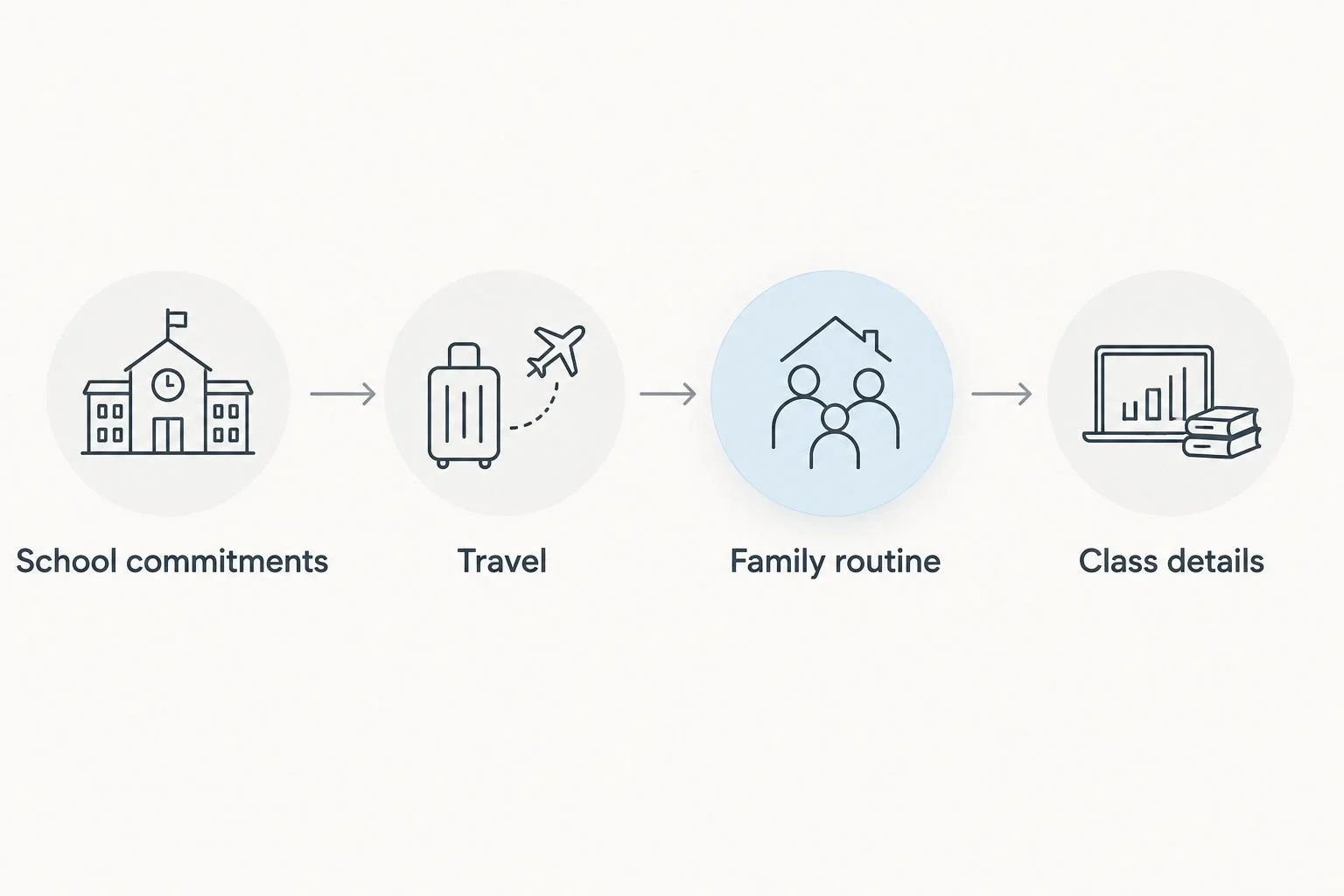
Check the whole family journey before choosing a class.
Treat 1 weekly class as a real commitment before adding another. Map 2 travel legs rather than checking only the drive there. Then ask 3 practical questions: who takes your child, who brings them home, and what happens when the usual caregiver cannot go?
Those are planning prompts, not a recommended attendance schedule. The class requirements still need confirmation. A sustainable routine is a better starting point than a crowded calendar.
How can you help a nervous child feel prepared?
Tell your child what you know and be honest about what you will ask together. Explain that a teacher leads the class and that everyone starts by learning. Avoid saying the lesson will be easy; a new activity can feel unfamiliar even when it is enjoyable.
Ask what worries your child most. The answer might be changing shoes, not knowing anyone, loud sounds, or uncertainty about where you will wait. Each concern calls for a specific answer rather than a general instruction not to worry.
Confirm observation and separation arrangements before describing them to your child. Do not promise to sit inside the room unless that has been agreed. Predictability comes from accurate information.
After the lesson, ask about the experience before asking about achievement. What did your child notice? Was anything confusing or uncomfortable? Give the teacher relevant feedback without treating the first visit as a verdict on your child’s ability.
Is The Garden Arts Center right for a first dance class?
The Garden Arts Center is best for families seeking dance education within a broader arts community. Its offerings include tap, ballet, creative movement, music, theater, art, and wellness, giving families a wider arts context to consider.
That breadth does not replace checking the particular class. Your decision still depends on beginner placement, the weekly schedule, travel, and the support your child needs. Ask those questions before making a commitment.
For a 2026 registration conversation, bring your child’s interests and your household constraints together. You do not need a polished dancer or a perfect plan—just enough information to discuss an appropriate starting point.
FAQ
What should my child wear to their first tap dance class?
Your child should wear the clothing and footwear specified by the instructor. Confirm the requirements before buying items, including any guidance about hair, jewelry, and changing shoes.
Does my child need tap shoes for the first lesson?
Ask the instructor whether tap shoes are required for the first lesson and which style is expected. Do not assume ordinary shoes, borrowed shoes, or a particular fastening will meet the requirements.
Does my child need dance experience before taking tap?
Previous dance experience is a placement question, not something to assume from the word tap. Tell the instructor your child is new and ask which class is intended for beginners.
Can I stay and watch my child’s first tap class?
Parent observation depends on the class arrangements. Confirm where caregivers wait before telling your child you will be inside the room.
How should I prepare a child who dislikes loud sounds?
Discuss sound sensitivity before the first lesson because tap footwork produces audible rhythms. Ask about the class environment and appropriate support rather than assuming your child will adjust without help.
Can my child practice tap at home?
Ask the instructor about suitable practice activities and flooring before using tap shoes at home. Clapping along to music offers a simple way to explore rhythm without tapping on a household floor.
How do I choose tap dance classes in 2026?
Choose tap dance classes in 2026 by confirming beginner placement, footwear requirements, teaching location, and the weekly schedule. For The Garden Arts Center, discuss your child’s interests and support needs alongside the practical family journey.
One last thing
Before your child’s first class in 2026, replace a performance goal with a practical one: help your child know how to ask for help. Needing a demonstration repeated, a shoe adjusted, or an instruction explained is part of learning—not a failed first lesson.