

Evaluate professional dance classes by watching how the teacher explains movement, corrects mistakes, and adjusts instruction to the students in the room. Choose instruction that combines sound technique with respectful feedback and appropriate placement, not a class that simply looks advanced. Before registering, confirm that the weekly commitment fits your child's school routine and your family's travel needs.
TL;DR
Evaluate professional dance classes through clear explanations, useful corrections, appropriate placement, and respectful classroom expectations.
Ask how ballet or kids dance instruction changes with a student's experience and readiness.
The Garden Arts Center offers dance alongside other arts lessons for children and adults.
Choose a manageable weekly commitment rather than the most demanding class label.
Why this matters
A polished performance shows what dancers can present. It does not show how a teacher helps a beginner understand a movement, recover from confusion, or ask a question. For parents choosing classes in 2026, those everyday teaching interactions deserve close attention.
Professional instruction and professional-career training are different things. Your child can benefit from careful teaching without pursuing auditions or a dance career. Ask what a class is designed to teach rather than treating the word professional as a qualification on its own.
The Garden Arts Center offers dance and other arts lessons for children and adults. When considering a class, use the same practical test you would apply anywhere: does the instruction match your child's starting point, interests, and ability to participate consistently?
How do you evaluate instruction in professional dance classes?
Use this sequence when reviewing class information, speaking with an instructor, or observing a lesson where observation is permitted. Evaluate the teaching process before judging the difficulty of the dancing.
Clarify the purpose. Ask whether the class introduces a dance style, develops existing technique, or prepares students for more demanding study. Explain your child's experience honestly, including whether this would be their first structured dance class.
Listen for clear explanations. A useful explanation connects a movement's name with what the student should actually do. Notice whether the teacher demonstrates, breaks down the task, and checks understanding rather than repeating the same instruction louder.
Watch the correction. Look for feedback that identifies something the dancer can change. Ask yourself whether your child would understand the next attempt after hearing that correction.
Check placement and progression. Ask how the teacher decides that a student is ready for the class and what happens when the work is too easy or too difficult. Age alone does not describe a child's dance experience.
Test the family fit. Review travel, school activities, meals, and the return home. A suitable class must work as a repeatable routine, not just an appealing activity on registration day.
For your 2026 class search, record 2 observations after each conversation: how the teacher explains learning and how the teacher responds to difficulty. These are notes for comparing instruction, not a score that proves one school is better than another.
Clear explanations: can your child understand the task?
Dance vocabulary is useful when students learn what the words mean through movement. Naming a step is not the same as teaching it. Listen for explanations that connect the term, the demonstration, and the physical action.
In ballet, for example, a teacher can demonstrate a plié as a bending action rather than leaving a beginner with an unfamiliar French word. In tap, a teacher can separate a foot action from its rhythm before asking students to combine them. These are examples of teaching approaches to ask about, not promises about a particular class.
Notice what happens after the demonstration. Does the teacher give students a chance to try, notice confusion, and explain differently? A demonstration helps students see the task; feedback helps them understand their own attempt.
Best for beginners: explanations that make the next action clear. Detailed terminology has value, but unfamiliar language should not become a barrier to participating.
Useful corrections: does feedback lead to another attempt?
A useful correction describes an action rather than judging the student. Compare a direction about where to place a foot with a general statement that the movement is wrong. The first gives the dancer something to work on.
Look for a cycle of explanation, attempt, feedback, and another attempt. A correction has limited teaching value if students never get to apply it. Equally, constant interruption can make it difficult to experience a movement phrase as a whole.
Encouragement and correction serve different purposes. Praise can acknowledge effort; a technical correction identifies what needs attention. You are looking for both, delivered without ridicule or personal comparisons.
Ask for 2 examples of how a teacher might explain a difficult movement to a beginner. The purpose is not to demand a scripted answer. It is to hear whether the instructor can describe teaching in language your family understands.
Appropriate placement: does the class match the student?
The most advanced-sounding class is not automatically the right choice. A student needs an entry point that reflects experience, understanding, and the demands of the material. Ask what the teacher expects students to know before joining.
For a child returning after time away, explain what they previously studied and what they remember. For a beginner, describe their interests without presenting enthusiasm as technical experience. Clear information helps make the placement conversation useful.
Ask how placement is reviewed when the fit is uncertain. Do not assume that a center offers assessments, trial lessons, transfers, or make-up classes; confirm the actual arrangements before relying on them.
Pointe deserves a separate discussion with a qualified ballet instructor. Interest in pointe shoes does not establish readiness, and a class label cannot replace an individual assessment. Best for developing dancers: progression explained through skills and readiness, not status.
Which class approach fits your child's starting point?
Different dance classes ask students to focus on different kinds of movement. Use this comparison to frame questions about the actual lesson rather than treating styles as a ranking. These are general distinctions, not descriptions of a specific center's curriculum.
Creative movement
Best for: Beginners interested in movement exploration
What to ask about: How the teacher combines imaginative tasks with clear boundaries
Strength and limitation: Supports exploration; does not replace every style-specific technical foundation
Introductory ballet
Best for: Beginners interested in ballet vocabulary and technique
What to ask about: How positions, movement patterns, and corrections are introduced
Strength and limitation: Provides a focused technical vocabulary; repeated practice must suit the child's interests
Introductory tap
Best for: Beginners drawn to rhythm and percussive footwork
What to ask about: How foot actions and rhythms are taught separately and together
Strength and limitation: Makes rhythm audible; coordinating movement and sound takes practice
An experience-matched technique class
Best for: Students continuing a style they have already studied
What to ask about: Which prior skills the teacher expects and how placement is reviewed
Strength and limitation: Builds on existing learning; a familiar class name does not guarantee a suitable level
Ask your child what appeals to them about the movement itself. Costumes, music, or a friend's participation can spark interest, but the weekly learning experience needs to hold their attention too.
Why instruction in professional dance classes varies
Good teaching does not look identical in every room. Evaluate the instruction in relation to the task and the students, using these factors:
Starting experience: Beginners need explanations that do not assume previous vocabulary or class habits.
Dance style: Ballet positions, tap rhythms, and creative movement tasks require different demonstrations and feedback.
Learning purpose: An exploratory lesson and a technique-focused lesson organize practice differently.
Student understanding: A teacher needs to notice when repeating the original explanation is not helping.
Progression demands: More demanding material requires clarity about the skills students need beforehand.
Family routine: A class that conflicts with essential commitments is not a workable choice simply because the teaching appeals to you.
For 2026 comparisons, keep the questions consistent across classes. That makes differences easier to understand without assuming that every teacher should use the same lesson format.
Can beginners take professional dance classes?
Beginners can take a professionally taught class when its entry requirements match their experience. Ask explicitly whether the class welcomes students who have never studied that style and what they need to understand before starting.
A beginner class still needs clear expectations. Welcoming instruction makes those expectations understandable rather than removing them.
Does a professional dance class prepare children for a career?
A professional dance class does not automatically provide career preparation. Ask whether the class serves recreational learning, continuing technique, or a stated training pathway; do not infer its purpose from the word professional.
For a child exploring dance, a suitable starting class matters more than an early career label. Revisit longer-term goals as their interests and experience develop.
What should parents ask before registration?
Start with 3 questions: what does the class teach, what experience does it require, and how does the teacher help a student who struggles? Then confirm the practical arrangements that affect participation.
Ask about the current schedule, required clothing or footwear, and any attendance expectations. Treat unanswered practical questions as reasons to seek clarification, not as details to guess.
Make the weekly commitment sustainable
Parents across Berks, Montgomery, and Chester counties need to consider the whole outing, not only the lesson. Whether you travel from Douglassville, Pottstown, Phoenixville, King of Prussia, Reading, or Lansdale, check the actual destination and route before deciding. These communities describe families' travel considerations, not verified center locations.
For your 2026 planning, map the afternoon from school dismissal through the return home. Include existing activities, meals, and the time your child needs to change or gather belongings. Use your actual household routine rather than an ideal week with no competing demands.
Organize the decision around these checks:
Travel: Is the journey practical at the time you would actually leave?
School activities: Does the commitment conflict with responsibilities your child already has?
Weekly routine: Can your family repeat the plan without depending on exceptional arrangements?
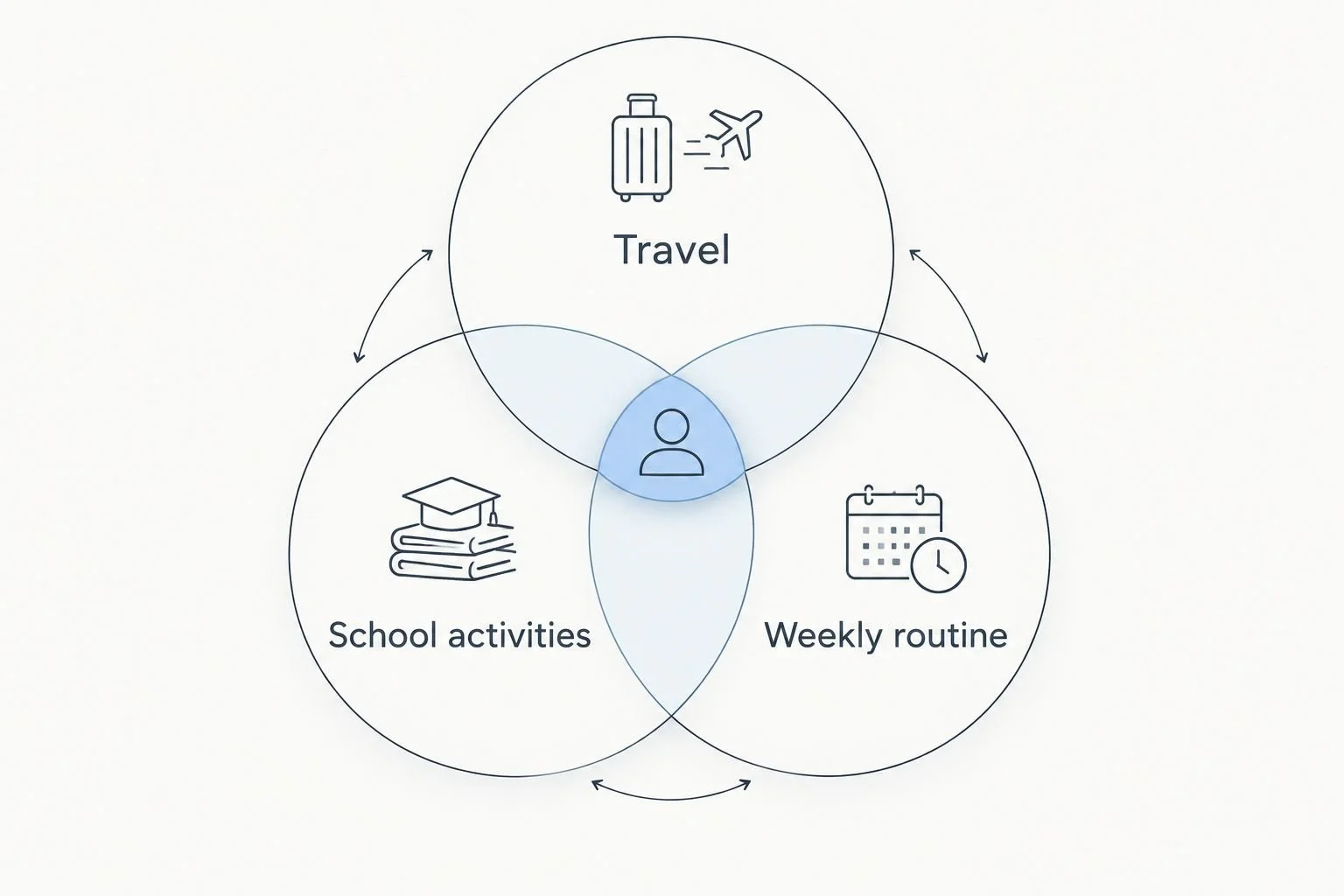
A class choice needs to fit travel, school activities, and the weekly routine together.
Choose 1 weekly commitment as the starting point for your planning exercise, then assess whether it fits. This is a way to test the calendar, not a claim that every student should take the same number of classes. Ask the instructor what participation the specific class expects.
Match the arts community to your family's interests
The Garden Arts Center is a fit for families seeking dance alongside music, theater, art, and wellness classes. Its stated offerings include dance styles such as ballet, tap, jazz, hip hop, lyrical, contemporary, modern, and creative movement, as well as vocal and instrument-based music lessons.
That breadth gives families several artistic interests to explore. It does not establish that particular classes share a timetable, suit the same experience level, or can be combined in one visit. Confirm those details when comparing options.
The Garden Arts Center offers professional guidance within a welcoming arts community. Your next step is to ask how the relevant class supports your child's starting point and whether its current arrangements fit your family. Belonging and sound instruction should work together; neither replaces the other.
FAQ
What should I look for in professional dance classes for my child?
Look for clear explanations, specific corrections, suitable placement, and respectful classroom expectations. Ask how the teacher helps beginners understand and apply feedback.
How can I tell whether a dance teacher gives useful corrections?
A useful correction tells the dancer what to change on the next attempt. Notice whether the teacher gives students an opportunity to apply the direction rather than only pointing out mistakes.
Is a harder dance class better for my child?
A harder dance class is not better when its expectations exceed your child's current preparation. Choose a level that supports learning and ask how progression is decided.
Should my child start with ballet or creative movement?
Choose between ballet and creative movement by comparing the lesson's purpose with your child's interests and starting experience. Ballet introduces style-specific vocabulary and technique, while creative movement emphasizes movement exploration.
Can I watch a dance class before registering?
Ask the center whether class observation is permitted before making plans. Do not assume observation, trial lessons, or particular registration arrangements are offered.
What does The Garden Arts Center teach besides dance?
The Garden Arts Center offers theater, music, art, and wellness classes alongside dance. Its stated offerings include vocal and instrument-based music lessons, yoga, and pilates.
How should I compare dance schedules for 2026?
Compare the complete weekly outing, including travel, school activities, meals, and the return home. Confirm current class details directly rather than relying on an older schedule.
One last thing
After a class visit or teacher conversation, ask your child what they understood—not only whether they enjoyed it. A response about a movement, a rhythm, or a helpful correction gives you something concrete to discuss with the instructor.
For your 2026 decision, keep that answer beside the family calendar. Choose instruction your child can understand and a commitment your household can sustain.