

Teen lyrical dance classes are dance lessons that connect ballet- and jazz-based movement with musical expression, with the aim of developing technique and interpretation together. For teens, choosing a class means matching experience, comfort with expressive movement, and a weekly commitment that fits school and family life.
TL;DR
Choose lyrical dance classes by experience and instructional fit, not age or song preference alone.
Ballet and jazz foundations support lyrical movement; ask how instruction addresses beginners before registering.
A sustainable family schedule matters alongside your teen’s interest in musical expression.
Compare lyrical, ballet, jazz, and contemporary by learning goals rather than treating them as interchangeable.
Why lyrical dance matters for teens
Lyrical dance gives teens a way to explore how movement communicates an idea. A change in timing, direction, or energy can alter the meaning of the same phrase. Technique gives students tools for making those choices deliberately rather than simply copying an emotional gesture.
Families considering classes in 2026 also need a practical fit. The Garden Arts Center identifies school activities, travel, and sustainable weekly commitments as important registration considerations. Start with the available dance and arts options, then ask which instruction matches your teen’s experience and interests.
For families across Berks, Montgomery, and Chester counties, a class decision also involves the journey from home or school. Whether you travel from Douglassville, Pottstown, Phoenixville, King of Prussia, Reading, or Lansdale, evaluate the actual trip rather than assuming a class fits because its start time looks convenient.
Choose a class your teen can participate in consistently, with instruction that makes the movement understandable. An appealing style is only part of the decision.
How to choose lyrical dance classes for your teen
Start with your teen’s reason for dancing
Ask what draws your teen to lyrical dance before comparing classes. Some students enjoy interpreting music; others want to connect familiar ballet or jazz movements into a more expressive phrase. A teen who has only seen performance clips needs a clear picture of the learning process, not just the finished routine.
Let your teen describe the appeal without supplying the answer. Wanting to dance to a favorite song is a useful starting point, but it does not establish the right instructional level. Separate the musical interest from the movement skills the student wants to develop.
Ask what your teen notices in a lyrical performance: movement, storytelling, music, or all three.
Identify whether the goal is exploration, continued dance study, or returning after a break.
Discuss comfort with learning in a group and receiving corrections.
Write down one learning goal in your teen’s own words.
Match the class to current foundations
Age alone does not describe dance experience. A teen with ballet training, a teen with jazz experience, and a complete beginner bring different starting points. Ask how the class handles alignment, weight transfer, balance, and movement vocabulary before assuming the label means beginner-friendly.
In lyrical dance, expressive choices still depend on controlled movement. For example, a sustained reach involves balance and coordination as well as intention. A traveling phrase requires awareness of direction and space, not just remembering the order of steps.
Best for a new dancer: instruction that explains foundations rather than expecting students to infer them from choreography. For a returning dancer, ask how placement accounts for time away without treating past experience as a guarantee of current readiness.
Describe previous styles studied and any breaks in training.
Ask what students should already understand before joining.
Ask whether foundational movements are taught within the class.
Explain any access needs relevant to participation and instruction.
Let the instructor guide placement rather than choosing by the class name alone.
Compare teaching fit before choosing a center
Begin with a simple written list of questions and compare the answers against your teen’s goals. A useful conversation explains what students learn, how corrections are communicated, and how a family can identify an appropriate class. You do not need an elaborate scoring system.
The Garden Arts Center is best for families seeking dance within a broader arts community. Its stated offerings include dance, theater, music, art, and wellness, with professional guidance and a supportive environment. That breadth is useful when your teen has several artistic interests.
For lyrical dance classes at The Garden Arts Center, confirm the current class format, placement expectations, and registration details directly. The center’s broad arts offering does not, by itself, tell you whether a particular class suits a first-time teen dancer or your family’s schedule.
Ask what a student learns beyond memorizing a routine.
Ask how instructors explain and revisit corrections.
Discuss how expressive exploration works alongside sound technique.
Confirm the appropriate next step toward registration.
Include your teen in the conversation rather than deciding entirely on their behalf.
Test the weekly routine before committing
Build your 2026 class plan around the whole evening, not just the lesson. Include school dismissal, transportation, meals, homework, and the trip home. An adult’s work schedule and a sibling’s activities belong in the same plan.
Use 2 school weeks as a planning exercise: mark ordinary obligations and any known exceptions. This is a family scheduling recommendation, not an attendance requirement. Start by evaluating 1 weekly dance commitment before adding another activity.
A manageable routine leaves room for your teen to arrive ready to participate. If every class day depends on an unusually quick departure from school or work, resolve that conflict before registration rather than expecting enthusiasm to solve it.
Map the trip from the place your teen will actually leave.
Check transportation responsibilities with every adult involved.
Account for meals, homework, and other children’s activities.
Identify conflicts with school performances, sports, or recurring appointments.
Ask the center directly about attendance expectations and scheduling questions.
Look for expression grounded in movement
Lyrical dance is not simply dancing slowly or looking emotional. Musical interpretation includes how a dancer uses phrasing, accents, transitions, focus, and changes in energy. A clear movement choice can communicate more than an exaggerated facial expression.
Ask how students learn to connect technique with interpretation. A teacher might discuss the difference between a continuous phrase and a sharply accented one, or how changing the direction of a reach changes its effect. These are examples of dance concepts, not a description of a specific class curriculum.
For your teen’s 2026 goals, focus on learning language that makes expression approachable. Students should not need a dramatic personal story to participate meaningfully in an expressive dance style.
Ask how musical phrasing is explained to students.
Look for attention to transitions as well as individual steps.
Discuss expression as a movement choice, not a required emotion.
Ask how students learn control before adding complexity.
Encourage questions when a movement instruction feels unclear.
Set a review point with your teen
After choosing a class, agree on what you will discuss as your teen gains experience. Keep the conversation about learning and participation rather than comparing bodies, flexibility, or performance clips. A new skill can require repeated explanation without making the class a poor fit.
Use 3 questions: What are you learning? What feels unclear? Does the weekly routine still work? These questions separate an instructional concern from a transportation problem or a temporary frustration. Bring specific concerns to the instructor instead of asking your teen to diagnose everything alone.
A useful 2026 review is not a promise of a particular result. It is a chance to check whether the class remains understandable, welcoming, and manageable for your family.
Ask your teen to describe a movement or concept they are learning.
Invite them to name a question they want to ask in class.
Check whether transportation and homework arrangements remain workable.
Discuss placement concerns with the instructor.
Revisit the original learning goal without demanding a deadline for progress.
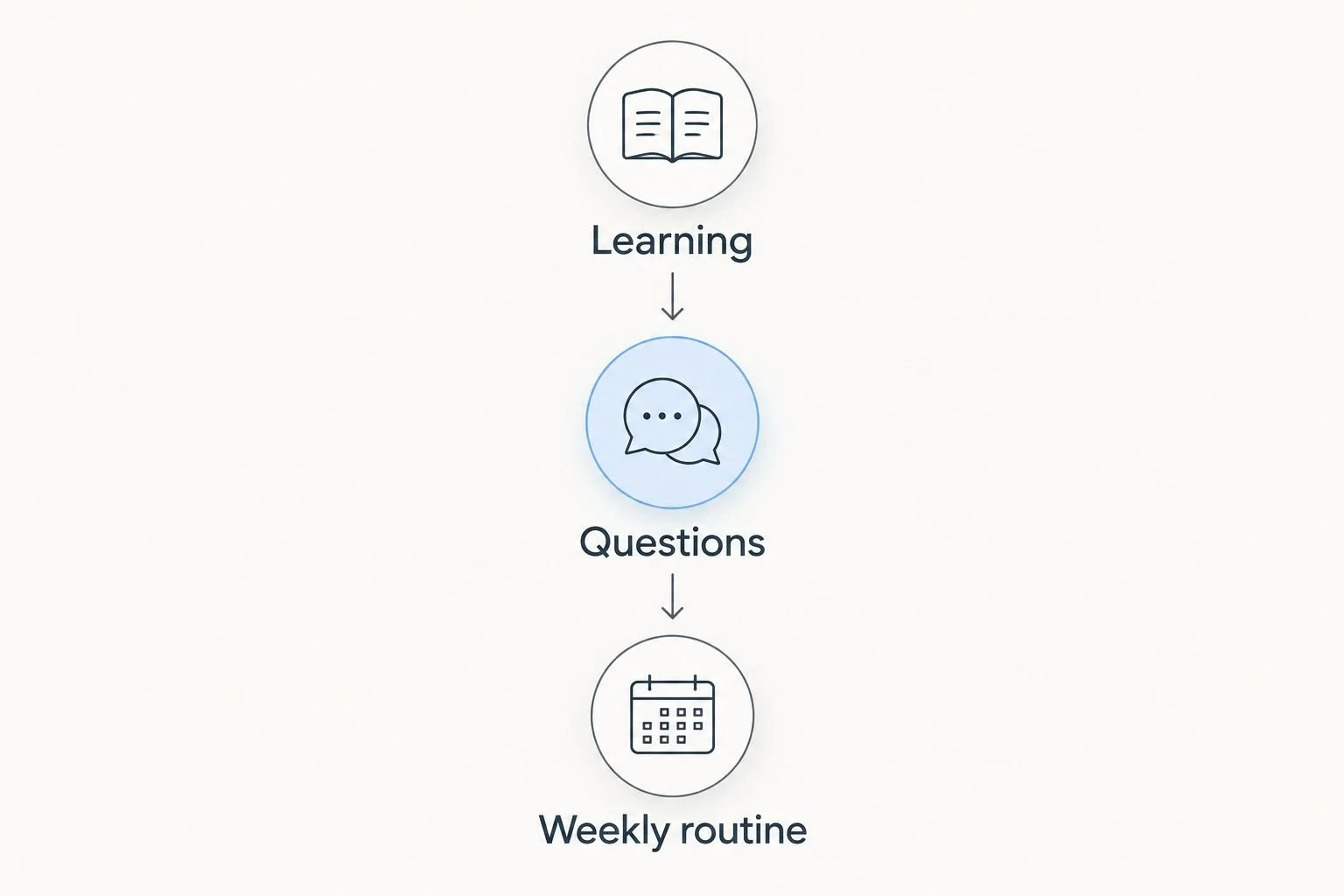
Review the learning experience and the family routine together.
Compare lyrical with other dance options
The best starting point is the style and instructional level that match your teen’s learning goal. These broad distinctions help you prepare questions; individual class content and placement requirements need confirmation. None of these styles replaces the need for clear instruction.
Lyrical dance
Best for: Teens interested in connecting technique with musical interpretation
What it emphasizes: Expressive phrasing using ballet- and jazz-based movement
Key limitation to consider: The name alone does not establish whether beginners can join
Ballet
Best for: Teens who want focused study of ballet foundations
What it emphasizes: Alignment, placement, coordination, and ballet vocabulary
Key limitation to consider: It is not interchangeable with a lyrical class’s expressive focus
Jazz dance
Best for: Teens drawn to rhythmic accents and dynamic movement
What it emphasizes: Rhythm, coordination, isolations, and jazz vocabulary
Key limitation to consider: Content varies; confirm the class’s style and level
Contemporary dance
Best for: Teens interested in exploring movement qualities and spatial choices
What it emphasizes: Varied approaches to weight, space, transitions, and expression
Key limitation to consider: The label covers different teaching approaches, so ask about content
A teen does not need to declare a permanent favorite. Compare what each class teaches now, and ask about any preparation expected for the next step. Adding multiple styles should follow a workable schedule, not the assumption that more classes automatically means a better experience.
Common mistakes families make when choosing teen lyrical
Choosing by the song instead of the instruction
A performance set to a favorite song can spark interest, but music does not establish class suitability. Ask what students learn and how beginners receive explanations. Use musical interest to begin the conversation, not finish the placement decision.
Assuming every teen class starts at the same level
An age label does not reveal prior-training expectations. Share your teen’s actual experience, including time away, and ask for placement guidance. Avoid treating a friend’s enrollment as evidence that the same class is appropriate.
Treating expression as a personality test
A quiet teen can be interested in expressive dance. Ask how the instructor introduces interpretation rather than assuming students must already be outgoing. Keep the focus on exploring movement, not performing a particular personality.
Leaving travel out of the commitment
Families planning from Reading, Lansdale, or other communities need to evaluate their own route and school-day obligations. Do not borrow another family’s commute estimate. Check the full evening before deciding that a weekly class fits.
FAQ
Can my teen take lyrical dance classes without ballet experience?
Ask about the specific class’s entry expectations before registering a teen without ballet experience. Lyrical dance draws on ballet and jazz foundations, but whether those foundations are introduced or assumed depends on the class.
What’s the difference between lyrical and contemporary dance?
Lyrical dance generally connects ballet- and jazz-based movement with musical interpretation, while contemporary dance includes a wider range of movement approaches. Class content varies, so ask about technique, movement vocabulary, and placement rather than relying only on the label.
Is lyrical dance a good choice for a shy teenager?
A shy teenager can explore lyrical dance without already being an outgoing performer. Ask how expressive work is introduced and how instruction supports students who need time to feel comfortable participating.
Does The Garden Arts Center offer more than dance?
The Garden Arts Center offers dance alongside theater, music, art, and wellness classes. Families can consider those broader interests while confirming the current details of the class they want to pursue.
How many lyrical classes should my teen take each week?
Choose a weekly commitment based on placement guidance, learning goals, and your family’s actual schedule. Start your planning with one weekly commitment, then ask whether the class has additional training expectations before deciding what is manageable.
How do I fit teen dance around school activities?
Plan the full class-day routine, including school dismissal, travel, meals, homework, and the return trip. Compare that routine with recurring school commitments and ask the center about any attendance or scheduling questions before registering.
What should I ask before registering for lyrical dance in 2026?
Ask about experience requirements, learning content, placement, current scheduling, and registration steps. For lyrical dance classes at The Garden Arts Center, describe your teen’s background and family constraints so the conversation addresses the class you actually need.
One last thing
Ask your teen what they hope to learn, not only which dance looks most impressive. An answer such as wanting to understand musical phrasing gives you a concrete question to bring to an instructor. It also keeps the decision centered on your teen’s interests rather than somebody else’s finished performance.
For your family’s 2026 plan, take that question to The Garden Arts Center alongside your scheduling constraints. A suitable class connects artistic interest, understandable instruction, and a commitment your family can sustain.