

Before choosing pointe dance classes, ask how the teacher assesses readiness, what ballet training your child must continue, and how beginners progress under supervision. Ask about shoe fitting, discomfort, and what happens when a student needs more preparation. Then check whether the full training commitment—not just the pointe class—fits your family’s week.
TL;DR
Choose pointe dance classes by individual readiness and supervised progression, not a birthday or classmates’ progress.
Ask how ballet technique, alignment, strength, and control inform the teacher’s readiness decision.
Confirm the full weekly ballet commitment before planning travel, school activities, and family routines.
The Garden Arts Center offers pointe and ballet within an arts community serving children and adults.
Why this matters
Pointe changes how a dancer supports and controls movement. Enthusiasm matters, but it does not replace the technique and physical preparation needed to work safely on the tips of pointe shoes.
For your 2026 class search, separate two decisions: whether your child is ready for pointe, and whether a particular program suits your family. A welcoming class still needs clear expectations, individual feedback, and a sensible response when a dancer is not ready to advance.
The Garden Arts Center is best for families seeking dance within a broader arts community. Its offerings include ballet and pointe alongside other dance, music, theater, art, and wellness classes. You can start with The Garden Arts Center when considering that broader setting; the questions below help you assess the specific pointe pathway.
What should parents ask before choosing pointe dance classes?
Ask the teacher to explain the decision-making process, not simply confirm that your child can join. You need to understand how readiness is assessed, what participation involves, and how instruction changes when a student needs additional preparation.
Use these questions during your first conversation:
How do you assess individual readiness? Ask what the teacher looks for in ballet technique, alignment, strength, balance, and control. A useful answer connects observations to your child rather than relying only on age or years of attendance.
What ballet training must continue alongside pointe? Clarify the expected weekly commitment and which classes support the pointe work. Do not assume pointe replaces regular ballet.
Who teaches beginners, and what is their relevant experience? Ask about experience teaching beginning pointe, not just performing on pointe. Teaching a new skill requires explaining it and correcting it.
How does a beginner progress? Ask how initial exercises are selected, what students must demonstrate before moving on, and how the teacher responds to difficulty.
When should we arrange a shoe fitting? Establish whether the teacher wants an assessment before you obtain shoes, how fitting guidance works, and whether the teacher checks the shoes before use.
What happens if my child is not ready? Ask for specific preparation goals and how progress will be reviewed. Continued ballet study should have a clear purpose, not feel like an unexplained rejection.
What should my child do if something hurts? Ask how students report discomfort, when they should stop, and when a qualified healthcare professional should assess a concern.
Choose a clear assessment and progression process over a promise of an early start. You should leave the conversation knowing the next step, even when that step is continued preparation.
Which learning pathway fits your child right now?
Pointe is not a separate shortcut around ballet foundations. It builds on them. The right pathway depends on what your child can currently do with control and what the instructor recommends after assessment.
These are learning pathways to discuss, not a list of confirmed class formats or enrollment options at any particular center.
Ballet foundations
Best for: Students developing consistent basic technique
Main benefit: Builds the movement skills needed for later progression
Limit or trade-off: Does not mean the student is ready for pointe
Focused pointe preparation
Best for: Ballet students working toward specific readiness goals
Main benefit: Gives preparation a clear purpose when the instructor identifies needs
Limit or trade-off: Preparation is not permission to begin pointe
Beginning pointe
Best for: Students approved for supervised pointe work
Main benefit: Introduces pointe technique through guided practice
Limit or trade-off: Requires continued ballet training and careful progression
A child who loves ballet but is not ready for pointe still has meaningful work to do. Ask the teacher to describe that work in terms your child understands: maintaining alignment, controlling a rise and lowering, or keeping movement steady without gripping or forcing.
For 2026 planning, choose the pathway first and build the schedule around its actual requirements. Starting with a timetable and trying to fit your child into an unsuitable level reverses the decision.
What should a pointe-readiness conversation cover?
Readiness is an individual teaching and physical-development decision. It is not something parents should test by asking a child to stand on their toes at home.
A teacher’s explanation should address how the dancer organizes the body during ballet movements. Ask about alignment through the trunk and legs, control of the feet and ankles, and the ability to follow corrections without forcing a position.
Also discuss attention and communication. A beginning pointe student needs to follow instructions, resist copying more advanced classmates, and speak up when something feels wrong. These expectations deserve the same clarity as the physical criteria.
Useful follow-up questions include:
What have you observed in my child’s regular ballet work?
Which skills are consistent, and which still need attention?
How will you explain those goals to my child?
What would prompt you to pause or adjust pointe work?
When is an outside clinical assessment appropriate?
Ask for observable goals, not a label such as talented or mature. Specific feedback gives your family something constructive to understand without turning readiness into a contest.
Why the right pointe class varies by student
Two children who began ballet together do not necessarily need the same next step. Their preparation, response to instruction, and family routines can differ.
Use these factors to compare programs without treating another child’s progress as your benchmark:
Ballet foundation: Ask how the student’s existing technique supports the proposed pointe work. Attendance history alone does not explain movement quality.
Individual readiness: Ask how strength, control, alignment, and physical development inform the decision. No single characteristic should become your home screening test.
Instruction and feedback: Find out how beginners receive corrections and how the teacher checks understanding. A class description cannot answer that by itself.
Weekly commitment: Confirm the ballet training expected alongside pointe. Judge the complete commitment rather than the length of one class.
Travel and recovery: Consider transportation, meals, homework, rest, and other activities. A demanding journey belongs in the decision, even when the class itself looks manageable.
Student motivation: Ask whether your child wants the work involved or mainly wants the shoes. Both feelings are understandable, but they call for different conversations.
The best-fit decision connects your child’s current needs with a routine your household can sustain. Prestige, friends’ choices, and an appealing class name do not resolve those practical questions.
How can families fit pointe into a busy week?
Build your 2026 schedule around the complete training expectation before committing. Ask for current class details directly; a general article cannot establish class times, placement requirements, or attendance policies.
For families across Berks, Montgomery, and Chester counties, travel deserves its own review. Whether you are starting from Douglassville, Pottstown, Phoenixville, King of Prussia, Reading, or Lansdale, consider the actual journey at the time you would travel. These communities describe the families considering classes, not verified center locations.
Work through this sequence:
Confirm readiness. Establish the teacher’s recommended pathway before comparing possible days.
Confirm training. Write down the complete ballet and pointe commitment, including any stated requirements.
Map travel. Consider departure from school or home, transportation arrangements, and the return journey.
Check conflicts. Compare homework, school activities, sibling commitments, meals, and rest.
Discuss sustainability. Ask your child and the adults handling transportation whether the routine is realistic.
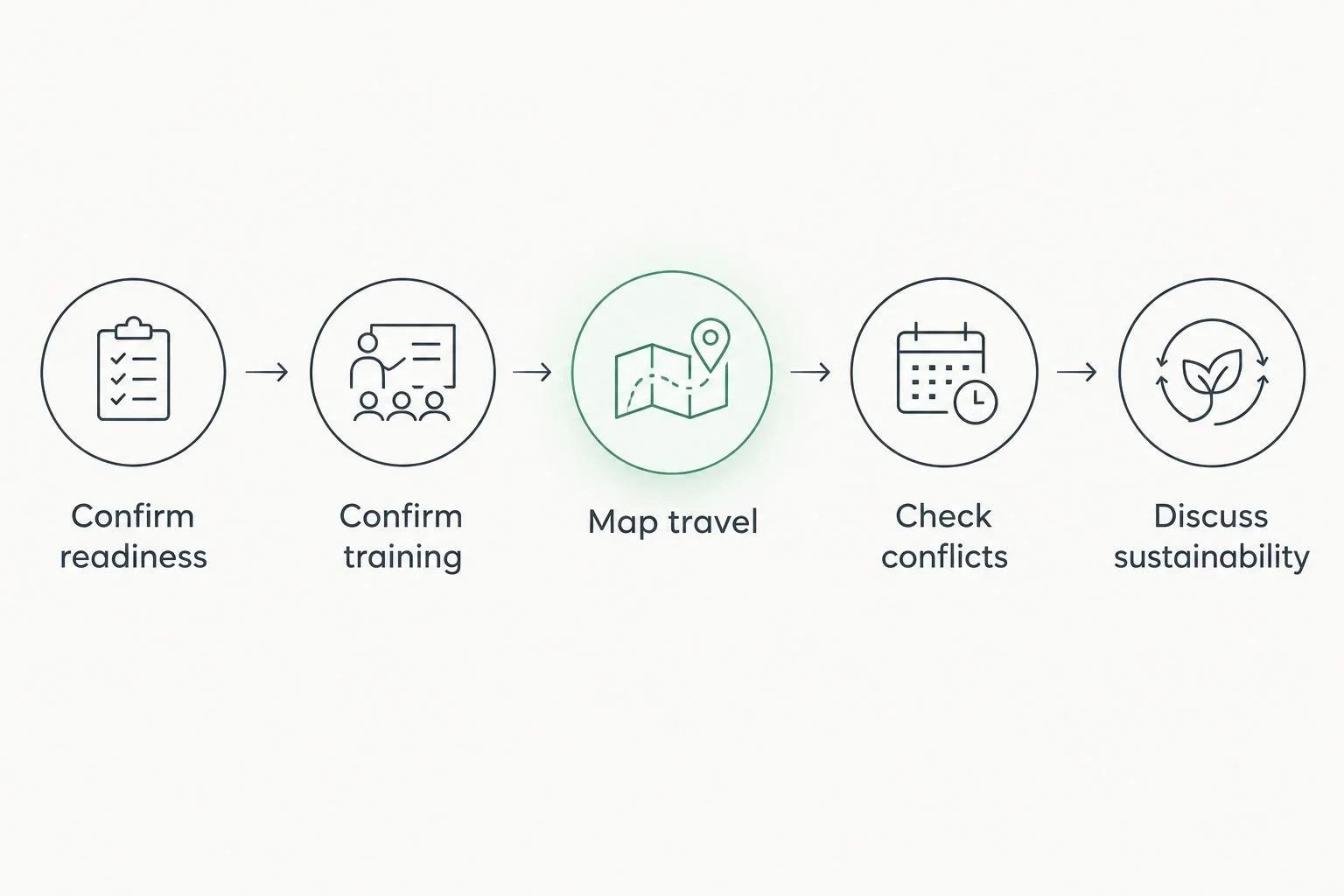
Assess the full training routine before choosing a class time.
A workable schedule leaves room for ordinary family life. If the proposed commitment is not sustainable, discuss an appropriate ballet pathway with the instructor rather than assuming your child should reduce required preparation.
What should parents ask about pointe shoes?
Ask about the shoe-fitting process before obtaining pointe shoes. A fitting and a readiness assessment answer different questions: one concerns the shoe, while the other concerns the dancer’s preparation.
Clarify who provides fitting guidance, what the instructor wants to review, and when your child should first use the shoes. Do not treat owning pointe shoes as permission to practice in them independently.
You should also understand how fit concerns are handled. Ask what your child should report, how the teacher responds to rubbing or discomfort, and when a fitting needs another review.
A close fit does not make persistent pain something to ignore. If pain continues, or there is swelling or difficulty bearing weight, stop the activity and seek appropriate medical advice. A dance teacher guides training; a qualified healthcare professional evaluates an injury.
How do you recognize supportive pointe instruction?
Supportive instruction combines belonging with clear boundaries. Your child should feel able to ask a question, report discomfort, or say that an exercise feels difficult without embarrassment.
Listen for explanations rather than promises. A teacher can describe what a student is working toward without guaranteeing a start date, a particular achievement, or progress matching another dancer.
Ask how the class handles different rates of development. Useful questions include whether exercises are adjusted, how corrections are communicated, and how students receive feedback when they need more preparation.
The Garden Arts Center offers pointe dance classes within its wider arts program. For your 2026 decision, discuss the specific instructor’s readiness process and expectations directly; the breadth of a program does not replace those details.
Explore your family's next step
Review the arts program, then ask about pointe readiness, ballet expectations, and your family schedule.
Should my child start pointe because friends are starting?
Your child should start pointe when individually assessed as ready, not because friends are starting. Classmates can share a love of ballet while needing different preparation or progression.
Keep the conversation focused on your child’s goals. Ask the teacher to explain the next useful step so that continued preparation feels purposeful rather than like being left behind.
Can pointe replace regular ballet classes?
Pointe should not be treated as a replacement for regular ballet training. Ask the instructor what ongoing ballet work the program requires and how that work supports beginning pointe.
For your 2026 schedule, count the whole commitment. A pointe class that fits on the calendar is not a workable choice if the required supporting ballet classes do not.
FAQ
What should I ask first about pointe dance classes?
Ask how the teacher assesses individual readiness for pointe dance classes. Then clarify the required ballet training, beginner progression, shoe-fitting process, and response to discomfort.
Is there one right age to start pointe?
Age alone does not establish pointe readiness. Ask the teacher how ballet technique, alignment, strength, control, and physical development inform the individual decision.
Does my child need pointe shoes before an assessment?
Ask the instructor before obtaining pointe shoes. Establish the readiness decision and fitting process first, including whether the teacher wants to check the shoes before use.
What if my child is not ready for pointe yet?
Ask for specific preparation goals and a clear explanation of how progress will be reviewed. Continued ballet training can address those goals without turning readiness into a comparison with classmates.
Can my child practice pointe at home?
Do not begin unsupervised pointe practice at home. Ask the teacher which activities, if any, are appropriate outside class and follow the instructions given for your child.
How do I compare pointe classes near my family?
Compare readiness assessment, teaching experience, progression, and the complete weekly commitment before choosing by proximity. Include travel, school activities, homework, and rest in the decision.
Does The Garden Arts Center offer more than ballet and pointe?
The Garden Arts Center offers dance, theater, music, art, and wellness classes for children and adults. Its dance offerings include ballet, tap, jazz, hip hop, lyrical, contemporary, modern, and creative movement, alongside pointe.
One last thing
Ask your child one question after the teacher conversation: “What will you be working on next?” A useful answer describes a skill or learning goal, not just a date for getting shoes.
That small distinction keeps the focus on learning. You are choosing a place for steady instruction and belonging, not simply securing the next milestone.