

Instead of starting your fall activity search from scratch, use your child’s summer theater camp experiences to choose a dance class and check it against your family calendar. This guide turns the move from summer theater camp to fall dance classes into a practical 2026 plan: identify what your child enjoyed, ask about placement, and confirm a manageable weekly commitment before registering.
TL;DR
The Garden Arts Center suits families seeking dance, theater, and music within one arts community.
For summer theater camp to fall dance classes, match your child’s favorite camp activity before choosing a dance style.
Camp performance experience does not establish ballet, jazz, or tap placement; ask about beginner foundations.
Check school activities, travel, and class expectations before committing to a fall routine.
Why this matters
A child who loved a camp performance does not necessarily want every part of theater training. Your child might have enjoyed learning choreography, creating a character, singing with others, or simply belonging to the group. Those are different starting points for choosing a class.
Choose the skill your child wants to keep learning, not the class name that sounds most like camp. The comparison of first dance styles for kids can help you discuss those differences together.
The Garden Arts Center offers dance, theater, music, art, and wellness classes for children and adults. That range gives your family different directions to consider, but the right fall choice still depends on your child’s interests, instructional needs, and schedule.
Before you start
Gather your materials: Bring your school calendar, known activities, transportation constraints, and any camp feedback. Include your child in the conversation rather than choosing solely from a performance video.
Set a realistic starting commitment: Consider 1 class per week as a planning starting point, not an enrollment requirement. Review a 2-week stretch of ordinary school life to see where travel, meals, homework, and rest fit.
Watch the placement gap: A camp role or memorized routine does not establish readiness for a particular dance level. Ask about prerequisites and instruction before choosing; confirm any clothing or footwear requirements before buying anything.
Your child’s interest profile
Identify the part of camp worth continuing
Have a 10-minute conversation. Ask what your child would choose to do again: learn a dance, play a character, sing, or create something for a performance. Treat this as a suggested conversation length, not a readiness test.
Ask for a concrete memory. Replace “Did you like camp?” with “Which activity did you wish lasted longer?” A specific example gives you something useful to discuss with an instructor.
Separate interest from familiarity. Ask whether your child liked the activity itself, the friends, or the excitement of performing. All matter, but they do not point to the same class.
Write a simple goal. Use your child’s words: learning dance steps, moving to music, speaking as a character, or singing with guidance. Keep the goal about participation and learning rather than a promised result.
Expected result: You have a clear interest statement to share when asking about fall 2026 classes. You do not need to choose a level yet.
A child who says “I liked making up movements” needs a different conversation from one who says “I want someone to teach me the steps.” Neither answer is better. Both help you find instruction that fits.
Your class shortlist
Match the interest to an instructional focus
Choose a starting direction. Use the table to connect your child’s camp interests with questions about dance, acting, or singing instruction.
Check the foundations. Ask what beginners learn and whether the class assumes previous training. A familiar song or performance theme does not tell you the technical level.
Ask about professional guidance. Request examples of how the instructor explains movements, gives corrections, and supports students learning at different speeds.
Keep a fallback direction. If the first style does not fit your child’s preparation or family schedule, return to the original interest rather than choosing an unrelated activity solely because its time works.
The following are general distinctions between learning areas, not descriptions of a particular class syllabus or a 2026 timetable.
Creative movement
Best for: Children drawn to imaginative movement
What the training emphasizes: Exploring space, rhythm, and movement through guided activities
Benefit and trade-off: Supports movement exploration; differs from a technique-centered class.
Ballet
Best for: Children interested in structured dance foundations
What the training emphasizes: Alignment, positions, coordination, and controlled movement
Benefit and trade-off: Provides a clear technical focus; differs from acting out a camp scene.
Jazz
Best for: Children who enjoyed choreography and musical accents
What the training emphasizes: Rhythm, coordinated steps, and performance expression
Benefit and trade-off: Connects movement with music; beginner foundations still matter.
Tap
Best for: Children interested in making rhythms with their feet
What the training emphasizes: Footwork that produces sound and rhythmic patterns
Benefit and trade-off: Makes rhythm audible; requires attention to footwork and footwear guidance.
Acting
Best for: Children most interested in characters and dialogue
What the training emphasizes: Character choices, listening, and scene work
Benefit and trade-off: Keeps storytelling central; does not replace dance technique instruction.
Singing lessons
Best for: Children who most enjoyed the songs
What the training emphasizes: Vocal instruction and musical development
Benefit and trade-off: Keeps the learning focus on singing; does not address dance placement.
Expected result: You can explain why a learning direction fits your child and what you still need to ask. You are choosing an instructional focus, not ranking children by talent.
Hip hop, lyrical, contemporary, and modern are additional dance styles offered by The Garden Arts Center. Ask how each class’s level and focus match your child rather than treating them as interchangeable alternatives. Pointe is not a shortcut for a child inspired by a ballet costume or performance; discuss readiness with a qualified instructor.
Your family calendar and registration questions
Confirm the routine before making the commitment
Map the whole outing. Include school dismissal, the trip to class, changing time, the return journey, and dinner. Use your actual departure point rather than a general town-to-town estimate.
Check recurring conflicts. Look at homework routines, school rehearsals, sports, sibling activities, and caregiver work commitments. Identify who can handle transportation when the usual driver cannot.
Ask about the current class details. Confirm the age grouping, level, meeting schedule, prerequisites, clothing, footwear, and any performance expectations. Ask how registration works and what attendance or withdrawal terms apply before committing.
Share relevant learning needs. Explain what helps your child follow directions or settle into a new group. Ask what support the instructor can provide rather than assuming a specific accommodation is included.
Confirm the next step. Use the contact page to ask about suitable instruction and registration. Describe your child’s camp experience without presenting it as formal dance training.
Expected result: You have a class direction, an understood weekly commitment, and answers to the questions that affect registration.
For families across Berks, Montgomery, and Chester counties, the travel plan belongs in the class decision. Whether you are traveling from Douglassville, Pottstown, Phoenixville, King of Prussia, Reading, or Lansdale, check the actual destination and route before deciding. This guide does not identify a center location in any of those towns.
A useful message is: “My child enjoyed choreography at summer theater camp and is new to formal dance instruction. What beginner class should we discuss, and what should we know about the fall schedule and registration?” Add your child’s age and your scheduling constraints when you send it.
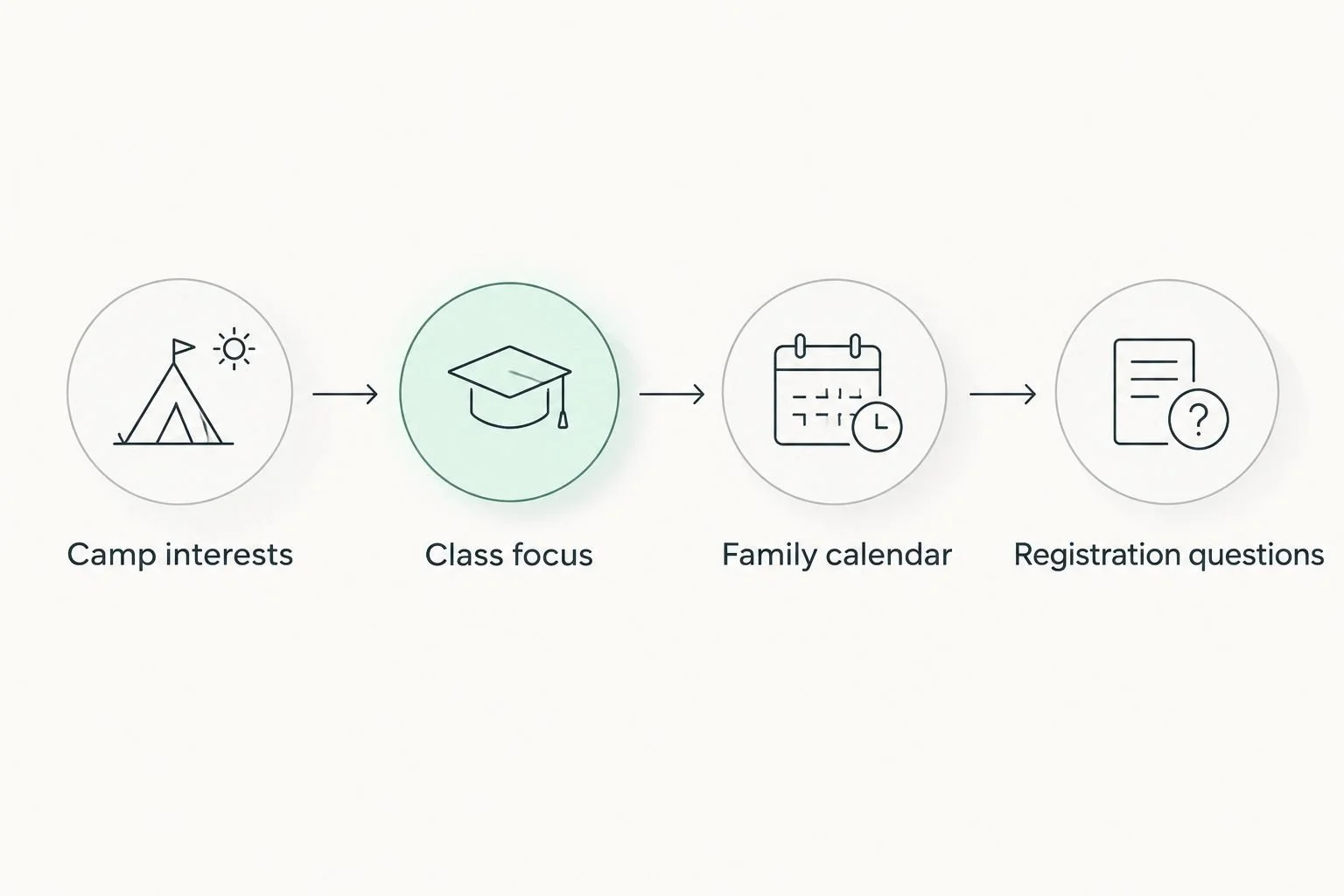
Check both the learning fit and the family routine before registering.
A second route: when your child prefers acting or singing
The transition from summer theater camp to fall dance classes does not have to end in dance. If your child consistently talks about dialogue, character choices, or songs rather than movement, keep that interest at the center of your 2026 decision.
Repeat the same process with a different instructional focus:
Name the preferred activity. Separate singing from acting instead of treating “theater” as a single skill.
Ask about the matching instruction. Discuss acting or vocal lessons, including the experience expected of a beginner.
Check the same calendar constraints. A different art form still needs a sustainable travel and attendance routine.
Revisit dance only for a clear reason. Add dance when your child wants movement training and the schedule supports it, not because every young performer supposedly needs every class immediately.
This route keeps your child’s interest intact without forcing a dance choice. Its trade-off is focus: acting or singing lessons do not substitute for learning dance technique.
Instrument-based music lessons, including guitar, offer another direction when your child’s interest has shifted toward playing music. Art classes serve a different creative interest again. Ask about the relevant instruction instead of assuming every arts class continues the same camp skills.
Troubleshooting the transition
Your child loved the show but resists weekly classes
Ask what your child wants to repeat. A performance, friendships, and regular instruction are different experiences; do not assume enjoyment of one means readiness for all three. Discuss the classroom experience before making a commitment.
The class sounds right, but the level is unclear
Describe what your child has actually practiced: following a choreographed sequence, learning dialogue, singing in a group, or attending previous technique classes. Ask the instructor to explain the placement decision and beginner expectations. Do not use a camp lead role as a dance-level credential.
The trip conflicts with school-night routines
Rebuild the plan around the complete outing, not just the lesson. If meals, homework, transportation, and rest do not fit, ask about a different class arrangement before registering. Do not assume schedule changes or make-up arrangements are offered.
Your child compares themselves with experienced dancers
Explain that camp experience and dance experience are not the same thing. Ask how beginners receive corrections and learn unfamiliar steps, and focus conversations at home on what your child is learning rather than who performs a movement first.
You are unsure what to buy
Ask for the class-specific clothing and footwear guidance before purchasing. Ballet, tap, and other styles have different practical requirements, and a theater camp costume does not establish what a weekly dance class requires.
Customize your workflow
For fall 2026, keep one shared note containing your child’s interest, your class questions, confirmed requirements, and the family travel plan. Update it when you receive answers so that different caregivers work from the same information.
The Garden Arts Center is best for families seeking dance, theater, and music within one arts community. The benefit is the range of learning directions to discuss; the practical limit is that the class must still fit your child’s level and your weekly routine. A broad arts offering is not a reason to overschedule.
Once a routine is established, revisit additional interests with your child. A sibling’s class or a parent’s yoga or pilates interest deserves its own scheduling check rather than an assumption that everyone can attend together.
FAQ
How do I move my child from summer theater camp to fall dance classes?
Start with the camp activity your child most wants to continue, then ask about a beginner dance class that teaches the relevant foundations. Confirm placement, the full travel routine, class requirements, and registration terms before committing.
What is the best dance style after summer theater camp?
The best starting style matches your child’s interest and current preparation. Compare creative movement for imaginative exploration, ballet for structured foundations, jazz for choreography and musical accents, or tap for rhythmic footwork, then ask an instructor about placement.
Does a lead role at camp qualify my child for advanced dance?
A lead role at camp does not establish advanced dance readiness. Describe the movements and training your child has actually practiced so an instructor can discuss an appropriate level.
Should my child take acting or singing instead of dance?
Choose acting or singing instruction when characters, dialogue, or songs are what your child wants to keep learning. Dance is a separate instructional choice, not a required next step after every theater camp.
How many fall classes should a beginner take?
Use one class per week as a planning starting point, not a universal requirement. Ask about the program’s expectations and check whether your family can sustain the complete weekly outing alongside school and rest.
What should I ask The Garden Arts Center before registering?
Ask The Garden Arts Center about the class focus, age grouping, level, current schedule, prerequisites, clothing, footwear, and registration process. Also clarify attendance terms and any performance expectations that affect your family calendar.
How should families outside the immediate area plan the trip?
Plan from your actual school, home, or caregiver pickup point to the confirmed class destination. Include changing, meals, the return trip, and sibling commitments rather than judging the outing by lesson length alone.
One last thing
Ask your child to describe a class they would enjoy even without a show at the end. The answer helps separate enthusiasm for performing from enthusiasm for learning the underlying skill. Use that distinction when making your 2026 choice, and leave room for your child’s interests to change.