

Children should wear comfortable clothing that stays in place during movement and the footwear specified by their instructor for kids dance classes. Check the class dress requirements before buying shoes, tights or a leotard: ballet, tap, creative movement and other styles do not all use the same outfit.
TL;DR
For kids dance classes, choose clothing that allows movement and follow the instructor’s footwear requirements.
Ballet, tap and creative movement need different clothing and footwear checks before you shop.
The Garden Arts Center offers dance options for families seeking professional guidance in a welcoming arts community.
Confirm fit, hair requirements and changing arrangements before your child’s first class.
Why this matters
A useful dance outfit lets your child bend, reach and follow instructions without repeatedly adjusting clothing. It also lets the teacher see movement clearly enough to offer corrections. The goal is participation, not an elaborate first-day wardrobe.
The Garden Arts Center is a good fit for families seeking kids dance classes within a broader arts community. Its offerings include ballet, tap, jazz, hip hop and creative movement, alongside other arts subjects. Explore The Garden Arts Center for the class context, then confirm the requirements for your child’s particular group.
For your 2026 class plans, treat clothing and scheduling as connected decisions. An outfit that requires a rushed change after school adds another task to the trip; a manageable routine helps you arrive prepared without making dance day harder than necessary.
What should children wear to kids dance classes?
Start with the instructor’s dress requirements, then check how the outfit works on your child. A garment described as activewear is not automatically suitable for every dance style, and a shoe that looks like a dance shoe is not automatically the correct type.
Use this sequence before shopping:
Confirm requirements. Ask for the clothing, footwear, hair and accessory guidance for the exact class, including any required colors or garment types.
Check movement. Have your child bend their knees, reach overhead and sit comfortably. Clothing should stay in place without restricting those movements.
Check footwear. Confirm the shoe type and fit rather than choosing by appearance or assuming siblings can share.
Secure hair. Keep hair away from the face using a style that follows the instructor’s guidance and feels comfortable.
Pack simply. Keep the required items together so your child can find them without emptying an overfilled bag.
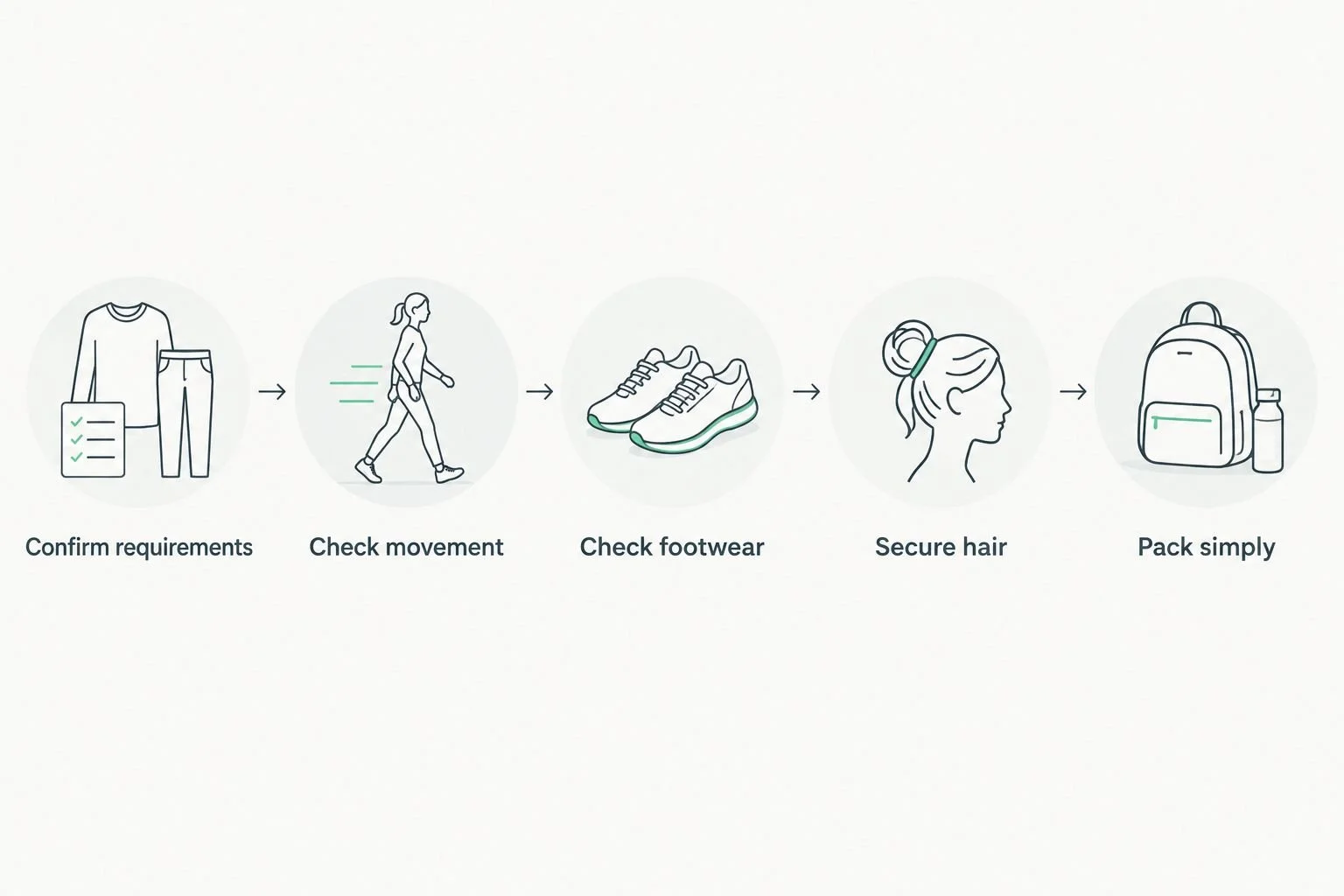
Confirm the class requirements before buying or packing dance clothing.
The comparison below describes general considerations, not a dress code for a specific provider. Your instructor’s requirements take priority over a general clothing guide.
Ballet
Best for this clothing approach: Close-fitting dance clothing that makes alignment visible
What to confirm: Leotard, tights, ballet slippers and hair requirements
Main limitation: General activewear might not meet the class dress code
Tap
Best for this clothing approach: Clothing that allows knee and ankle movement
What to confirm: Tap-shoe style, fit and any clothing requirements
Main limitation: Ordinary sneakers do not provide the function of tap shoes
Jazz
Best for this clothing approach: Clothing that stays secure through stretches and traveling steps
What to confirm: Required footwear and whether fitted dancewear is expected
Main limitation: Loose layers can make body position harder to see
Hip hop
Best for this clothing approach: Comfortable clothing suited to bending and full-body movement
What to confirm: Approved sneakers and any indoor-shoe requirements
Main limitation: Outdoor shoes or a particular sole might not be accepted
Creative movement
Best for this clothing approach: Simple, flexible clothing a young child can manage
What to confirm: Footwear, bathroom practicality and any required dancewear
Main limitation: Everyday clothing can include awkward fastenings or loose hems
What should children wear to ballet?
Ballet clothing should allow the instructor to observe posture, leg placement and movement. Leotards and tights are common ballet garments, but their use, color and combination depend on the class. Do not treat a general ballet outfit checklist as a purchase instruction.
Best for ballet: the specified dancewear and properly fitted ballet slippers. A close-fitting outfit supports clear observation; the trade-off is that fit matters, and a garment bought with excessive growing room can shift during movement.
Ask whether your child needs a particular slipper style and whether the teacher has fitting guidance. Ballet slippers and pointe shoes serve different purposes. A beginner’s interest in ballet is not a reason to buy pointe shoes, and pointe work requires instruction and readiness assessment.
For a first ballet class in 2026, keep the shopping decision narrow: buy what the class actually requires. A decorative skirt, extra layers or accessories should not displace the basic clothing and footwear instructions.
What should children wear to tap?
Tap clothing needs to allow movement through the knees, ankles and feet. Check that trouser hems do not trail under the shoes or catch on them. The teacher also needs to observe the feet as students learn steps and rhythms.
Best for tap: the instructor-specified tap shoes with clothing that leaves footwork unobstructed. Tap shoes create sound through attached taps; ordinary athletic shoes are not a substitute for that function. The limitation is that the correct footwear is a separate requirement from a comfortable general outfit.
Before buying, ask about shoe style and fitting. Do not assume a shoe recommended for another child, age group or teacher is the correct choice for your child’s class. Keep tap shoes available for class rather than relying on whatever footwear your child wears to school.
What should children wear to jazz or hip hop?
Jazz and hip hop both involve full-body movement, but they should not be treated as having identical footwear rules. Ask about each class separately, especially if your child attends more than one style.
Best for jazz: secure clothing that allows stretching and makes movement visible. Fitted dancewear can help the teacher observe body position, while overly loose fabric can obscure it. Confirm whether the class requires jazz shoes or another footwear arrangement before purchasing.
Best for hip hop: comfortable clothing that allows bending, reaching and changes of level. Athletic clothing can suit those movements, but a loose outfit still needs secure waistbands and manageable hems. Sneakers must match the teacher’s guidance; comfort alone does not establish that a shoe is appropriate for the floor or lesson.
For either style, ask your child to try the complete outfit rather than checking each item separately. A top that feels fine while standing can ride up during an overhead reach, and trousers can pull at the knees during a deep bend.
What should preschoolers wear to creative movement?
Creative movement clothing should let a young child move freely without creating unnecessary dressing difficulties. Think about reaching, sitting, bending and getting ready for a bathroom visit, not just how the outfit looks in a photograph.
Best for creative movement: simple, flexible clothing that meets the teacher’s requirements. Easy-to-manage garments can simplify preparation, but everyday clothes are not automatically suitable. Stiff fabric, trailing hems and complicated fastenings deserve a closer look.
Ask specifically about footwear. Do not assume that barefoot participation, socks, ballet slippers or sneakers are interchangeable choices. The instructor’s guidance should determine what goes on your child’s feet.
A costume is not the default outfit for a lesson. If your child loves dressing up, explain that class clothing is chosen for moving and learning; save extra costume pieces unless the teacher invites them.
Why dance clothing requirements vary
The right outfit depends on what students will do and what the instructor needs to observe. These differences explain why a single shopping list does not cover every class:
Dance style. Tap involves sound-producing footwear, while ballet uses different shoes and emphasizes visible alignment.
Movement demands. Reaching, stretching and traveling across the floor place different demands on fabric, hems and waistbands.
Instructional visibility. A teacher needs to see relevant body positions; excess fabric can obstruct that view.
Student independence. Younger children need clothing that works for their dressing and bathroom needs.
Floor and footwear guidance. The instructor determines which footwear is appropriate for the lesson setting.
Class expectations. Required garments, colors and hair arrangements belong to the particular class, not to dance education as a whole.
When reviewing a 2026 clothing list, separate requirements from optional extras. Ask for clarification when an item is unclear rather than buying several alternatives and hoping one is correct.
How can you make getting ready fit your family schedule?
Choose a preparation routine that works on an ordinary school day. Families traveling from Douglassville, Pottstown, Phoenixville, King of Prussia, Reading or Lansdale need to consider their actual route, school activities and where changing clothes will happen. These communities are planning reference points, not claims about center locations.
Start with the departure time your household can realistically manage. Then work backward through changing, gathering shoes and leaving school or home. A class commitment includes that preparation and travel, not just time spent dancing.
For families across Berks, Montgomery and Chester counties, an outfit check at home can prevent a second problem during an already busy trip. Ask about changing arrangements rather than assuming a private space will be available, and keep the required clothing together between lessons.
The Garden Arts Center offers both dance and other arts subjects, but your child does not need a crowded activity schedule to belong in an arts community. Choose a sustainable weekly commitment first. For 2026 planning, leave room for homework, meals and the practical work of getting ready.
Can my child wear regular clothes to the first dance class?
Regular clothes are appropriate only when they meet the instructor’s requirements and allow the necessary movement. Ask before the first lesson rather than assuming a special first-day exception exists.
If the teacher permits everyday activewear, choose secure, flexible garments without trailing fabric. That permission does not automatically extend to footwear, jewelry or costume accessories.
Should I buy dance shoes with room to grow?
Dance shoes should fit for movement now, not simply offer extra length for later. Excess space can let the foot shift, while a shoe that squeezes or curls the toes also needs attention.
Follow the instructor’s fitting guidance and check the relevant shoe type on your child. Do not assume dance-shoe sizing matches school-shoe sizing, or that a borrowed pair fits because its label looks familiar.
Does my child need a new outfit for every dance style?
Your child needs an outfit that meets each class’s requirements, not automatically a separate wardrobe for every style. Some garments can serve more than one class when the teachers permit them; shoes often require a separate check.
Before building a 2026 shopping list, compare the actual requirements side by side. Reuse suitable clothing where allowed, and avoid buying duplicates solely because the class names differ.
FAQ
What should my child wear to their first kids dance class?
Your child should wear the clothing and footwear specified for that class. Confirm the requirements before shopping, then check that the complete outfit allows bending, reaching and sitting without repeated adjustments.
Can my child wear leggings and a T-shirt to dance?
Leggings and a T-shirt are suitable only if the instructor permits them and they stay secure during movement. Some classes require particular dancewear, and footwear needs its own check.
Are socks okay instead of dance shoes?
Socks are not an automatic substitute for the required dance shoes. Ask the instructor what footwear is appropriate for the class and floor rather than choosing based on convenience.
Does my child need a leotard for creative movement?
A leotard is required only if the creative movement class specifies one. Ask about clothing and footwear, and consider how easily your child can manage the outfit when dressing or using the bathroom.
How should my child wear their hair for dance?
Your child’s hair should stay away from the face and follow the instructor’s requirements. Check whether a particular style is needed rather than assuming every class requires a ballet bun.
Can my child wear jewelry to dance class?
Follow the instructor’s jewelry guidance and leave unnecessary accessories at home. Dangling or loose items can catch during movement, and decorative pieces are not needed for participation.
What should I ask The Garden Arts Center before buying dance clothes?
Ask The Garden Arts Center for the clothing, footwear and hair requirements for your child’s exact class. Also clarify any questions about fit or changing arrangements before making purchases.
One last thing
Do the movement check in the complete outfit, including the required shoes. Checking a waistband, hem or shoe separately can miss how the pieces work together when your child bends and reaches.
Then let your child practice finding and packing the essentials. Preparation can be a small, manageable part of joining a dance community rather than another source of first-class worry.