

Best for spoken auditions: acting classes. Best for singing auditions: vocal lessons. Best for choreography-led auditions: jazz dance classes. This 2026 guide compares performing arts classes for auditions so you can match your child’s next step to the audition brief, then explore dance, theater, and music at The Garden Arts Center.
TL;DR
Choose performing arts classes for auditions by the required skill: acting, singing, or dance.
Acting classes are the first choice for spoken scenes; vocal lessons address singing preparation.
Jazz dance supports choreography practice; ballet emphasizes foundational dance technique.
The Garden Arts Center offers dance, theater, and music for families seeking an arts community.
Choose a sustainable weekly commitment before adding another class.
Why this matters
An audition is a request to demonstrate particular skills, not every performing skill at once. A child preparing a spoken scene needs different guidance from a dancer learning a combination or a singer preparing a song.
Choose the class that addresses the audition requirement before choosing an extra class. For a first-time performer, interest and readiness matter too: preparation should leave room for curiosity, not turn every lesson into a casting exercise.
The Garden Arts Center suits families seeking dance, theater, and music classes within one arts community. Its offerings provide several starting points; the right choice depends on your child’s experience and the requirements of the opportunity.
What makes the best performing arts classes for auditions?
Use these criteria when comparing classes for your family’s 2026 plans:
Audition match: Does the class teach the skill named in the notice—spoken acting, singing, or a particular dance style?
Starting level: Can your child follow the instruction without skipping foundational work?
Specific feedback: Ask how instructors explain corrections and help students apply them.
Practice relevance: Look for a connection between the exercises and the task your child must perform.
Supportive instruction: Ask how teachers introduce unfamiliar material and respond when students make mistakes.
Sustainable attendance: Consider the trip, school activities, meals, and practice before committing.
A class can offer valuable arts education without being an audition-preparation course. Ask directly whether instruction includes individual audition material; do not assume that a general class includes coaching for a particular production.
Performing arts classes for auditions at a glance
This is a ranking of class types by audition fit, not a claim that one art form is better than another. Move the class matching your audition notice to the top of your shortlist.
1. Acting classes
Best for: Spoken scenes and monologues
Main learning focus: Character choices, listening, and text
Key limitation: Does not replace singing or dance instruction
2. Vocal lessons
Best for: Singing auditions
Main learning focus: Pitch, phrasing, and song interpretation
Key limitation: Does not replace scene work or choreography
Best for: Choreography-led auditions
Main learning focus: Rhythm, coordination, and movement sequences
Key limitation: Does not cover every dance style
4. Ballet classes
Best for: Foundational dance technique
Main learning focus: Alignment, balance, and controlled movement
Key limitation: Does not directly prepare spoken or sung material
5. Tap classes
Best for: Auditions explicitly requiring tap
Main learning focus: Rhythmic footwork and clear sounds
Key limitation: Specialized rather than general audition preparation
6. Creative movement
Best for: Young children beginning movement learning
Main learning focus: Musical response, space, and movement exploration
Key limitation: Not a substitute for role-specific preparation
1. Acting classes: best for spoken audition material
Acting classes address the central task of a spoken audition: communicating a character’s situation through words and actions. Students explore what a character wants, listen to scene partners, and make choices that give the text meaning.
For a child preparing a monologue, ask whether the instructor can discuss the assigned material. General acting instruction and individual monologue coaching are different services; confirm what the class includes.
Acting classes pros:
Directly relevant to spoken scenes and monologues.
Develop attention to a scene partner rather than memorization alone.
Provide a vocabulary for discussing character choices.
Acting classes cons:
Do not teach the dance technique needed for movement auditions.
Do not replace vocal instruction when singing is required.
Best for: Children whose audition notice requests dialogue, a scene, or a monologue.
Verdict: Choose acting first for a spoken audition.
2. Vocal lessons: best for singing auditions
Vocal lessons focus on the voice as an instrument, including pitch, phrasing, diction, and musical interpretation. For an audition, those skills support singing the requested material clearly and making sense of its words.
Bring the actual song requirements into the conversation with an instructor. Ask about suitable material, accompaniment instructions, and how to prepare without forcing volume or copying another singer’s sound.
Vocal lessons pros:
Directly address the singing component of an audition.
Connect musical phrasing with the meaning of lyrics.
Give students a setting to ask questions about vocal technique.
Vocal lessons cons:
Do not replace choreography practice.
Song work alone does not cover the demands of a spoken scene.
Best for: Children asked to sing, including young performers considering musical theater.
Verdict: Choose vocal lessons first when singing is required.
3. Jazz dance classes: best for choreography-led auditions
Jazz dance brings together rhythm, coordination, and movement sequences. It is a useful class to investigate when an audition asks students to learn and perform choreography, particularly when jazz is named in the requirements.
Ask how the class introduces combinations and matches instruction to experience. Learning a sequence and performing it with clear timing are related tasks, but a beginner needs guidance with both.
Jazz dance classes pros:
Connect technical exercises with movement combinations.
Give students opportunities to follow musical timing.
Address coordinated movement across the body.
Jazz dance classes cons:
Do not substitute for tap, ballet, or other specifically requested styles.
A class above the student’s level can leave foundations unaddressed.
Best for: Students preparing for auditions centered on jazz or choreography pickup.
Verdict: Choose jazz when the dance brief matches; confirm the level first.
4. Ballet classes: best for foundational dance technique
Ballet classes emphasize alignment, balance, coordination, and controlled movement through a structured movement vocabulary. They are a relevant foundation for students pursuing dance training and a direct match when ballet is part of an audition.
For beginners, the priority is learning technique at an appropriate level—not rushing toward advanced steps. Pointe is a separate training decision that requires instructor assessment, not an audition shortcut.
Ballet classes pros:
Establish a shared vocabulary for discussing dance technique.
Focus attention on placement and movement control.
Directly address ballet requirements when those appear in an audition brief.
Ballet classes cons:
Do not teach spoken acting or singing.
Foundation training is not a quick replacement for required experience.
Best for: Students needing ballet preparation or a structured dance foundation.
Verdict: Choose ballet for technique; keep the level appropriate.
5. Tap classes: best for auditions that name tap
Tap uses footwork to create audible rhythms. When an audition explicitly asks for tap, practicing another dance style does not replace learning its steps, timing, and sound production.
Ask what prior experience the class expects and what footwear instruction applies. Preparation should match the requested level rather than push a beginner toward a fast combination before the underlying steps are clear.
Tap classes pros:
Directly match tap-specific audition requirements.
Make rhythmic accuracy audible.
Develop coordination between footwork and musical timing.
Tap classes cons:
Have a narrower audition use than general acting or singing preparation.
Require style-specific learning even for experienced dancers from other disciplines.
Best for: Students whose audition notice explicitly requests tap skills.
Verdict: Choose tap when it is required, not as a general audition add-on.
6. Creative movement: best for young beginners
Creative movement introduces children to responding to music, exploring space, and expressing ideas through movement. It is a starting point for participation and discovery rather than a specialized audition course.
A young child who is still learning to follow group directions does not need every class framed around performing for a panel. Ask how instruction balances exploration, simple directions, and participation at the child’s current stage.
Creative movement pros:
Introduces movement through exploration rather than advanced combinations.
Gives children ways to respond physically to music.
Helps families explore whether group movement learning fits their child.
Creative movement cons:
Does not directly prepare a monologue or audition song.
Does not replace technical training for an audition requiring established dance skills.
Best for: Young children beginning a movement-based artistic journey.
Verdict: Choose creative movement for readiness and enjoyment, not accelerated audition preparation.
How these classes are ranked
The ranking prioritizes the connection between instruction and the audition task, followed by starting level, useful feedback, and family practicality. It does not assign scores, predict casting results, or imply that every class includes audition coaching.
For 2026 planning, treat the audition notice as your decision document. A ballet requirement moves ballet first; a tap requirement moves tap first. Hip hop, contemporary, lyrical, and modern classes also deserve consideration when those styles match the brief or the student’s longer-term interests.
Build a weekly plan your family can sustain
Start with the class that addresses the clearest need. As a planning recommendation, consider 1 class per week before adding another commitment; this is a starting framework, not an attendance requirement.
Review 2 calendar weeks that include ordinary school activities, not just an unusually quiet week. Families across Berks, Montgomery, and Chester counties—including Douglassville, Pottstown, Phoenixville, King of Prussia, Reading, and Lansdale—should check the actual teaching location and route before planning travel.
Use this sequence:
Read the brief: Identify the required skill, material, and deadline.
Check readiness: Ask which class level matches current experience.
Map the week: Include travel, schoolwork, meals, and sibling activities.
Ask the instructor: Confirm whether audition-specific material fits the instruction.
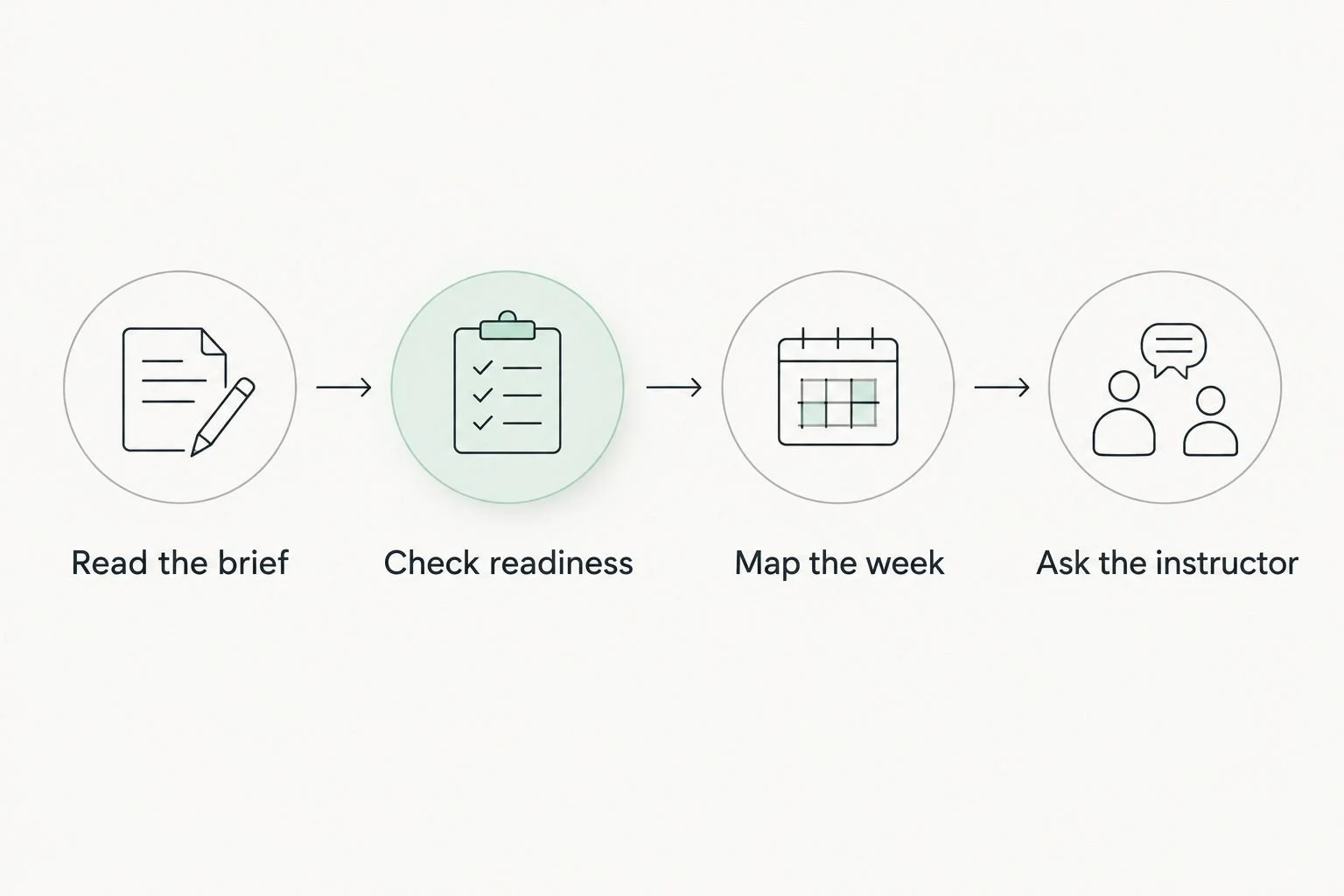
Match the class to the audition task before adding it to the family calendar.
If you need a home-practice starting point, discuss a 10-minute practice session with the instructor rather than assuming more is better. That is a suggested planning unit, not a prescribed duration; the task and the child’s needs should determine the plan.
At The Garden Arts Center, ask about the relevant dance, theater, or music offering, its level, and the next registration step. Confirm current scheduling details directly before reorganizing your week.
Which class should you choose?
For an undecided family with a spoken audition ahead, start with acting. Choose vocal lessons for a singing requirement, jazz for matching choreography requirements, and ballet or tap when the brief names those styles.
For a child without an upcoming audition, choose interest and readiness before audition usefulness. Art classes, guitar lessons, and other creative activities remain worthwhile choices even when they do not directly address a casting task; yoga and Pilates are not replacements for acting, singing, or dance instruction.
FAQ
What are the best performing arts classes for auditions?
The best performing arts classes for auditions match the required skill: acting for spoken material, vocal lessons for singing, and the requested dance style for movement. Read the audition notice before choosing a class.
Should my child take acting or singing lessons for musical theater?
Choose according to the audition requirements and your child’s immediate learning needs. If both spoken material and singing are required, ask instructors how to prepare both within a sustainable schedule.
Are ballet classes enough for a dance audition?
Ballet classes directly address an audition that requires ballet, but they do not replace every other dance style. Check whether the notice also asks for jazz, tap, hip hop, or another form.
Can a beginner take a performing arts class before auditioning?
A beginner can start with a class matched to current experience. Confirm separately whether the audition accepts beginners and whether the instructor can address the requested material.
Does The Garden Arts Center offer dance, theater, and music?
The Garden Arts Center offers dance, theater, and music classes and lessons for children and adults. Ask about the relevant offering, starting level, and current schedule before choosing your next step.
How should busy families plan audition-related classes in 2026?
Choose the class that addresses the clearest audition need, then check the full weekly commitment. Include travel, school activities, meals, and practice rather than evaluating the lesson time alone.
Will performing arts classes guarantee my child gets a role?
No class guarantees a role. Choose instruction for the skills your child needs to learn, and keep casting outcomes separate from the value of participating in the arts.
One last thing
Before choosing another class for 2026, ask your child to explain the audition task in their own words. If the answer is unclear, return to the notice together; knowing what is being requested is more useful than adding unrelated preparation.
Keep the first decision small: one relevant class, an appropriate level, and a weekly plan your family can maintain.